Kayak fishing looks expensive from the outside. The boats in the ads cost $3,000, the electronics cost more than the boat, and every accessory has a premium version. The real cost is different from the sticker shock. Most kayak anglers who overspend do it the same way: they buy the cheapest hull first, replace it within a year, then buy electronics in small steps until they have paid for the same fish finder three times.
Buy in the right order and a workable starter kit runs about $500 to $900 used, or about $1,000 new. The order is: sort out transport, then the kayak, then a PFD (personal flotation device, the life vest) and a paddle, then position control, then storage. The fish finder comes last, and the pedal drive waits until your second season. Add about 50 percent of the hull cost for everything else, a budgeting rule from the forums: a $500 kayak is really a $750 kit.
Buy first, in this order
Transport, before the hull. Decide how the kayak gets to the water before you buy it. A truck bed is easy. Car-topping an 80 to 100 pound kayak alone is harder than it sounds, and nearly impossible in the wind. Storage matters too: a 12-foot boat needs a garage, a rack, or a yard. The hull you can actually move beats the hull you wish you could move.
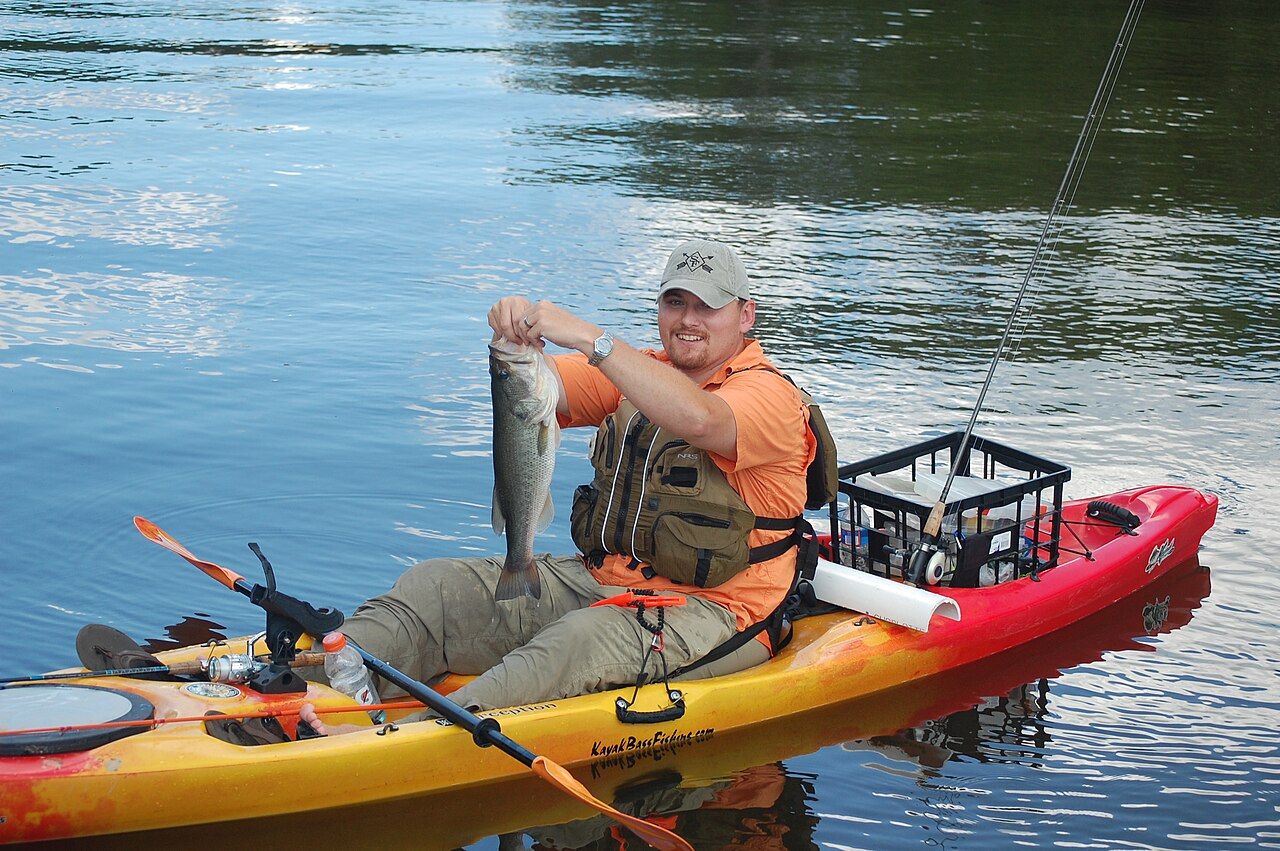
The kayak: a used sit-on-top, 10 to 12 feet. A sit-on-top is the open-deck style you sit on rather than inside, so you can climb back on after a capsize instead of bailing out a swamped hull. Ten to 12 feet is the sweet spot for ponds, creeks, and small lakes. If you weigh over about 200 pounds, go 12 feet. Longer boats track straighter and handle wind better. Short cheap 10-footers get blown around and wander off course. Buy used: fishing kayaks typically sell secondhand for 25 to 50 percent off retail, and the used market is full of boats from anglers who upgraded. Our Best Fishing Kayaks for Bass Under $1,000 (2026) covers the new-budget models if you would rather buy new, but a used hull is the better first buy.
A PFD you will actually wear. This is the one place where a cheap vest can cost you more than comfort. Buy a kayak-specific PFD, the kind cut short in front so it clears the seat back, in the $75 to $130 range. Cheap clearance vests ride up, fight the seat, and end up stowed in the hull instead of on your chest. A foam vest works fine. An inflatable vest is the comfort upgrade for hot days, not a starter need. Our Best PFDs for Kayak Fishing (2026) covers the fishing-specific models.
A decent paddle, the right length. The paddle is the engine. A heavy paddle that flexes will wear you out long before the fish do. A basic aluminum paddle around $50 gets you on the water. The value peak is a carbon-blend paddle around $120 to $180, and that is the first upgrade most anglers actually feel. Get the length right: 230 to 260 centimeters for a fishing kayak, and too long beats too short. Buying too short is the classic rookie mistake, and it costs a second paddle.
One rod and reel, the one you already own. There is nothing special about a kayak combo. Bring your spinning setup and a few confidence baits: soft plastics, one spinnerbait, one crankbait, one popper. Two rods rigged for different techniques beat five rods you never touch. The tackle mountain can wait.
Position control: an anchor trolley or a stake-out pole. Wind is the kayak angler's constant enemy, and holding position matters more than another lure. An anchor trolley is a line running along the side of the kayak that lets you slide the anchor point forward or back, so the boat points where you want to cast. A kit runs $30 to $50, or about $20 to $30 if you build one from paracord, pulleys, and pad eyes (small loop brackets screwed to the hull). A folding grapnel anchor costs $10 to $15. In shallow water a stake-out pole is faster and simpler: push it into the bottom and you are parked. Our Best kayak anchors & shallow-water anchors for bass fishing (2026) covers both, and our How to Rig a Fishing Kayak for Bass: The Setup Order That Works walks through the trolley install.
Storage: a milk crate and PVC. Most fishing kayaks ship with flush-mount rod holders. Add a standard milk crate, about $5 to $10, strapped to the stern tank well (the open cargo area behind the seat), with short sections of PVC pipe zip-tied to the corners as extra rod holders. One crate holds your tackle trays and a few rods. Add rod leashes: a $3 coiled leash saves a $200 rod. Our Best Landing Nets covers the short-handle nets that work waist-deep from a kayak, and Kayak Boat Positioning for Bass Without a Trolling Motor covers holding a spot once you are rigged.
Small extras. A whistle is required gear on the water, and a white light is required after dark. Add a paddle leash, a dry bag for your phone and keys, and a pair of pliers. That is the whole starter kit.
What to skip (for now)
The pedal drive. This is the most argued topic in kayak fishing, and the answer is a split. Pedal drive means foot pedals that power a propeller or fins, leaving your hands free to fish. Anglers who own one love it, and on big windy water it is a real advantage. But a pedal kayak costs $1,000 at the cheapest and typically $1,500 to $4,500. It also weighs 80 to 120 pounds, and needs a trailer or a strong back. Paddle for your first full season, learn positioning and water reading, and make the pedal drive your second kayak or your first upgrade. Rent or borrow one first. Our Best Pedal-Drive Kayaks for Bass Fishing (2026) covers the models when you are ready.
Big electronics. A fish finder is the last purchase, not the first. Most kayak anglers use one eventually, but beginners should learn the water first. In skinny water and visible-structure bass fishing, a finder adds little. On deep water and unfamiliar lakes, it earns its keep. When you do buy one, get the biggest screen you can afford once: the classic regret is buying a 5-inch unit, then a 7, then a 9, plus three mounts and two batteries. Entry units run about $100 to $150, and a 5-inch screen with GPS is the sweet spot for most kayak anglers, at about $230 to $300. Our Best Budget Fish Finders Under $300 (2026) covers the budget models.
The premium paddle. A $300 to $400 carbon paddle is a fine tool for someone who paddles every weekend. It is not a starter need. The $120 to $180 carbon-blend is the sweet spot, and even that can wait until you know your stroke and length.
The tackle mountain and the fancy crate. Commercial crate systems run $125 to $180 and amount to a glorified milk crate. Buy one later if you want turn-key storage. The DIY crate fishes the same. Same rule for tackle: two rods and a small box of confidence baits will catch more fish than a crate full of lures you never tie on.
The trolling motor. A basic clamp-on trolling motor is far cheaper than a pod motor, but it still adds a battery, a mount, wiring, and registration in most states. Purpose-built pod motors run $1,500 to $2,500, and a factory motorized kayak runs about $4,500 to $6,000. It is a second-stage build, not a starter purchase.
DIY that actually works
Four DIY builds come up in every source. The milk-crate command center costs about $10 to $15: crate, PVC rod holders, a bungee to strap it down, and a cutting board as a backing plate if the plastic is thin. The DIY anchor trolley costs about $20 to $30 in paracord, carabiners, a small pulley, and pad eyes, against $30 to $50 for a kit. The DIY stake-out pole costs about $20 in parts, against $55 to $150 for a commercial pole. The rope anchor is a $10 to $15 folding grapnel plus 50 feet of paracord and a small float, a complete system for under $30. One more free habit: use snap swivels and pre-tied leaders, because tying knots while rocking on the water is a pain.
The two mistakes that cost the most
Buying the cheapest hull twice. The single most repeated regret is the $100 to $180 kayak that tracks poorly and gets blown around. The floor for a usable fishing kayak is roughly the $250 to $500 class new. Buying cheap once to test the sport is defensible. Buying cheap twice is the waste.
Buying electronics in small steps. The upgrade trap is predictable: a 5-inch finder, then a 7, then a 9 with forward-facing sonar, plus three mounts and two battery generations. Thousands spent incrementally that one bigger unit up front would have avoided. The same logic applies to seats, carts, and crates: buy the minimum, fish the boat for a season, and let experience tell you what to upgrade.
Bottom line
Buy the hull used, buy the PFD and paddle well, and fish the boat before you buy anything else. A milk crate, a homemade anchor trolley, and one good rod will put you on fish this weekend. The pedal drive, the big screen, and the fancy crate will still be there next season, when you actually know which ones you want.