The fish that feeds when the light fades
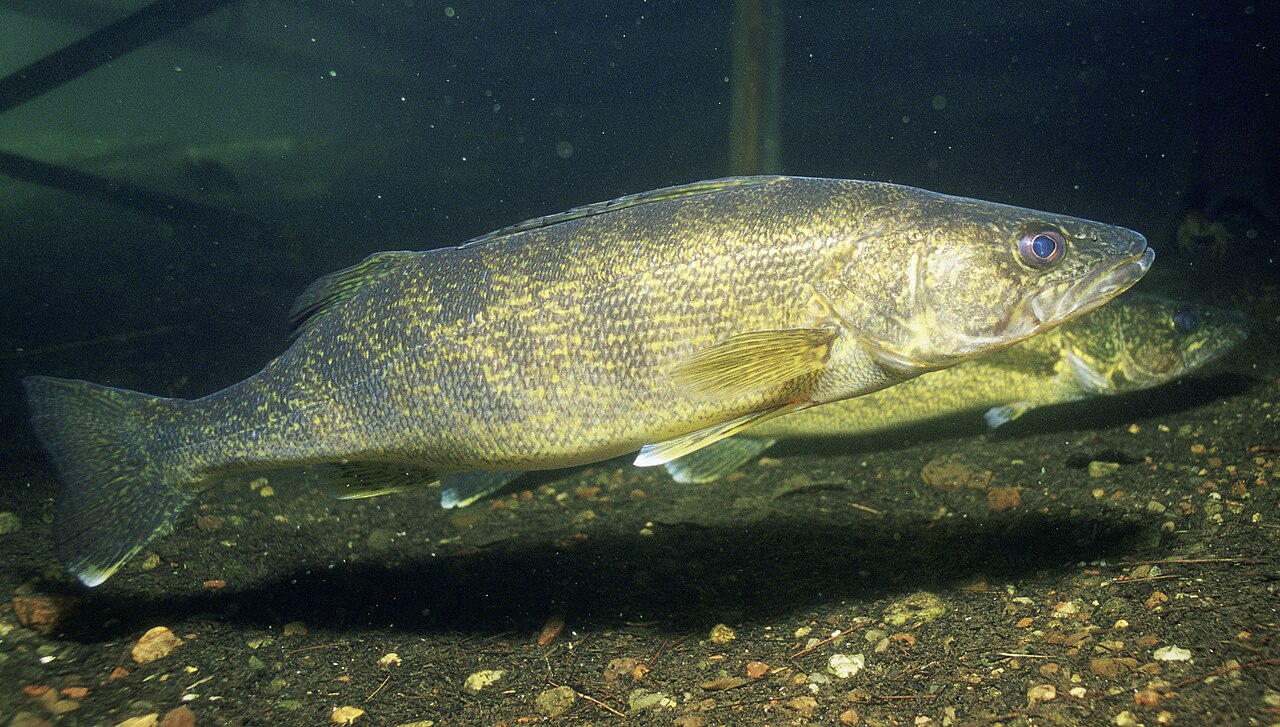
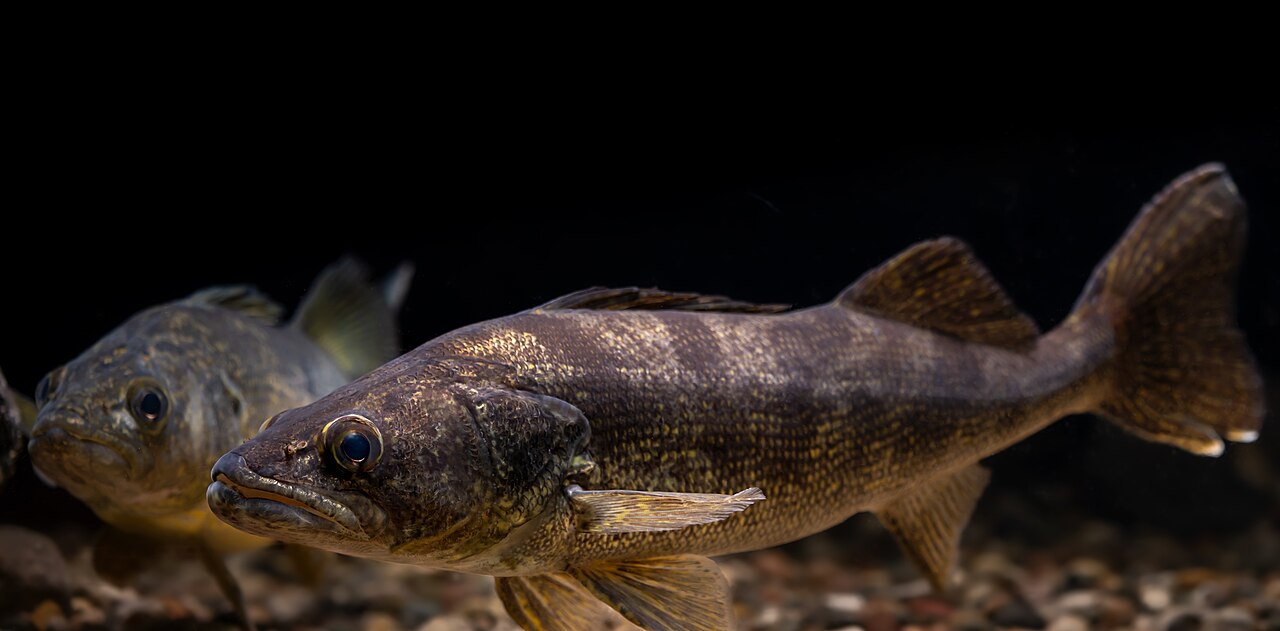
A walleye is the largest member of the perch family in North America, a golden, torpedo-shaped fish with a white tip on the lower lobe of its tail and eyes that glow like a cat's in a headlight. Those eyes are the whole story. Behind each one sits a reflective layer called the tapetum lucidum, and it lets a walleye see and hunt in light so dim that most other fish have already quit for the day. That is why walleye feed hardest at dawn and dusk, on cloudy days, and after dark.
The short version: fish low light, fish structure near the bottom, and start with a jig tipped with a minnow or a slip bobber hung over a leech. Wait on the light bite instead of jerking at the first tap. Everything else in this guide is the detail behind those four sentences.
How to tell a walleye from a sauger
Walleye have a close cousin called the sauger, and the two share a lot of the same water. The mix-up matters because the two fish can be treated differently by the rules, so learn the marks before you keep anything.
The tail. A walleye carries a bright white tip on the lower lobe of its tail fin. A sauger has no white tip. If the tail tip is white, you are holding a walleye.
The dorsal fin. The spiny front dorsal fin settles the rest of it. A walleye's is mostly plain, with one dark blotch at the base of the last two or three spines. A sauger's is covered in rows of distinct dark spots. Spots across the fin mean sauger. One blotch and no spots mean walleye.
The cheek. Run a thumb across the cheek. A walleye's cheek feels mostly smooth, with few scales, while a sauger's is rough and fully scaled. Sauger also run smaller and skinnier, seldom topping three pounds, while a walleye in the 20- to 28-inch range is a normal adult. Where the two overlap they can cross, producing a hybrid called a saugeye, which mixes the marks. When in doubt, check your state's fish ID page before you keep the fish.
Where they live
Walleye live in rivers, natural lakes, and reservoirs across the northern U.S. and Canada, from the big Minnesota lakes to Kansas reservoirs like Milford Lake. The question is never whether walleye are in the lake, but where they are sitting right now: on structure, near the bottom.
Learn the structure words. Points, humps, rock reefs, gravel bars, weed edges, and drop-offs (the sharp depth change where shallow water falls away into deep water) are where walleye and their food gather. In a river, add current seams, the line where fast water meets slow water, and the slack water below a dam or wing dam, a rock barrier built out from the bank to steer the current. Walleye feed in the bottom two feet of the water column most of the time, so a bait fished three feet over their heads might as well be in another lake.
The seasons move them. In spring they push shallow to spawn, onto gravel and rock in a few feet of water and up into feeder creeks and rivers. In summer they slide out to deeper mid-lake structure by day and come back shallow only in low light. In fall they drift back toward shore, onto flats, weedlines, and river mouths. In winter they hold deep on main-lake structure, though early-ice fish can sit shallow next to deep water.
Fish the edges, not the middle. Anglers disagree about whether walleye use weeds at all. Some say hard bottom is the rule and thick grass is a waste of time, while others catch plenty of walleye along weed edges, especially early in the season. Both camps agree on the fix: fish the weed edge and the breaks in it, not the thick middle.
The three rigs to learn
Three presentations catch nearly every beginner walleye. Learn them in this order.
The jig and minnow. A jig is a weighted hook with a painted head, and this is the number one starter rig by a wide margin. Start with a 1/8-ounce jig in water under ten feet. Step up to a 1/4-ounce jig as the general choice. Go to 3/8-ounce when the water is deep, the wind is up, or the current is strong. The rule every angler repeats is to use the lightest jig that still lets you feel the bottom. Tip the jig with a shiner or fathead minnow, a leech, or a soft plastic tail. Let the jig hit bottom, lift the rod tip about six inches, and let it fall back on a tight line. Most bites come on the fall, or they feel like nothing more than a single tick or a sudden bit of weight.
The slip bobber. A slip bobber is a float that slides on the line and stops at a small knot you set, so you can hang a bait at an exact depth in any depth of water. It is the easiest way for a true beginner to catch a walleye, and it works all year. Set the bobber stop so the bait hangs about two feet off the bottom, cast it over a hump, a point, or a rock pile, and wait for the bobber to go down. Most anglers hang a small jig tipped with a leech under the bobber, though a few insist on a plain hook and a split shot instead, arguing the plain hook shows light bites better. Use the jig version first, because it tangles less and casts easier. When the bobber dips, wait. A walleye will often pull it under, let it pop back up, then take it down for good. Do not jerk the rod the moment it twitches. A lighted bobber makes this rig work after dark, when walleye move shallow.
The live-bait rig. A live-bait rig, often called a Lindy rig, is a sliding sinker on the main line, then a swivel, then a snell, then an octopus hook. A snell is a length of lighter line between the swivel and the hook. Tie a three- to eight-foot snell of six-pound fluorocarbon, and size the hook to the bait: size 8 for a leech, size 6 for a worm, size 4 to 1/0 for a minnow. Drift or troll it slowly, about half a mile an hour, over humps, points, and rock piles. The bite is a light tap, tap, tap. Feed line for a few seconds so the fish can take the bait, reel down until the line is tight, then sweep the rod to set the hook. Rushing the hookset is the most common beginner mistake on this rig.
The next step: bottom bouncer and spinner harness. Once the three rigs feel natural, the fourth presentation is how you cover water in summer. A bottom bouncer is an L-shaped wire weight that keeps a spinner rig, a blade and beads ahead of a nightcrawler or leech, just off the bottom while you troll. Use a heavy enough bouncer to hold the line near a 45-degree angle. In twenty feet of water that often means one and a half to two ounces. Troll at about one mile an hour. The classic beginner error is dragging the bouncer along the bottom, which snags constantly. Feel the bottom, then hold the weight a few inches above it.
What they eat
Live bait is the beginner default. Minnows, leeches, and nightcrawlers are the big three. A useful starting rule sorts them by water temperature. Use minnows in water below about 65 degrees. Above that, leeches take over, and nightcrawlers work well from about 65 too. Treat that as a starting point, not a law. Anglers who fish walleye every week say to carry all three, because leeches sometimes outproduce minnows in cold dirty water and minnows sometimes win in summer heat.
Artificials are the skill-building next step. A jig with a plastic tail, a crankbait like a Shad Rap in size 5 or 7, a Jigging Rap, or a blade bait all catch walleye, and they cover water faster than live bait. Anglers agree crankbaits catch bigger fish but fewer of them, so they are a second tool, not a replacement for live bait. Presentation matters more than color: speed, depth, and how the bait moves beat the exact shade. When color does matter, chartreuse and pink get named most often, with firetiger in dirty water and natural patterns in clear water.
The gear: use what you have
Your bass outfit works. You do not need special gear to start catching walleye. Any spinning outfit built for largemouth bass will get the job done. A rod around six and a half to seven feet, medium-light to medium power with a fast action, paired with a 2000 to 3000 size spinning reel, covers nearly all beginner walleye fishing. Load it with six- to ten-pound monofilament. If you prefer braid, use eight- to ten-pound braid with a six- to eight-pound fluorocarbon leader, the near-invisible line tied between the braid and the bait. Monofilament is the better choice under a slip bobber, where sensitivity matters less and the stretch forgives a hard hookset. A longer rod, seven and a half feet, helps with live-bait rigs and slip bobbers because the extra length picks up slack on the hookset. Add a net, pliers for hook removal, and a few first aid items, because walleye have pointed teeth and a gill plate edge that cuts. Our How to Tie the 5 Knots Every Angler Needs covers the Palomar knot for tying on that jig, and our How to Spool a Spinning Reel Without Line Twist keeps the light line on your reel from turning into a mess.
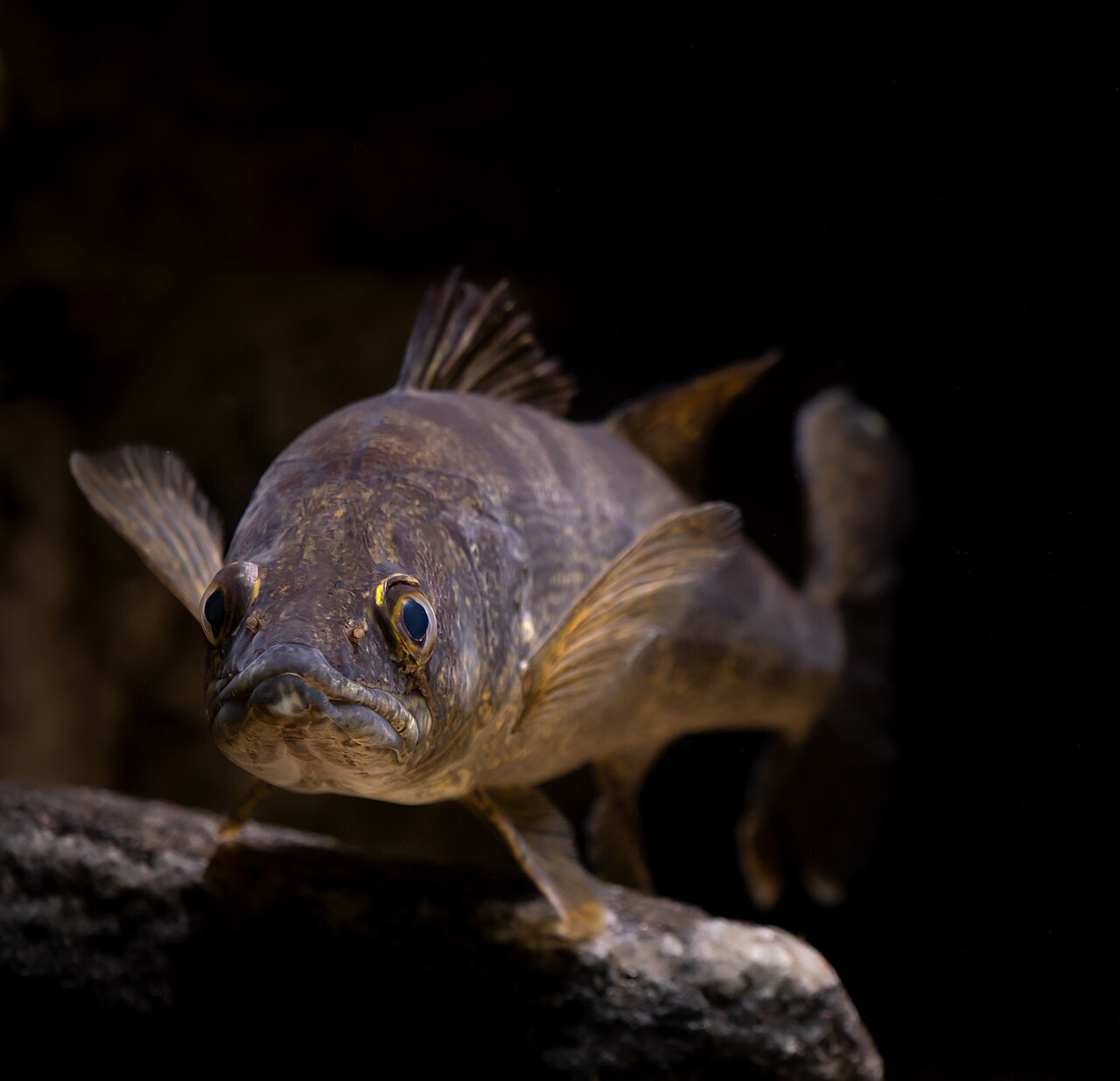
Handle them with respect. Walleye have a spiny dorsal fin, pointed canine teeth (blunter than a pike's), and gill plates with edges like a razor. Grip the fish just under the gill plate, keeping your fingers clear of the gill rakers and the back edge of the plate. Play a big fish with steady pressure and net it headfirst at the surface instead of reeling it straight to the boat like a bass. Many anglers keep the 15- to 19-inch fish for the table and release the big ones, which are the best breeders, but check your state's slot limit first. A slot limit is a protected size range the state sets, and it changes from lake to lake. A walleye cranked up from deep water, deeper than about 30 feet, often struggles to survive release, so keep what you catch from down there and release the shallow fish.
The seasons
Spring is the easiest season. Walleye spawn in spring when the water reaches the low to mid 40s, scattering eggs over clean gravel and rock in a few feet of water, often in tributaries and along rocky shorelines. The weeks before the spawn, when the fish are staged nearby and feeding hard, are some of the best fishing of the year. Right after the spawn the fish go quiet for a week or two, then feed heavily again.
Summer is the hardest season. Once the water warms, walleye slide deep to mid-lake structure during the day and feed mostly at dawn, dusk, and night. The easy bite is May and June, when the fish are still shallow. By July, midday in clear water is the dead period, and the fish are often 15 to 25 feet down. One exception is worth knowing: in stained water, walleye will hold on weed flats in four to eight feet even in mid-summer, so do not assume every summer fish went deep.
Fall is the second spring. Walleye move back shallow as the water cools, onto flats, weedlines, gravel bars, and river mouths, and they feed hard before winter. Trolling small hard baits slowly near shallow structure is a classic fall pattern, and river mouths at night are worth a trip by themselves.
Winter is slow but not dead. Walleye hold on deep main-lake structure, the same humps and drop-offs they used in summer. Through the ice, jigging spoons and jigging minnow baits fished just off the bottom catch them, and the last hour of daylight is prime. Early-ice fish can be surprisingly shallow, close to deep water.
Mistakes to skip
- Fishing bright midday sun in clear water. Fish dawn, dusk, and cloudy days instead, or fish deeper and slower until the light drops.
- Setting the hook too fast on a live-bait rig. Feed line for a few seconds, reel down to tension, then sweep. The fast jerk pulls the bait out of the fish's mouth.
- Jigging too fast and above the fish. Lift the jig six inches and let it fall. Bites come on the fall and the pause, not on the hop.
- Losing bottom contact. If you cannot feel the bottom, you are fishing over the fish. Go heavier on the jig or the sinker before you change anything else.
- Fishing flat, featureless water. Walleye hold to something: a point, a hump, a break, a weed edge.
- Buying too much tackle. Jigs, bobbers, hooks, and live bait catch the first fish. The rest of the tackle wall can wait.
- Leaving after one fish. Walleye school, so one catch means more are nearby. Work the spot thoroughly before you move.
- Quitting at sunset. The bite often starts when the light goes. Our Night Fishing for Bass guide covers the low-light hours that matter just as much for walleye.
The bottom line
Walleye fishing is not complicated, and the fish is not as hard to catch as its reputation suggests. Fish when the light is low, fish structure near the bottom, and start with a jig and a minnow or a slip bobber over a leech. Wait on the light bite, move until you find fish, and stay put once you do. The fish with the glowing eyes is waiting in water near you right now.