On a breezy day, your kayak drifts off the spot faster than you can paddle back. You slide into position off a laydown, make two casts, and the breeze has pushed you thirty feet off your spot while your lure is still sinking. An anchoring system is the answer, and it is really two purchases: the trolley that holds and positions the line, and the anchor tool that grabs the bottom. Our verdict up front: install the YakAttack LeverLoc Anchor Trolley first, at about $37 to $38, then add the tool that matches your water. Shallow water under six feet belongs to the YakAttack ParkNPole (about $102). Deeper water and mixed bottoms belong to a cheap grapnel kit, and docks-and-timber anglers want the fifteen-dollar YakGear Brush Gripper. The Power-Pole Micro Anchor is the push-button option for anglers willing to pay for convenience. Plan on about $650 for the drive unit. With spike and battery, expect $850 to $950 all-in.
YakAttack LeverLoc Anchor Trolley ~$37–38
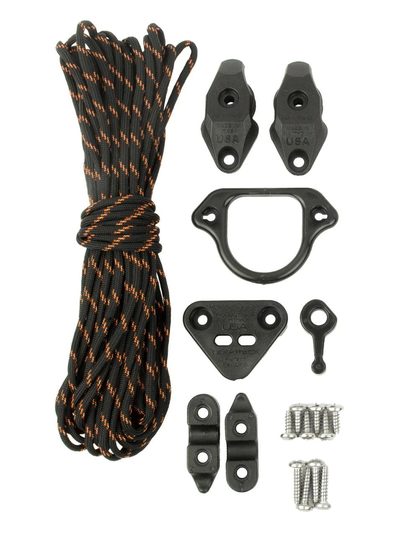
An anchor trolley is a loop of cord, two pulleys, and a ring running along one side of your kayak. Across forums, owner reviews, and videos, the message repeats: the trolley is what makes anchoring safe and workable, because it slides the anchor line to the bow or stern from your seat. Anchoring from the side in current or wind is how kayaks flip; the trolley makes bow and stern tie-offs automatic.
The LeverLoc is the named best of the branded kits. Its Stealth pulleys run quiet, which matters on still mornings, and the flip-clamp lock freezes the trolley line anywhere along the run with one motion. The PadHooks, little hull-mounted line guides, keep the line tight against the hull instead of snagging your line.
Two downsides. Installation is unforgiving: owners warn not to overtighten the screws (you strip the plastic), not to put silicone on the wellnuts (rubber expansion fasteners, they slip), and to leave the line slack because cord shrinks when wet. If you are planning the whole rig, our How to Rig a Fishing Kayak for Bass: The Setup Order That Works lays out the install order that avoids re-drilling. Second, half-price Amazon kits and DIY paracord builds do the same job, and r/kayakfishing commenters overwhelmingly vote DIY. The LeverLoc wins on refinement and quietness, not on being the only way.
Not for: anglers who will never drill their hull, and river anglers in fast water who will never bottom-anchor at all. Pairing it with a cheap rope anchor is the standard rig, installed once.
YakAttack ParkNPole ~$100–105
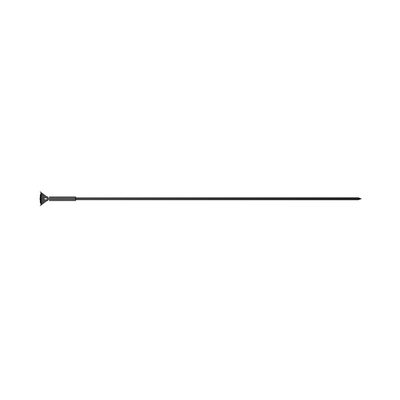
A stakeout pole is a long fiberglass pole you push into the bottom and tie off to, and in water under six feet it holds the edge over a rope anchor: no rope to tangle, no splash, zero drift once staked, nothing that can snag permanently. The ParkNPole floats, which sounds minor until you read the lost-pole stories. Sinking poles are the number-one cited pain point with cheap poles. The 7'8" length stakes effectively to about five to six feet of water and doubles as a push pole for sneaking across flats. Made in the USA, lifetime warranty.
Two downsides, both load-bearing. It is useless on rock and hard bottom: Florida and Texas anglers report the tip either will not bite or walks loose in real wind. Four to five anglers across forums reported switching away from stakeout poles entirely, most of them to cheap dumbbells. Second, the reputation premium over the $56 YakGear YakStick is unproven in owner reviews. We could not find a single readable ParkNPole owner review on any retailer; the verdict rests on blog testing, pro-staffer quotes, and video owners, not a deep owner corpus.
Not for: water over six feet, rocky bottoms, or windy lakes where you would re-stake every ten minutes.
Power-Pole Micro Anchor ~$650 drive; ~$850–950 all-in
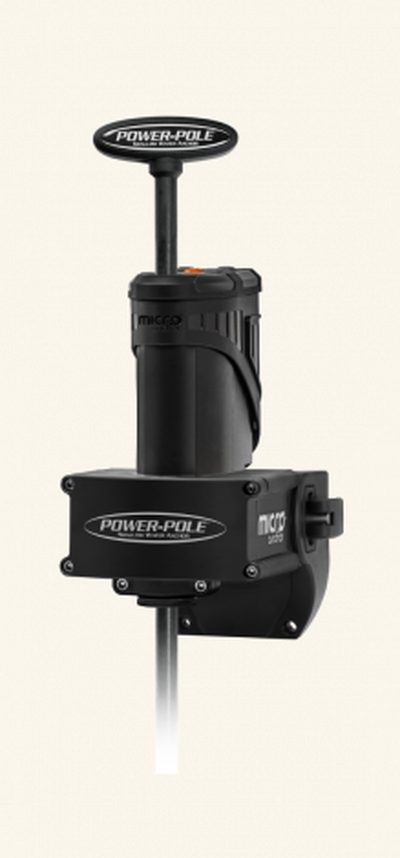
The Power-Pole Micro is a motorized shallow-water anchor for small craft: press a button, an 8.5-foot spike drives into the bottom, and you are pinned. It carries the strongest long-term owner endorsement in this guide. Power-Pole's own review page holds 32 owner reviews spanning 2017 to 2024, nearly all five stars, and the service stories repeat independently across years: dead key fob replaced in two days, lost hardware in three, dead battery in three.
Three downsides, all real. The drive lists at $649.99, with the spike and the battery/charger kit sold separately. All-in, plan on $850 to $950. The depth ceiling is about six to seven feet, and the spike sticking up catches overhanging branches and the occasional back cast. Electronics are the failure point: one owner had both battery pack and remote die within two years, and a river owner reports the pack dying about three-quarters through a full river day. Premium pick, never the value pick.
Not for: budgets under a grand, water deeper than seven feet, or small kayaks where twenty pounds of hardware crowds the stern.
YakGear Grapnel Anchor Kit ~$28–30
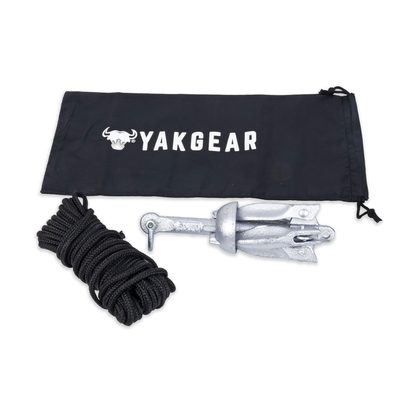
The folding grapnel, with four folding flukes that grab the bottom, is the default all-around kayak anchor: it holds on mud, sand, rock, gravel, and weed, it folds flat for a hatch, and the complete 1.5-pound kit with thirty feet of rope and a bag costs what you would spend on soft plastics. The flukes do the holding, not the weight. Paired with a trolley, it is the standard deep-water rig.
The defining pain is hang-ups, and it is severe. On snaggy bottom, owners call a grapnel next to impossible to retrieve; we read about anchors lost on Lake Fork, in twenty feet of water, and hung on timber that forced line-cutting. The fix is the zip-tie breakaway rig below, and this kit is near-mandatory with it.
The rest of the downsides: it holds poorly on sand and grass where flukes will not dig, and it walks downwind in real wind where a staked pole would hold. Cheap, versatile, never painless.
Not for: heavy timber or rock without the breakaway rig, or anchoring in current without quick-release line management.
YakGear Brush Gripper ~$15–20
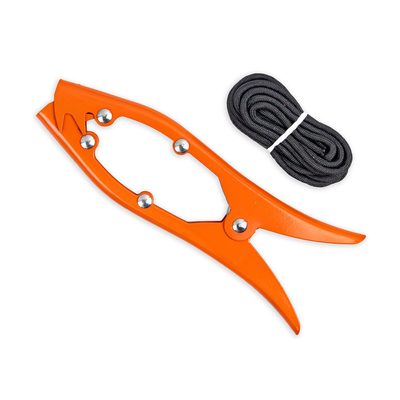
The Brush Gripper is a big orange clamp on a cord, and it is the fastest, cheapest, quietest way to stop your kayak next to something you can grab. Around docks, pilings, laydowns, brush piles, and grass lines, owners clip it on and the tension spring bites harder the more the wind pulls. It stows in a hatch, deploys in seconds, and costs less than a pack of good hooks.
Two hard limits. It needs something to clip to, so in open water it is dead weight. And it is not a long-term mooring: on grass and brush, grip points uproot in ten to fifteen minutes. Use it for quick stops, not for holding all day.
Not for: open-water anchoring or any hold you would bet the day on.
Rig the breakaway: the zip-tie trick that saves grapnels
This was the single most repeated piece of rigging wisdom in the corpus. A grapnel tied to the top eye hangs up by the arms and pulls tighter the harder you haul. Tied as a breakaway, it pops loose instead.
How it works: tie your anchor rode (the main anchor line) to the bottom eye, at the base of the flukes, not the top eye. Run the line up the shank and secure it to the top eye with a thin zip tie, about 1/8 inch. A hard straight pull breaks the tie, the pull shifts to the bottom eye, and the anchor yanks out backwards.
Use light ties: heavy ties defeat the purpose. Thin ties plus spares in the tackle box is the system owners report at 80 to 90 percent success.
Know the one backfire: a weak-link release under load has a real edge. One owner had the tie let go under tension and the recoil threw him out of the kayak. Never stand, and never fight the line over the gunwale.
Match the tool to your water
No single anchor wins. Every source that compares them converges on one buying rule: depth, bottom, and fishing style decide, in that order.
Depth decides the category. Under six feet, a stakeout pole or the Power-Pole Micro wins outright. Six feet and deeper, you need a rope anchor with scope (the ratio of line to depth) at five to seven times the depth. Drift socks and drag chains slow a drift; they do not anchor.
Bottom decides the tool. Mud and sand take grapnels, poles, and dumbbells. Rock and heavy timber take grapnels with the breakaway rig or dumbbells that cannot snag. Grass flats take poles or the brush gripper. Hard pan and oyster shell beat every spike.
Your style decides the system. Flats and marsh anglers build around a pole. Deep-lake and ledge anglers build around the grapnel kit. River anglers read the safety section first, then reach for a dumbbell or a drag chain, because river bottoms snag grapnels more than any other water. Timber and dock specialists buy the brush gripper as a second tool. For the full positioning playbook beyond anchoring, our Kayak Boat Positioning for Bass Without a Trolling Motor covers wind, current, and anchor-free control.
The rigs nobody writes reviews for. A five-to-eight-pound vinyl-coated dumbbell (under ten dollars) on a short leash to the trolley holds in calm to moderate conditions and cannot snag. A length of chain in a bike inner tube, used as a drag chain, slows a river drift to a fishable pace and never hangs permanently. Neither one earns a retailer review page. Both are what veteran kayak anglers actually fish.
What to skip
A mushroom anchor as your only anchor. It only holds in calm, still water. It pulls out in current, drags on sand and gravel, and its evidence base is the thinnest of any category we covered. Sinking stakeout poles: tie a safety line or a float, or you will donate it. If it does not float, it is a consumable. Staking through a scupper hole: it damages the hull plastic and the pole can wedge permanently. Use the trolley ring or a dedicated holder instead.
Safety: the part the forums insist on
Bow or stern only, never the side. Snagged anchors in river current have flipped kayaks and nearly cost anglers their gear. Use the trolley to slide the tie-off to the bow or stern before you drop. Keep a dive knife in your vest to cut a hung line. Give it scope, five to seven times the depth, and never tie off short in current. If you cannot paddle against the current you are anchoring in, do not drop an anchor there at all. Anchoring safety starts with the vest, so if yours is the cheap one you never wear, see our Best PFDs for Kayak Fishing (2026).
Bottom line
Buy the YakAttack LeverLoc Anchor Trolley before anything else, because every anchoring method we found either rides on a trolley or should. Fish shallow water mostly, and the YakAttack ParkNPole is the quiet zero-drift tool owners actually love. Fish deeper or mixed bottoms, and the cheap YakGear grapnel kit with the zip-tie breakaway rig does the job for thirty dollars. Docks and timber? The YakGear Brush Gripper is the fifteen-dollar specialist. And the Power-Pole Micro is the premium push-button option for a kayak, at about nine hundred dollars all-in, which is exactly what it costs.