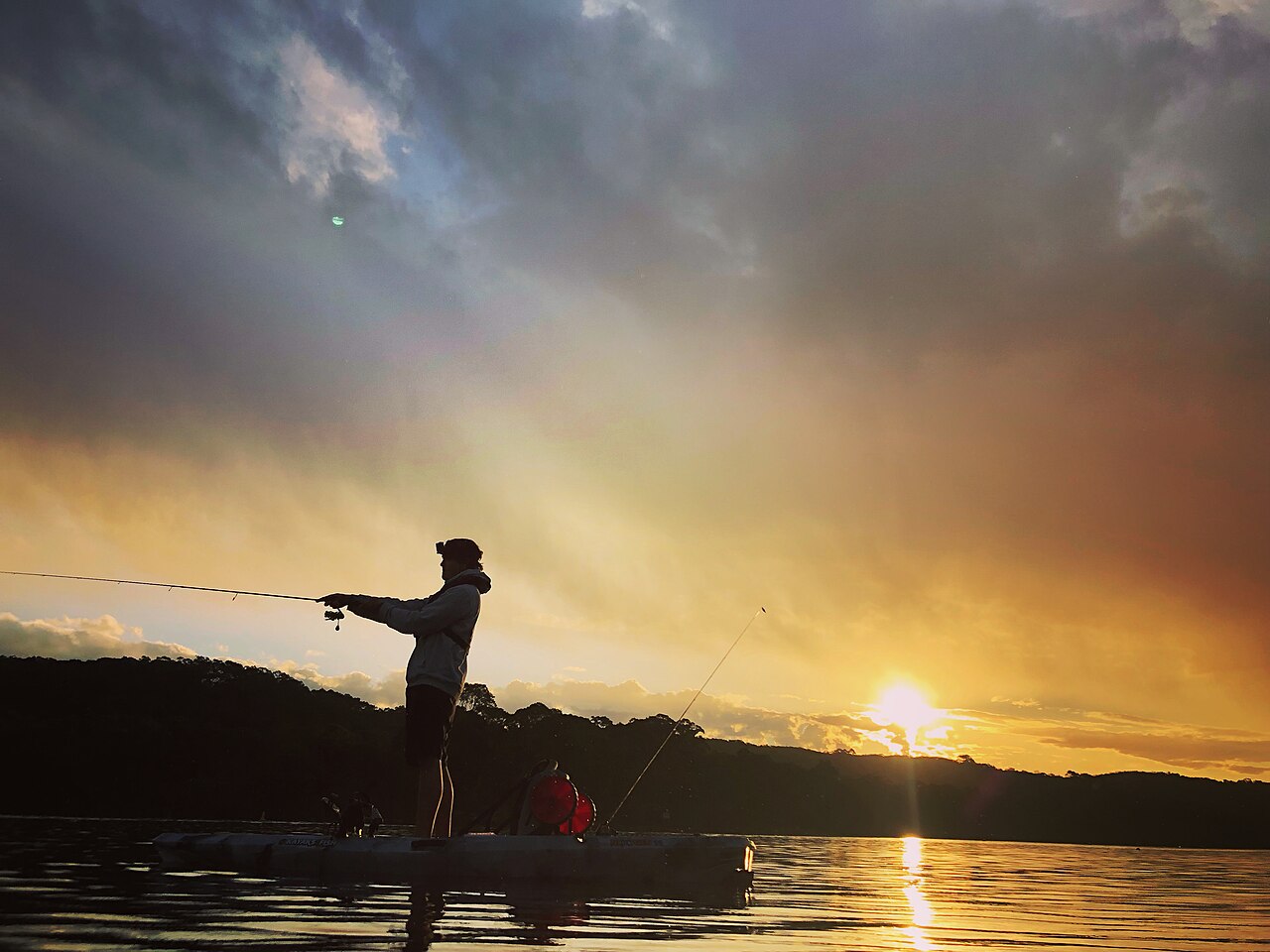
The wind is doing the moving. Use it.
A bass boat pins itself in place with a trolling motor. A paddle kayak has no such option, so the wind and current reposition you every minute of the trip. That is not a problem you manage around the fishing. It is the delivery system the fishing rides on.
The whole game, across the forums and kayak media we read: set up so the wind carries you where the bass are, and hold the boat's angle with a few cheap tools. The cast you want decides where the kayak goes, not the other way around.
Fish the wind instead of fighting it
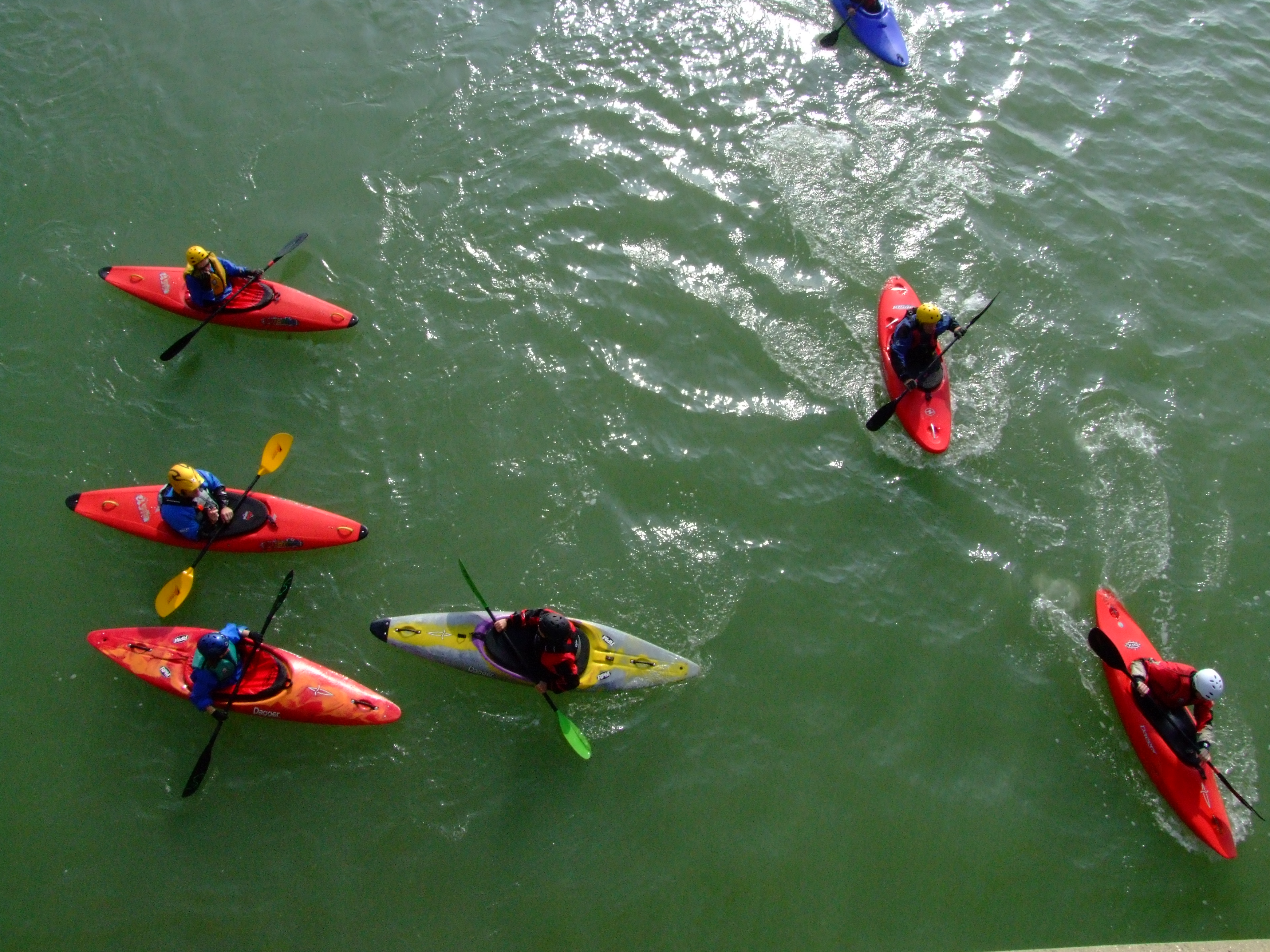
Fighting the wind is the classic beginner mistake. The experienced move is to start upwind of the area you want to fish and let the breeze carry you down through it, casting as you drift. A drift is not lost control. It is a slow, free trolling pass.
Two wind rules keep repeating across forums and kayak media:
- Sit on the leeward side of a point and cast into the windward edge. Leeward means sheltered from the wind; windward means the side the wind hits first. Bass face into the wind because that is where the food comes from, so a bait arriving from the windward edge comes at them head-on instead of sneaking up from behind.
- Tuck behind points, laydowns, and shorelines. The water near the bank is calmer, the wind is weaker, and the same cover that holds bass blocks the gusts pushing you around. Hugging the shoreline is the fastest way to make a windy day fishable.
One habit worth building: check the wind forecast before you unload the boat. A quick conditions check for wind speed and direction (the BiteLab app shows both for your water) tells you which banks will be fishable before you pick a launch.
The anchor trolley: the one rig to learn
An anchor trolley is a pulley loop that runs along the side of the kayak from bow to stern (front to back), with a sliding ring the anchor line clips to. Pull the ring forward and the anchor holds the bow into the wind, so you face the breeze head-on. Slide the ring back and the stern takes the wind, so the bow points downwind and the wind sits at your back, carrying your casts.
Almost everything in this article runs through a trolley: anchors, stakeout poles, and drift socks all clip to that same sliding ring. A small counter-school skips anchors entirely and fishes brush clips, stakeout poles, or moving baits straight downwind. Both work; the trolley just gives you more options when the wind changes.
Three ways to slow or stop the drift
The drift sock. A drift sock is a small parachute-like canopy you tow behind the kayak to slow a wind drift. Deploy it off the stern, never the side, and the wind pushes you along at a walking pace while you face downwind and your casts get a tailwind. For a kayak, an 18-inch canopy is plenty according to multiple sources. Rig a retrieval line (a cord tied to the sock's narrow end) with a float, so you can collapse it and pull it back to the seat without shipping the paddle. Think of it as a drift-rate tool, not a parking brake.
The drag chain. A length of heavy chain (3/8- to 5/8-inch, a foot or two of it) wrapped in a bicycle inner tube for quiet, paid out behind the boat on a retractable dog leash. More chain on the bottom means a slower drift, and you tune it on the fly. River specialists run it straight off the stern with no trolley at all, because a stern tie keeps the boat from swinging sideways in current. One hard split: on gentle rivers and creeks, kayak anglers swear by it. On swift tailwaters, a tailwater outfitter calls drag chains bad practice, period: a snagged chain can stop the boat cold and roll it before you react. Slow water only.
The stakeout pole. A 6- to 8-foot pole you stab into the bottom through the trolley ring or a scupper hole (one of the hull's drain holes) to pin the kayak in place. It is the fastest anchor in shallow water: grab, stab, fish. Pull it up and it doubles as a push pole, and several forum regulars say it is their most-used positioning tool, ahead of their actual anchors.
Current and rivers
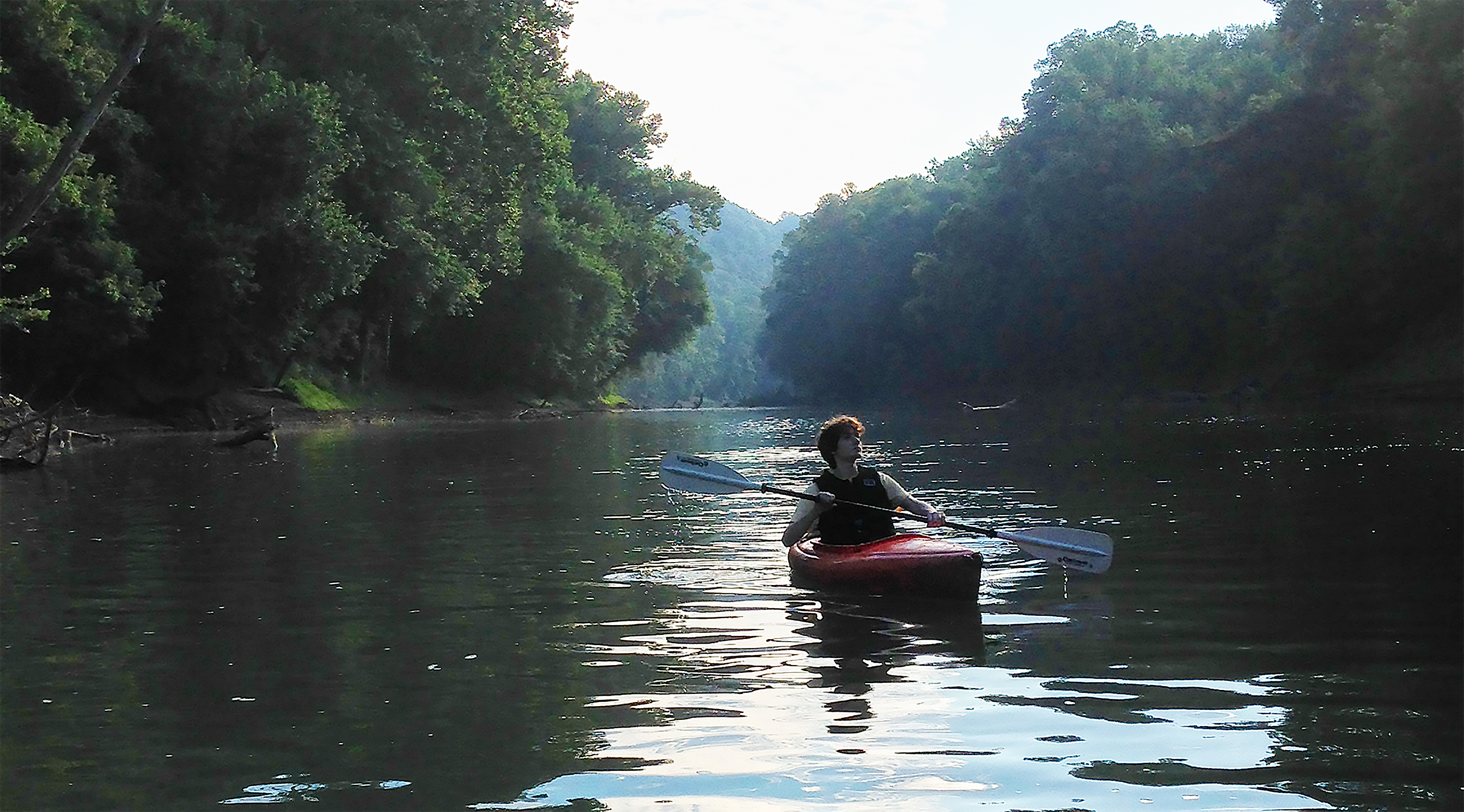
Rivers give you the same tools with one free addition: the eddy. An eddy is the calm pocket that forms behind a rock, log, or point, where the current curls back on itself. Paddle past the spot you want to fish, tuck into the eddy behind it, and fish the current seam (the line where fast water meets slow) without touching the paddle. The seams are where the bass hold anyway.
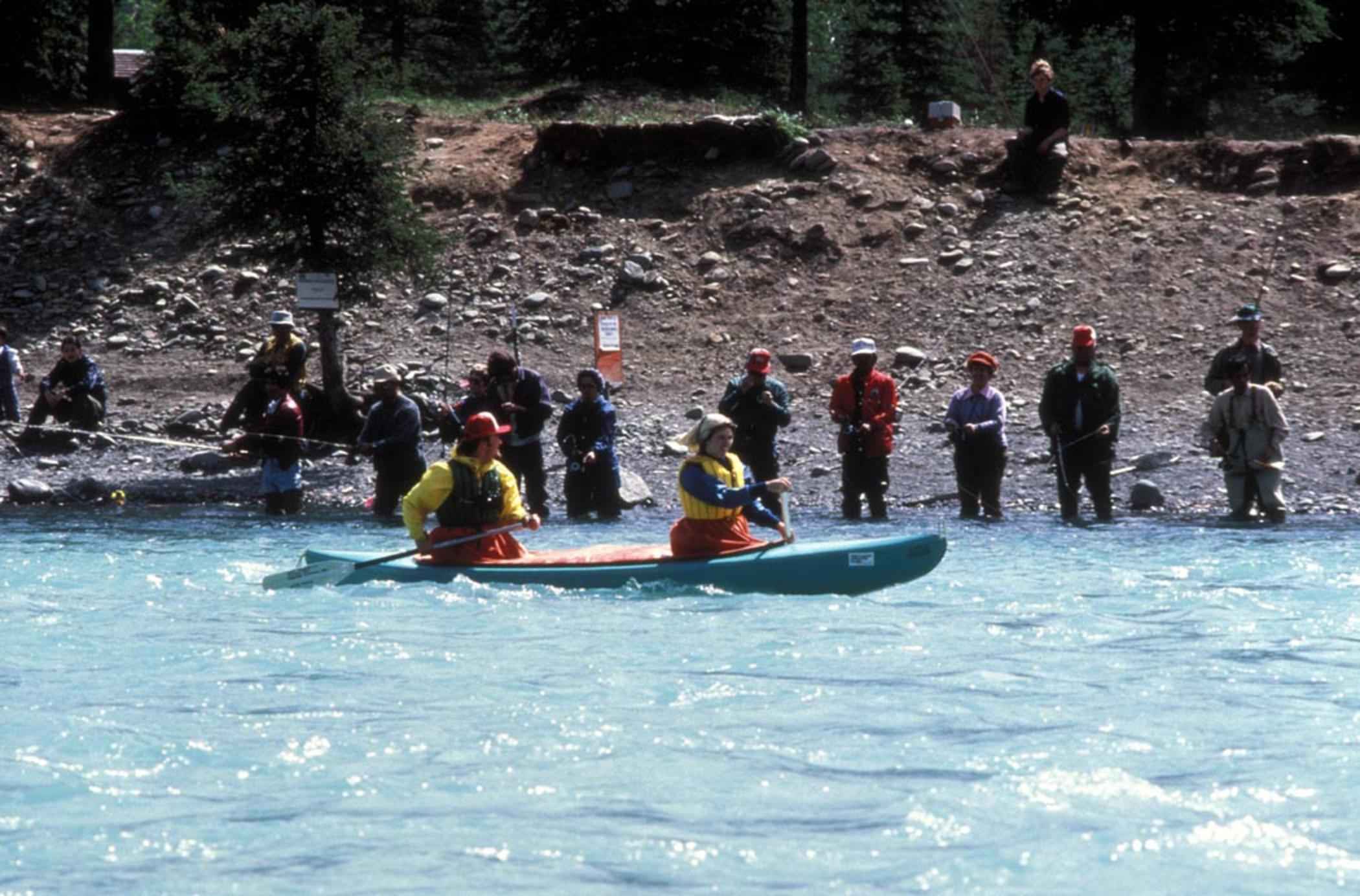
Two rules from people who fish rivers weekly. First, never tie off amidships (the middle of the boat) in current: a side pull rolls the kayak, and a stuck anchor in fast water can pull the gunwale (the hull's top edge) under. Bow or stern only, always with a quick release: a cam cleat (a spring-loaded rope clamp that pops free with an upward pull), a breakaway zip tie, or a float you can unclip. Second, when the current gets genuinely fast, beach the kayak and wade. Anchoring from a kayak in heavy current is the one scenario where experienced anglers just say "swim."
Your body is part of the rigging
A kayak has control surfaces no bass boat offers, and they are all attached to you.
- Paddle across the lap: lay the paddle across your thighs and you can dip one blade one-handed to steer while fighting a fish with the other hand.
- The one-handed paddle: lock the shaft along your forearm and you can make short steering strokes without setting the rod down.
- Feet as rudders: drag a foot, hook a stump, press a boot against a laydown to hold or turn the boat.
- The paddle as a sail: angle the blade to catch the wind and you can tune your drift speed and direction without a stroke.
Moving baits steer the boat, too: a crankbait or spinnerbait dragging through the water pulls a light kayak toward it, so cast where you want the boat to go. And the upgrade that comes up constantly: pedal-drive kayaks (foot-powered, hands-free) are one of the biggest positioning upgrades a kayak angler can buy. Full rundown in our Best Pedal-Drive Kayaks for Bass guide.
Cast angle is boat position
Where the kayak sits decides what the cast can do, so position the boat for the retrieve you want.
Park about 20 feet off a laydown and retrieve parallel to it, hitting both sides, instead of casting straight at the wood. Fan-cast points from straight on. Sit side-on to a snag so a hooked bass cannot tow the kayak into the cover. And never park on top of the fish: approach slow, kill the drift early, and make the first cast from farther out than feels necessary. A kayak's low profile is stealthy, which also means you can be sitting on the school before you notice.
The safety rules, stated plainly
Anchors are the most dangerous positioning tool you own. The rules that keep the risk small:
- Always rig a quick release. A cam cleat, a zip-tie breakaway, or a float clipped to the anchor line that you can unhook in one motion. If the anchor snags in current or the waves build, you dump the anchor, not the boat.
- Scope your line. Scope is the ratio of anchor rope to water depth: three to five times the depth in calm water, more when it is rough or windy.
- Carry a knife on your PFD (personal flotation device) and be willing to cut the line. One kayak tournament angler reports cutting away two wedged anchors a year, because anchors are cheap and swims are not.
- Know when the wind is too much. Above roughly 10 mph on open water, most paddle kayaks stop being fishable. Tuck into sheltered coves, hug the bank, or call it a day.
- Watch the drift sock in waves. A sock deployed sideways to the waves can scoop water over the gunwale. Keep it off the stern with the boat pointed into the weather.
- Mind the paddle leash in a flip. A leashed paddle is great until the boat rolls and the leash wraps around you. Keep the leash short and know where it is.
For the boat itself, the Best Fishing Kayaks for Bass Under $1,000 guide covers hull stability, and How to Rig a Fishing Kayak for Bass walks through mounting the trolley and other positioning hardware.
The bottom line
Without a trolling motor, boat control is not a separate chore from fishing. It is the fishing. Rig a trolley, pick one drift tool for your water, and set up so the wind carries you through the cover instead of past it. The anglers catching more fish from kayaks are not stronger paddlers. They just stopped fighting the water and started using it.