
A bass kayak is the cheapest way to fish water that bank anglers cannot reach and boat owners cannot get into. It is also the easiest purchase to get wrong, because the number on the sticker is never the whole cost and the boat that looks stable in a showroom can feel like a different animal once you add your weight, your gear, and a crosswind.
The five below are the ones that survived their critics across forums, owner reviews, tested roundups, and video breakdowns. Our pick: the Vibe Sea Ghost 110, a rare boat under $1,000 that ships with a rudder, and the one with the most complete fishing layout in the class. Prices below are hull-only; budget $150 to $250 more for a paddle, a PFD, and a cart.
Vibe Sea Ghost 110 ~$999
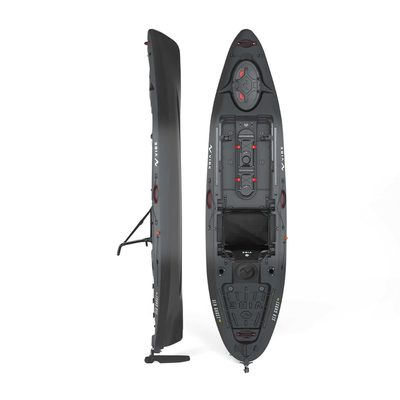
Field & Stream's test crew gave this boat their Best of the Test award, and the reason is the rudder. Few kayaks under $1,000 ship with a foot-controlled rudder, and on a windy lake that one feature changes the whole day, since you steer with your toes and keep fishing instead of picking up the paddle every thirty seconds to stay on a bank. The rest of the layout backs it up: six covered storage spots, long gear tracks, a transducer cavity, and a center console for small tackle.
The Hero Seat 2.0 is the other headline. Owners and testers call it one of the best seats in the class, with high and low positions for sight fishing or for hunkering down in wind. At 11 feet 6 inches and 33 inches wide, with a 425-pound capacity, it carries big anglers and full loads without riding low.
Two drawbacks are worth knowing before you buy. The weight comes first: the hull alone is 62 pounds, but rigged out it runs about 84 pounds, which is a two-person lift onto a roof rack or a cart job solo. Stability is good rather than great, since Field & Stream ranked it mid-pack and warned against rocky creeks and swift rivers, so treat it as a seated fishing boat you can stand in carefully on calm water rather than a stand-up barge. The rocker-style rudder pedals also drew a durability question from the test crew, so check the cables after your first season. Vibe headlines it at $999.99, though some color packages list higher, so check the color you want before you count it under the line.
Who it is not for: anglers who fish skinny creeks, and anyone who has to car-top solo without a cart. Vibe Sea Ghost 110 is the boat for lake and pond anglers who want the rudder advantage.
Lifetime Tamarack Angler 100 ~$450–650
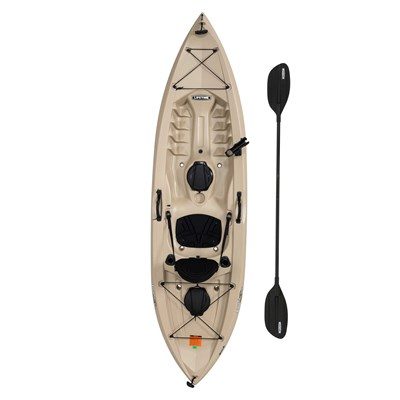
The Tamarack is the budget boat forum threads recommend most, and the reason is simple. Its street price starts at about half the Sea Ghost's, it weighs 52 pounds, and it is stable enough that owners toss it in a truck bed and go. The flat bottom and chine rails make it steady on calm water, the 10-foot length fits in a truck bed and turns in tight ponds, and it even comes with a paddle, which almost nothing else here does.
The ceiling is the seat. The stock pad and backrest are fine for a few hours, but owners report the clips bending or breaking first, and owners who fish all day end up swapping in a stadium seat. There are no gear tracks for accessories, the two hatches open into the whole hull, so owners say small items slide away from reach, and the 275-pound capacity is a hard limit once you add a crate, tackle, and water. Tracking is adequate, not precise, with a slight wander owners notice on longer paddles.
Buy it to learn whether kayak fishing is for you; skip it if you already fish all day every weekend, because the seat swap and the missing tracks will push you toward a second boat within a season. Lifetime Tamarack Angler 100 is the cheapest way to find out if kayak fishing sticks.
Pelican Catch Classic 100 ~$600
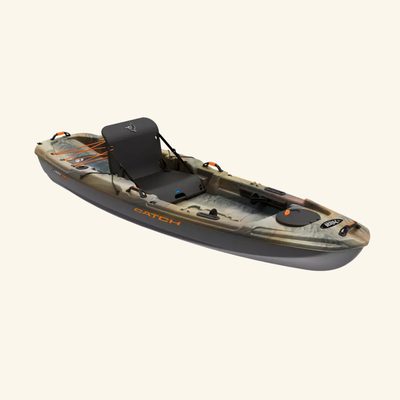
If standing up to cast is the point, this is the boat. The tunnel hull is wide and flat, the deck is open, and owners at 200-plus pounds report standing with confidence on calm water. A 6-foot-2, 225-pound owner fishing rivers, ponds, and coves two or three times a week called it extremely satisfying for comfort and fishability. The ERGOCAST seat adjusts to high and low positions, and at 58 pounds it is still manageable to load.
The tradeoff is speed. The Catch Classic 100 is slow, it plods rather than glides, and a loaded stern hurts the turning radius, so it is a boat for the water you can see across rather than for covering a big reservoir. The bow hatch is roomy but the opening is small and not fully watertight, so keep anything that must stay dry in a bag, and two rod holders sit behind the seat, which some owners say interferes with paddling. Pelican Catch Classic 100 is the stand-up pick for calm water.
Perception Pescador Pro 10 ~$899
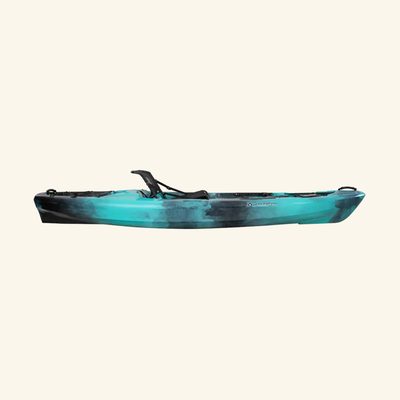
The Pescador line is the most-recommended boat in the forum threads we read, recommended more often than any other boat, and the Pro 10 is the version that fits this list with room to spare. The hull is derived from the original Wilderness Systems Tarpon design, a hull that has been around long enough to have nothing left to prove, and at 10 feet 6 inches it tracks straighter than the shorter boats here while still fitting on a car roof without a fight. It weighs 57 pounds and carries 325 pounds.
The seat is why owners stay loyal. The removable stadium-style seat adjusts high and low on the fly, so you sit up to spot fish and drop down when the wind picks up, and couples who own two of them describe sitting for hours without complaint. Gear tracks, bow and stern tankwells, and a fish-finder-ready console cover the rigging basics without drilling.
Two things to know. Standing is possible for balanced anglers, but this is a seated fishing boat first, and bigger anglers should not buy it for stand-up fishing. And like its bigger Pro 12 sibling, it has no rudder, so wind will cost you paddle strokes. The Pro 12 is the same boat stretched to 12 feet, but its price has crept to $999 at dealers, which is why the Pro 10 gets the slot here. Perception Pescador Pro 10 is the covering-water pick.
Ascend 12T ~$750
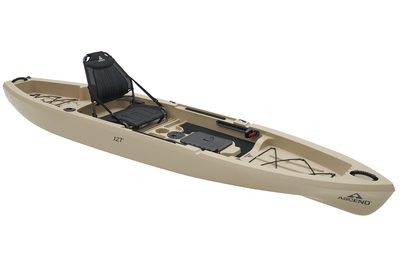
The Ascend 12T is the boat owners nickname the aircraft carrier. The tunnel hull and 12-foot length make it one of the most stable platforms under $1,000, with a flat standing deck, non-skid foam, and room for a crate, a cooler, and a full tackle load. Owners stand in it almost exclusively on still water, and at a $750 national price it costs less than the Sea Ghost while giving up nothing in stability. The deluxe adjustable seat, bow storage area, and stern tankwell round out the layout.
The price of that stability is speed and weight. At 77 pounds it is heavy to load solo, it paddles like a tank by several owners' own words, and it is not the boat for covering miles or for current. A few owners have found water getting into the hull around rod holders and scupper holes, and the factory hatch sealant sometimes needs a bead of silicone to stay dry. Ascend 12T is the steadiest deck under $1,000.
What to skip
Three boats that look like they belong here do not, and the reason in each case is price creep. The Old Town Topwater 106 and 120 were the classic sub-$1,000 picks, but the 120 now lists above $1,000, and the 106's successor, the Sportsman 106, lists above $1,000 at dealers we checked. Old stock on sale under the line is still a good buy, but do not pay four figures for a boat sold as a budget pick.
The Bonafide RS117 is the same story: listed at $999 in some roundups, $1,099 at dealers now, and 77 pounds with the seat. It is the upgrade many Tamarack owners name, but it is not a sub-$1,000 boat at today's prices. Pedal kayaks are out entirely, since established-brand pedal boats start around $1,500, so any "under $1,000" list that includes one is counting a sale price that does not exist.
Sun Dolphin is the cheap tier below this list. Owners are blunt about it, and while the boats work for testing whether you like the hobby, they are the first thing owners replace, so spend the extra money on the Tamarack instead.
How to choose (the three numbers that matter)
First, capacity. Take your weight, add 50 pounds for gear, a crate, and water, and buy a boat rated well above that total, since a boat loaded near its limit rides low, takes water through the scuppers, and loses the stability you paid for. The Tamarack's 275-pound rating is the tightest here, and it is the number that rules it out for bigger anglers.
Second, weight. The difference between 52 pounds and 84 pounds is the difference between fishing twice a week and fishing twice a month, because loading the boat is the part you feel before you ever touch water. If you car-top solo, the Tamarack and the Pescador Pro 10 are the easy lifts, while a truck or trailer opens up the Sea Ghost and the Ascend.
Third, length. Shorter boats turn in tight water and load easily, while longer boats track straighter and cover water faster. Ten feet is the pond and creek answer, twelve feet is the big-lake answer, and the 11-foot-6 Sea Ghost splits the difference, which is part of why it wins overall.
Bottom line
The Sea Ghost 110 is the pick if you want the most complete fishing kayak under $1,000 and can handle the weight, while the Tamarack is the cheapest way onto the water and the Catch Classic 100 is the boat for standing to cast. The Pescador Pro 10 suits anglers who cover water and want the best seat in the class for the money, and the Ascend 12T suits those who want the steadiest deck and do not mind paddling a tank to get there. Whichever you pick, rig it with a crate for your tackle (our tackle storage guide covers the systems that actually work), pair it with a simple spinning setup (see the best budget spinning reels), and fish the Texas rig vs Carolina rig techniques that suit the water you can now reach.