Start with the first trip, not the first purchase
A new kayak invites a spending spree: crates, tracks, rod holders, a fish finder, an anchor, a flag, a net, a cup holder. It all bolts on somewhere, and every box looks like progress, until the first trip reveals the rod holder sitting where your paddle stroke goes.
Across the veteran threads and beginner guides we read, the advice is consistent: buy the safety gear, a decent paddle, and one rod, then go fishing. Everything else gets earned over the next few trips, once you know where your hands go and what your water demands.
What you need on day one
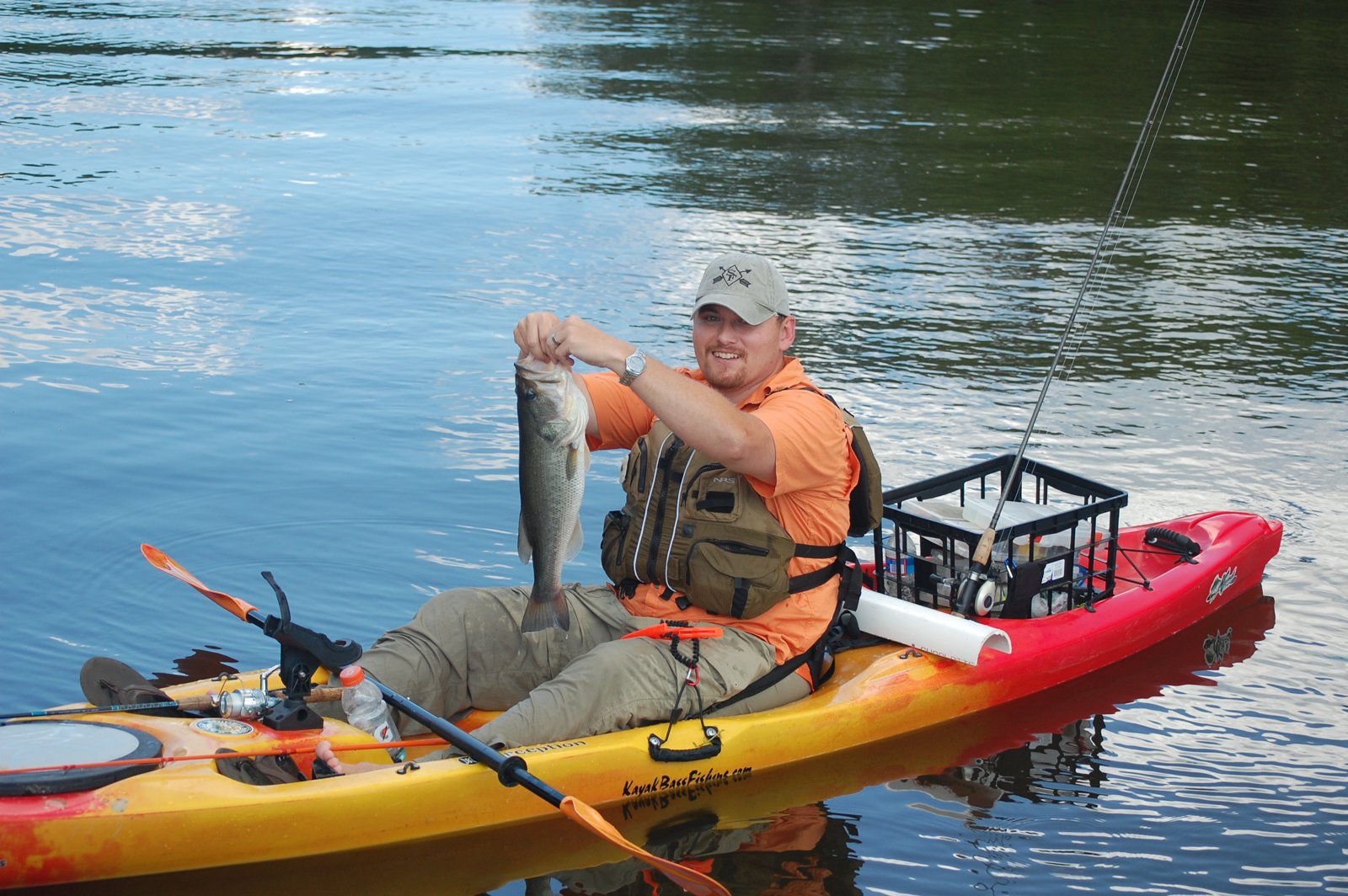
A PFD you will actually wear. A PFD (personal flotation device) is the one item every source agrees on, and the agreement is about wearing it. A PFD riding in the tankwell (the open cargo well behind the seat) is decoration. Fishing PFDs use foam, sit high on the back to clear a kayak seat, and carry front pockets for pliers and a few lures. Expect $70 to $140. Inflatable PFDs are lighter and cooler, but they only count when worn, and they need a working CO2 cartridge. Clip a whistle to the PFD too: a few dollars, and part of the legal minimums, along with a white 360-degree light for paddling after dark or before dawn. For the full rundown, see Best PFDs for kayak fishing.
A paddle that fits the boat. Your paddle is your engine, your steering, and your way home if anything else fails. Match the length to the width of the boat and the height of the seat. Wider boats need longer paddles, and 240 cm and up is the common range for the wide fishing hulls beginners buy. A basic paddle runs $50 to $80. A lighter fibreglass paddle costs more, about $125 to $180, and pays for it in shoulders that still work at noon. Clip a leash to it, because a dropped paddle in open water turns a fishing trip into a swim.
One rod and a small tackle box. Bring one rod on trip one: a 6 foot 6 inch to 7 foot medium-power, fast-action spinning rod covers most bass water, and spinning is the forgiving choice while you learn to cast sitting down. Two rods rigged differently is the working standard once you settle in. The tackle box stays small too, one compact box with three or four lures: a soft-plastic worm, a spinnerbait, a crankbait, and a topwater frog.
A milk crate. The default kayak tackle station is a milk crate behind the seat. It holds tackle boxes and a water bottle, and a few lengths of PVC pipe turn it into rod holders for about eight dollars. The crate is cheap and it moves between boats.
A way to stay put. Wind shoves a light kayak off a spot in seconds. A small anchor works, and a drag chain, a short length of chain that drags along the bottom to slow your drift, is the safer alternative several anglers recommend. An anchor trolley is a line along the side of the boat that lets you slide the anchor point from bow to stern without leaving your seat. One warning: anchoring in moving water is dangerous, because current pulls on the boat and can pull it under. Learn it in calm water first.
A net, pliers, and a dry bag. A landing net with rubber mesh keeps treble hooks and fish spines away from your hands and keeps fish from coming off at the side of the kayak. Pliers live in the PFD pocket, and a dry bag holds your phone, keys, and wallet, because everything in a kayak gets wet eventually.
Water, sun protection, and a first-aid kit. A seated kayaker sits low and exposed, with sun bouncing off the water from below, so bring water, sunscreen, a hat, and long sleeves, plus a small first-aid kit in a waterproof bag. A small cooler with water and a sandwich covers the same need; the Best fishing coolers for kayaks & bank anglers guide sorts out which fit behind a kayak seat.
Picking the boat
Most fishing kayaks are sit-on-top boats: you sit on an open deck rather than inside a closed hull, and that is the right call for a beginner. A sit-on-top drains itself, gives you room for a crate and rod holders, and lets you climb back on after a tip. A sit-inside kayak stays drier in cold weather, but it is harder to get back into when swamped and has less room for gear.
Length runs 10 to 12 feet for most beginners. Shorter boats turn easily and car-top without a fuss, which suits creeks and small ponds. Longer boats track straighter and handle big water better, and bass anglers on large lakes tend toward 12 or 13 feet. Width is what makes a boat feel stable: most fishing kayaks run 32 to 36 inches wide, and a hull 34 inches or wider is what lets an angler stand to fish. The trade is real: wide boats are stable and slow, and owners of the widest hulls call them barges with a shrug.
Weight matters as much as stability. Fishing kayaks run 75 to 100 pounds, and lifting one onto a roof rack alone is heavier and more awkward than most buyers expect. Confirm you can load it by yourself before you buy, and budget for a kayak cart if your launch involves any distance: dragging a hull across gravel wears a hole in it. For specific boats, see Best fishing kayaks for bass under $1,000.
Test before you buy: demo days, rentals, and local kayak fishing groups all give you a test ride, and the wrong hull for your water is a pain you feel every trip.
The one real argument in the sources is whether to buy cheap first or buy once. The budget case is strong: a used boat in good shape runs $400 to $900, a new 10 to 12 foot sit-on-top $600 to $900. Anglers on Reddit report the same beginner hulls far cheaper at warehouse clubs: the Lifetime Enclave runs $550 at Costco, cartop kit included, against an $800 list price. Facebook Marketplace turns up used kayaks in the $200 to $300 range. The other side says a cheap starter leads to a bad first experience and an upgrade anyway: buy a reputable boat with a good seat and worry about outfitting later. Both are right. The deciding question is commitment: unsure, rent or buy used; sure you will stick with it, spend the money on the hull and add gear slowly. Kayak fishing on a budget works through the same math in more detail.
What to buy later
A fish finder. This is the one item the sources genuinely split on. One camp calls a finder essential for finding fish and for knowing the depth under the boat. The majority says wait. Anglers who buy electronics first end up watching a screen instead of learning the water. Fish a few trips, learn your layout, then decide where the transducer (the sonar sensor that sits in the water) and battery go. Drilling holes for wiring before you know your layout is a regret you cannot undo.
A pedal drive or a motor. Pedal drives keep your hands free for casting and cover more water, running $1,300 to $3,800 for the boat. Motors run $2,500 to $5,000, need registration in most states, and add battery weight and wiring. Neither belongs on a first boat. Paddle first: a paddle kayak also fishes water that would foul a drive, like shallow weed beds and skinny creeks. Rent a pedal drive before you buy one.
Everything else. Rod holders, a better seat, a stake-out pole, a measuring board, a camera mount: add one thing per trip, after you have fished the boat enough to know where it goes. Paddle the bare boat three or four times before you drill anything. How to rig a fishing kayak for bass lays out that order step by step.
What to skip
Overpacking. This is the regret that comes up most in the forums we read. Veterans describe the same arc: six rods and a pile of tackle boxes on trip one, shed down over time to two or three rods and one or two small boxes. One angler put it plainly: if you are not catching fish on any of the six rods you have rigged, the problem is probably where you are casting, not what you are throwing. A loaded kayak is also a heavy one: fully rigged boats run 140 to 220 pounds with gear. Keep the deck clear and loading the boat stops being a chore.
Accessories before paddling. Do not buy mounts and tracks based on a video. Paddle the boat a few times, see where your hands rest, then decide. A hole in a hull is permanent in practice.
The cheapest kayak, then the upgrade. A bargain hull with a bad seat and a tankwell you cannot reach costs more than the good boat once you replace it six weeks later. Buy the boat that fits your water, even if it arrives bare.
Your first trip
Pick small, calm water close to shore and keep it to two or three hours. Practice casting while sitting in the kayak on grass first. From a seated, moving platform you have less leverage, your casts run shorter, and the rod tip needs to clear the water on the hookset. Tie the boat down with cam straps, not ratchet straps: a ratchet strap over-tightened can crack a plastic hull.
Fish slowly: anchor or drag your chain, work one small stretch of water for about ten minutes, then move. Retrieves from a kayak often run down the shore rather than up it, so expect your angles to feel different. Keep your head over the center of the boat and do not lean toward the net when a fish comes to the side. That lean is how people go in.
The bottom line
A PFD you will wear, a paddle that fits, a whistle, one rod, a small box of lures, a milk crate, and a way to hold still. That is the kit. Buy the boat that fits your water and your back, test it before you pay, add one piece of gear per trip. The anglers with the cleanest setups bought the least at the start.