
A cooler is the one piece of fishing gear that fails quietly. You pack it in the morning, fish all day, and find warm water and floating sandwich bags by noon. On a kayak the stakes are higher, because the wrong cooler is also too big, too heavy, or sliding around behind your seat. The right one fits the tankwell (the open storage well behind the seat) and holds ice through a full day.
Our verdict up front: buy the YETI Roadie 24, about $200 to $250. It held ice for about three days in lab tests and fits most kayak tankwells. If the price is too high, the RTIC 20 QT keeps ice nearly as long for about $135 to $169. For a tight tankwell, the Engel 19 QT Drybox costs about $90 and doubles as a waterproof box for your phone. The YETI Hopper Flip 18 is the soft cooler to buy at about $225 to $300, and the Lifetime 28 is the budget hard cooler at about $89 to $125.
Two rules came out of the research. First, size beats ice life on a kayak. A 45-quart rotomolded box (a thick plastic shell with foam insulation poured inside the walls) holds ice for days, but full it is a two-person lift, and it will not fit most tankwells. The sweet spot is 20 to 24 quarts. Second, marketing day counts come from lab conditions, not fishing trips. Owners who pre-chill, use block ice, and open the lid rarely get the long numbers. Owners who load warm drinks and open it every twenty minutes get about half that.
YETI Roadie 24 ~$200–250
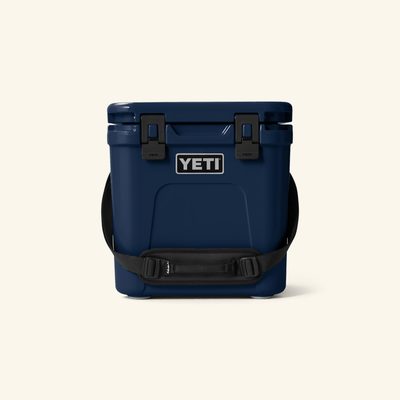
The Roadie 24 is YETI's small hard cooler, built from the same rotomolded plastic as the big Tundra boxes. It lists at $250 and goes on sale near $200. It weighs 13.1 pounds empty and holds about 18 cans plus ice. The current 2.0 version adds a drain plug and a shoulder strap.
It won on convergence. GearJunkie's lab test kept food safe for about three and a half days, and owners report the same range with pre-chilling and block ice. REI reviewers give it 4.7 out of 5 stars. The QuickLatch opens with one hand, which matters when you are holding a rod in the other. At about 17 inches long, it fits most kayak tankwells and straps down behind the seat.
Two downsides. First, the lid gasket is not fully airtight. Testers have found air and water leaking along the seam. Second, it is heavy for its size, and several kayak anglers on Reddit said it is too big for a small kayak. It is also not bear-resistant certified, so it is the wrong pick for backcountry camping.
Not for: anglers in a 10-foot kayak with a small tankwell, or anyone who needs a bear-resistant box. That angler should look at the Engel 19 below, or the Lifetime 28 for the bank.
RTIC 20 QT ~$135–169
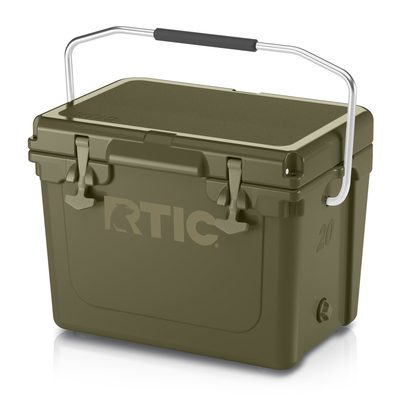
The RTIC 20 is a rotomolded hard cooler that lists at $169 and sells near $135. It holds about 20 cans with ice.
It won on value. Owners report three to four days of ice in hot weather, close to the Roadie's three and a half. One five-year owner says his is still going after years of weekend use. That is about 90 percent of the YETI's ice life for roughly half the price.
Two downsides, and the second one matters. First, the latches feel flimsy next to the YETI's. Second, the warranty is a moving target. RTIC cut its warranty from seven years to 30 days in 2017, and the terms have changed more than once since. Some owners report warped lids and wavy gaskets that RTIC would not stand behind. Buy from a retailer with easy returns, and check the lid seal the day it arrives.
Not for: anglers who want a warranty they never have to argue about. That angler should pay the YETI premium above.
Engel 19 QT Drybox ~$90
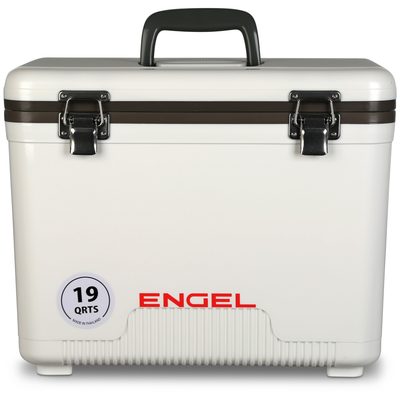
The Engel 19 is a drybox first and a cooler second. It is a hard plastic box with an airtight gasket and stainless steel latches. It lists at $90. It weighs 5.5 pounds empty, the lightest hard pick in this guide.
It won on fit. A kayak angler posted a photo of one sitting in the rear compartment of an Old Town 120 PDL, fitting like it was made for the boat. The airtight seal keeps a phone and keys completely dry. Rod holders are an add-on accessory, not built in.
One real limit: ice life. Engel claims up to two days of ice, but one owner reported ice half melted after eight hours. This is a day-trip cooler, not a multi-day box. The plastic hinges are also the weak point, with owners reporting creaky latches after about a year.
Not for: multi-day trips, or two anglers sharing one cooler for a full day. Nineteen quarts gets tight fast. That angler should step up to the Roadie 24 or the Lifetime 28.
YETI Hopper Flip 18 ~$225–300
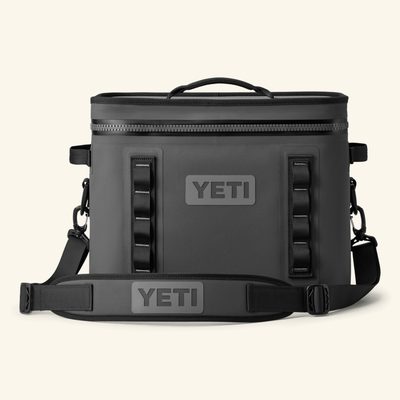
The Hopper Flip 18 is YETI's soft cooler, built from a puncture-resistant DryHide shell with ColdCell foam insulation. It lists at $300 and goes on sale near $225. It holds 16 cans plus ice and weighs 5.1 pounds empty.
It won on the zipper. The HydroLok zipper is the one soft-cooler zipper that owners and testers agree is truly leakproof. Testers tipped it upside down with water inside and got zero spill. Testers report about two to two and a half days of ice. The soft body squeezes behind a kayak seat or into a day hatch where a hard box will not go.
Two downsides. First, the zipper is stiff and needs two hands, especially when new. Second, zippers are the weak point over time. Two owners reported zipper failures after two and five years of use. YETI does warranty zippers, but a failed zipper still ends a trip.
Not for: multi-day trips without re-icing, or anglers who want to open the cooler one-handed while holding a fish. That angler should buy the Roadie 24 and accept the hard box.
Lifetime 28 ~$89–125
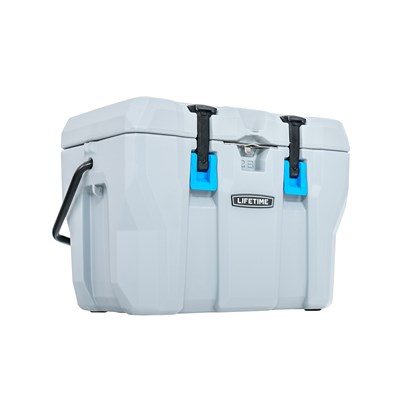
The Lifetime 28 is a hard cooler that lists at $119 and sells for $89 to $125 at Amazon and Walmart. It holds 20 cans, weighs 17.35 pounds empty, and carries a five-year warranty. It is bear-resistant certified by the IGBC (the Interagency Grizzly Bear Committee, which tests coolers against real bears), and it is made in the USA.
It won on ice for the money. One owner kept ice for three days in heat over 100 degrees, and five days with a pre-chilled cooler. At about a third to half the price of the same-size YETI, it is the pick for a bank angler who drives to the water and wants real ice life without the premium badge.
Two downsides. First, owners report it leaks when tipped, so keep it upright. Second, some owners report the lid warping over time, which shortens ice life.
Not for: kayak anglers who need a cooler that can tip in a tankwell and stay sealed. That angler should buy the Engel 19 or the Hopper Flip 18 instead.
What to skip
Pelican 20QT Elite. The lifetime guarantee sounds great, and the latches are easy to use with wet hands. But Outdoor Gear Lab's test gave it the worst insulation result in its class, about 1.4 days below 40 degrees, and a multi-year owner reports only about a day of ice in summer. A strong warranty does not make up for weak insulation.
Coleman Xtreme. The old ones lasted 10 to 15 years, and owners still swear by them. But the current price sits close to better-built coolers, and a 2026 video documents the community moving on: ice gone after day one, lids and hinges wearing out after a few seasons. If you already own one that works, keep it.
Igloo BMX 25. Light and cheap, but owners report the lid ripping off its hinges with a gentle yank, and the 25-quart size has no drain plug. Real ice life in heat runs about two days, against a four-day claim.
Ozark Trail 26. One of the cheapest rotomolded coolers, and some owners get four to five days of ice with pre-chilling. But the seal is inconsistent: owners report lids warping in the sun and coolers leaking on their sides. One owner returned his after losing half his ice by day two.
Buying advice: measure first, then buy
Measure the tankwell before you order. A standard milk crate measures about 13 inches square, and most kayak tankwells are built around that footprint. The Roadie 24, Engel 19, and Hopper Flip 18 all fit a standard well, but wells vary by boat.
Pre-chill and use block ice. Put a bag of ice in the cooler the night before, dump the meltwater, then load cold drinks and a block of ice. Owners who do this get the long numbers in this guide. Keep the ice-to-food ratio near two to one on hot days.
Soft coolers fit where hard ones do not. A soft cooler squeezes behind a seat, under bungees, or into a day hatch. A hard cooler needs a tankwell that fits it. If your kayak has no tankwell, buy soft. If it does, a hard cooler holds ice longer and doubles as a seat or a cutting board.
Tie it down. A loose cooler in a kayak is a cooler in the lake. Strap it down before you launch, not after the first wave.
Bank anglers: size up. From the bank, a 28-quart box like the Lifetime is the floor, not the ceiling, and wheels help. Our Best Fishing Kayaks for Bass Under $1,000 guide covers the boats these coolers ride in, and Best PFDs for Kayak Fishing covers the life jacket that goes with them.
Bottom line
Buy the YETI Roadie 24 for the best all-round kayak and bank cooler: about three days of ice and a size that fits most tankwells. Buy the RTIC 20 QT if you want nearly the same ice for about half the price. Buy the Engel 19 QT Drybox for the tightest tankwell. Buy the YETI Hopper Flip 18 if you need a soft cooler that will not leak when it tips. Buy the Lifetime 28 for the bank, where its price and ice life beat everything near it. Measure the well first, pre-chill the night before, and skip the Pelican, the Coleman, and the Igloo.