The one number that predicts the day
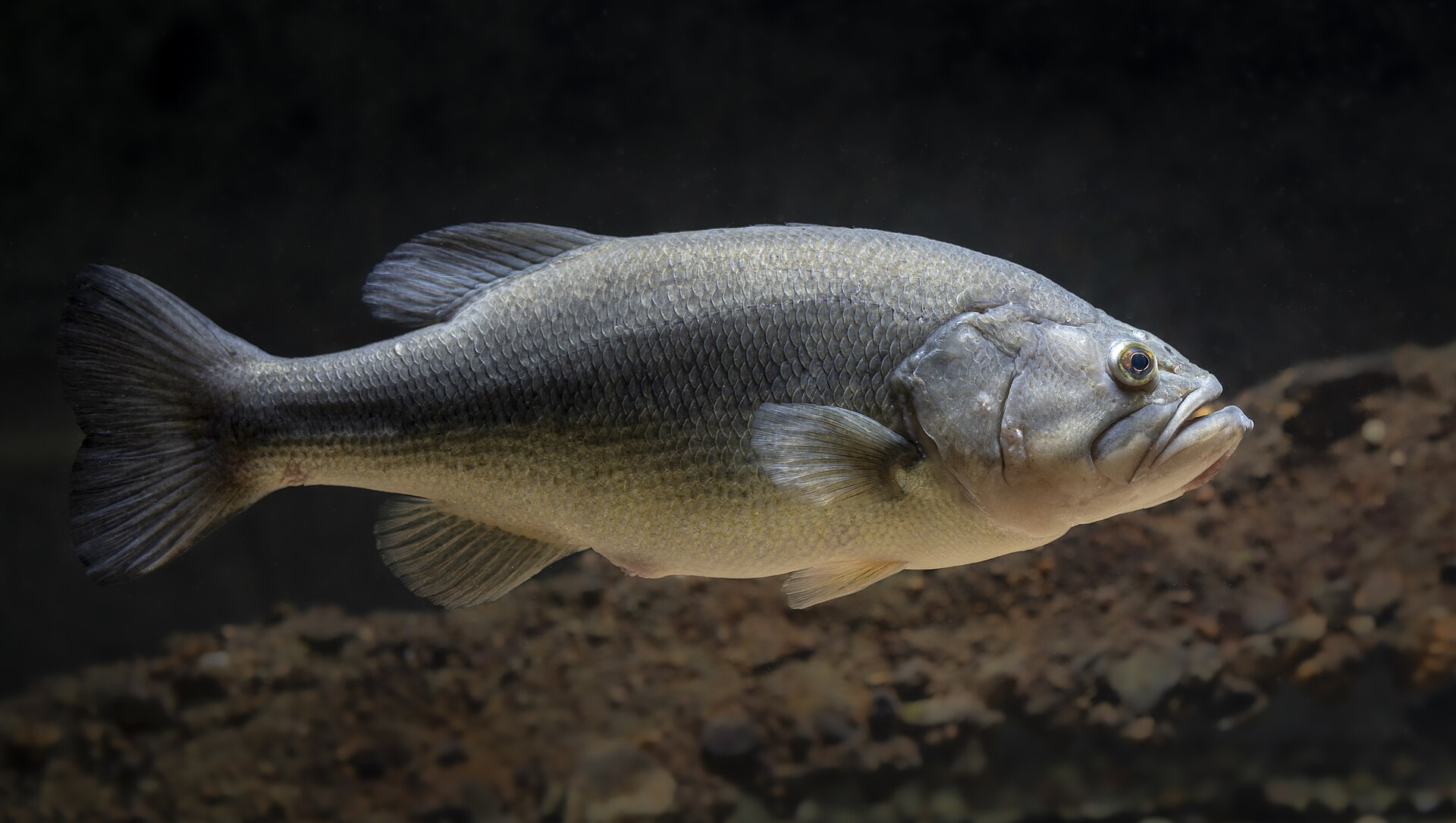
Ask a dozen bass anglers what matters most on a given day and you will hear a dozen answers. Wind, barometric pressure, moon phase, lure color. The one number behind every answer is the water temperature. Bass are cold-blooded, so the water sets how fast they move, how often they need to eat, and how far they will travel for a meal.
The biology is simple. A bass's metabolism roughly doubles for every 18 degrees the water warms, so a fish in 45-degree water digests a meal at about a quarter of the pace it manages in 80-degree water. That is why the same lure burned across a point in July gets ignored in February. The fish is not being picky. It is running on a different clock.
How to read the number before you trust it
Measure at the depth the bass hold, not at the surface. A shallow pocket can read 60 degrees on a sunny afternoon while the main lake sits in the low 50s. The temperature that matters is the one at the depth the bass are holding. In the pre-spawn, that is usually 55 to 60 degrees for largemouth, a couple of degrees cooler for smallmouth and spots. Your graph reads the surface. A probe lowered on a line tells you what the fish actually feel.
Watch the trend as well as the reading. Anglers argue about magic numbers endlessly, but one theme kept coming up from anglers: the direction of the change beats the absolute number. Rising water wakes fish up. Falling water shuts them down. A lake at 45 degrees on a warming trend can fish better than the same lake at 52 the morning after a cold front.
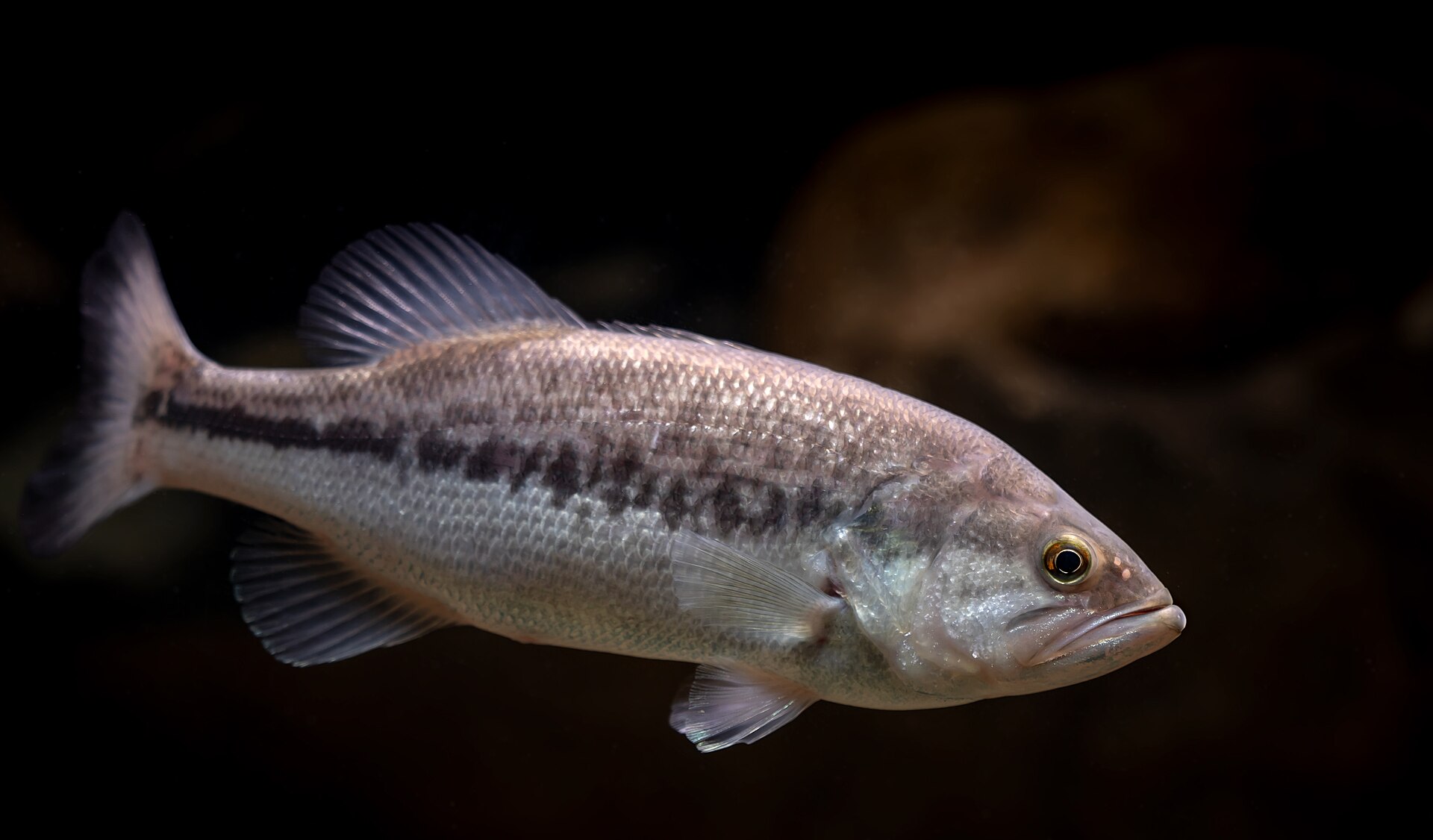
Remember that smallmouth and largemouth read the same water differently. Smallmouth stay more active in cold water but slow down sooner in the heat, while largemouth are lazier in the cold and more tolerant of heat. At 78 degrees a largemouth pond can fish great while a smallmouth lake goes quiet. The bands below assume largemouth unless noted.
Below 40 degrees: slow, deep, and still catchable
Bass never stop eating in cold water. They just eat rarely and move little. At 40 degrees a bass that fed every day in July may feed once in four days. The fish hold deep and tight: bluffs, channel bends, standing timber, main-lake points, often 18 to 30 feet down. Find one fish and you have probably found several, because winter bass group up in the same holes.
Depth is not the whole story. The warmest water in the system matters more than the deepest water. Creek mouths run warmer, and sun-warmed rock, wood, and shallow flats can hold the most active fish in the lake. The best bite usually comes late morning to mid-afternoon. Under the ice, the same physics keeps bass catchable: water is densest at about 39 degrees, so the lake bottom sits near 39 while the surface is locked at 32.
What to throw: a suspending jerkbait with pauses of five to fifteen seconds, a blade bait, a hair jig, a Ned rig, a drop shot, or a float-n-fly. Put the bait on the fish's nose, because it will not chase, though smallmouth give you a little more room than largemouth down here. Treat 38 to 40 as a practical floor many anglers observe, not a biological limit.
The 40s: short windows and tight groups
The 40s are winter fishing with the edges softening. Feeding windows are short and usually land in the warmest part of the day. Bass sit in their wintering holes in tight groups, deeper than at any other time of year, and in the low 40s they hug the bottom. The fish that do feed want the bait presented vertically or nearly still: a Damiki rig (a small soft-plastic minnow fished straight up and down, just above the fish), a blade bait, a finesse jig, a Ned rig, or a suspending jerkbait with very long pauses.
Smallmouth stay noticeably more active than largemouth in this band, while largemouth need an even slower approach.
Cover water slowly until you find a group, then work it thoroughly, fishing at the fish's speed. Our full breakdown of the jerkbait approach is in How to Fish a Jerkbait.
The 50s: the turn
Everything changes in the 50s. In spring, bass leave their wintering areas and stage (pause and feed on the way to the spawn) on main-lake points, channel swings, and the first drop next to flats. The biggest females of the year show up now, at their heaviest weight of the season, and anglers point to 55 to 65 degrees as the best big-fish water.
In fall, the 50s are the peak feed: bass feed at their hardest as they pack on weight before winter. They group up on deep weeds, long tapering points, and channel bends, which makes for hero-or-zero days.
The same number means different fish depending on the direction. Fifty-five degrees in April means bass staging for the spawn. Fifty-five in October means shad in the creek arms and bass feeding harder than at any point in spring.
What to throw: jerkbaits, swimbaits, jigs, slower crankbaits, lipless crankbaits, and spinnerbaits slow-rolled in the lower 50s. Topwater starts working again around the mid-50s in spring, and in fall it stays in the lineup as long as bait is showing high in the water.
The 60s: the spawn window
Sixty degrees is the closest thing to a magic number in bass fishing, and it belongs to the spawn. Males sweep nests on hard bottom and gravel in two to eight feet of water, starting around 60 degrees, with most egg-laying happening between 62 and 65. The catch is stability. Bass need 58 to 60 degrees held for three or four nights in a row, not a warm afternoon. A daytime reading of 61 that drops to 55 overnight is not enough.
Daylight matters too. Rising temperature plus lengthening days triggers the spawn, so a warm snap in January will not put bass on beds. And the visible shallow spawn is not the whole spawn: the biggest fish spawn earlier and deeper than the beds you can see, sometimes in eight to twelve feet of clear water. A cold front pushes fish back deeper, and sometimes they spawn deep instead of waiting it out.
After the spawn, males stay shallow guarding fry while females slide out to the first point and start feeding again. In fall, the 60s bring shad into the creek arms, and the turnover arrives as the surface cools through the low 60s into the 50s.
What to throw: squarebills, lipless crankbaits, spinnerbaits, swim jigs, and bladed jigs around staging areas. On the beds, a weightless stick bait, a tube, or a Texas rig fished dead still. In fall, do not put the topwater away in the 60s. Poppers, walking baits, buzzbaits, and frogs all still catch fish.
The 70s: prime time
The 70s are the comfort zone. The peak aggression window is 65 to 75 degrees. Largemouth feed hardest from about 65 to 80 degrees. Smallmouth peak a little narrower, roughly 65 to 72, and start slowing above 75. After the post-spawn recovery, bass feed hard and chase. This is the fastest fishing of the year: topwater at dawn, swimbaits and crankbaits by day, retrieves at a healthy clip.
As the 70s wear on, the fish split: shallow shade early and late, deep structure in 15 to 25 feet at midday. In late summer the big schools break into isolated fish tucked into brush and stumps. Slow down and leave the bait in the cover. A two-to-three-minute soak in one brush pile beats ten quick casts past it.
The 80s and above: heat, oxygen, and the thermocline
Hot water is a squeeze, not a shutdown. Warm water holds less oxygen, so bass get trapped between the hot surface and the deep water below, where the oxygen runs out. The key structure of summer is the thermocline: the band of water where the temperature drops fast with depth, separating the warm surface layer from the cold deep layer. A fish finder shows it as a fuzzy band a couple of feet thick. In murky water it may sit at eight to ten feet. In a clear reservoir it can be 25 to 30 feet down.
Fish the structure and cover that intersects the thermocline. On most lakes, never fish below it: in fertile or murky water there is no oxygen down there. Clear, infertile lakes are the exception, where light reaches deep enough for plants to make oxygen below the thermocline. On the typical lake, if the thermocline is at 15 feet, do not fish anything deeper than 15 feet. Shade helps too: a weed mat or a dock can drop the water underneath by 5 to 10 degrees, and current and green vegetation add oxygen back in.
Feeding windows compress to dawn, dusk, and night. Deep-diving crankbaits, jigs, swimbaits, and bladed baits fished at thermocline depth do the daytime work. Frogs and punch rigs work the mats. After dark, a black spinnerbait is a summer classic. Our guide to that shift is Night Fishing for Bass: Lights, Lures, Safety.
Above 90 degrees, the fishing gets genuinely hard. A largemouth's aerobic scope, its ability to take in oxygen and use it, peaks near 72 to 81 degrees and declines above that, so by the mid-90s fish are losing weight. They hold in the deepest cool water or in strong current and mostly wait it out. In very warm water, use heavy line, get them in fast, and keep them wet while you unhook.
The turnover: the messy week
All summer, a lake sits in layers: warm water on top, cold water below, the thermocline between them. As the surface cools through the low 60s into the 50s, the surface water gets denser and sinks. The layers mix. The whole column turns over.
Fishing usually goes tough for a few days to about a week while the fish adjust. The water can smell like rotten eggs where the deep water comes up. Then the fish scatter and feed actively again, chasing shad in coves and suspending over humps and points. The exact temperature varies by lake, so treat the turnover as a process, not a magic number. One dissent: a Bassmaster smallmouth writer calls it a great time, because it pushes smallmouth shallow and the best lure is a jig.
Our full guide to the season around the turnover is Fall Bass Fishing: How Cooling Water Changes Everything.
The cheat sheet
| Water temp | Where bass are | How they feed | What to throw |
|---|---|---|---|
| Under 40°F | Deep and tight, channels and bluffs; sun-warmed pockets | Rarely, opportunistically | Suspending jerkbait, blade bait, hair jig, Ned rig, drop shot |
| 40s°F | Wintering holes, tight groups, bottom-oriented | Short windows, warmest part of day | Jerkbait with long pauses, blade bait, Damiki rig, finesse jig |
| 50s°F | Staging on points and ledges; fall feed-up | Hard, in groups | Jerkbait, swimbait, jig, lipless crankbait, slow-rolled spinnerbait |
| 60s°F | Spawning flats and nests; fall creek arms | Aggressive; spawning and guarding | Squarebill, spinnerbait, swim jig, weightless plastics, topwater |
| 70s°F | Shallow shade early and late; deep structure midday | Peak aggression, fast chases | Topwater, spinnerbait, swim jig, crankbait, swimbait |
| 80s°F and up | At or just above the thermocline; shade and current | Dawn, dusk, and night windows | Deep crankbait, jig, frog, punch rig, black spinnerbait at night |
Mistakes that cost fish
Trusting the surface reading. The surface is the warmest layer on a sunny day and the coldest on a cold morning. Measure where the fish are.
Fishing below the thermocline in summer. On most lakes there is no oxygen down there, and there are no bass either. Clear, infertile lakes are the exception. If your graph shows the fuzzy band at 15 feet, that is your floor.
The bottom line
Water temperature is the closest thing bass have to a schedule. Cold water means slow fish packed tight in deep holes or sun-warmed pockets. The 50s mean staging and the heaviest feeding of the year. The 60s mean the spawn. The 70s mean the fastest fishing of the year. The 80s mean the thermocline, dawn and dusk, and fish squeezed between heat and low oxygen. Once you know what bass do at each temperature, you stop fishing the calendar and start fishing the lake in front of you.