The spawn comes in waves
Spring crappie fishing offers some of the most accessible action of the year, and the easiest fishing to mistime. The fish move shallow to spawn and stack up around cover. Then a cold front rolls through, the beds empty, and the angler who showed up on the calendar date instead of the conditions goes home empty.
The short version: start watching the water when it hits the low 50s, fish the staging areas, then follow the fish onto the beds once the water at spawning depth reaches the high 50s into the low 60s. The spawn runs in waves over three or four weeks, not one weekend, so bring jigs and minnows and fish the wood.
When to go
Water temperature, measured at depth. Crappie stage in the 50s and start nesting when the water where they spawn reaches about 56 to 60 degrees. The peak bite runs through the low to mid 60s. Measure the temperature at the depth the fish are holding, not at the surface. A sunny afternoon can warm the top foot by several degrees while the water six feet down is still in the 50s.
That said, the textbook number is not a law. Anglers who fish the same waters every day report big females sliding shallow in warm spells well before the water hits 60. One Texas angler who fishes seven days a week has watched spawning in water colder than the books allow. Treat 56 to 60 as the working window and trust what the fish are doing over what the thermometer says.
The calendar, roughly. In Florida and south Texas the spawn can start in January, while Mississippi turns on in mid-March and Arkansas runs late March into early April. Mid-country lakes follow in March and April, and the far north does not spawn until May or June. Shallow bays and dingy water warm first and spawn a week ahead of the deep, clear end of the same lake, and the upper ends of reservoirs usually spawn first, with the bite moving down-lake as the water warms.
Daylight and dogwoods. Spawning tracks the lengthening days as well as the warming water. One long-running study on Table Rock Lake found spawning starting at about 13.2 hours of daylight and ending near 14.6. On the bank, the folk marker is the dogwood and redbud bloom. When the redbuds are out, the crappie are moving.
Cold fronts stall the spawn, they do not end it. A front pushes fish off the beds and back to deeper water or tight into cover, where they hold until conditions recover. The delay runs a day to a week. Slow down, fish vertical, and work steep banks near the shallows.
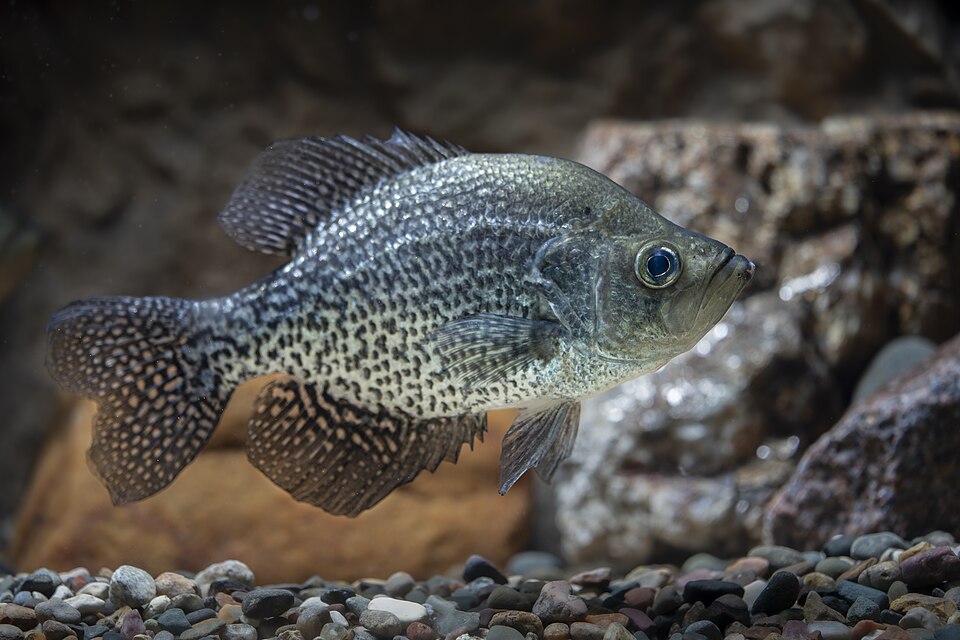
Males first, females deeper. The males arrive first, build and fan the nests, and turn dark, almost black, at the peak of the spawn. The females hold just off the beds in slightly deeper water, often 6 to 8 feet down, and slide in to lay eggs in batches over several weeks. The biggest fish tend to spawn first, so if you are catching nothing but small dark males, the big females are probably holding deeper, right behind you.
Where they are
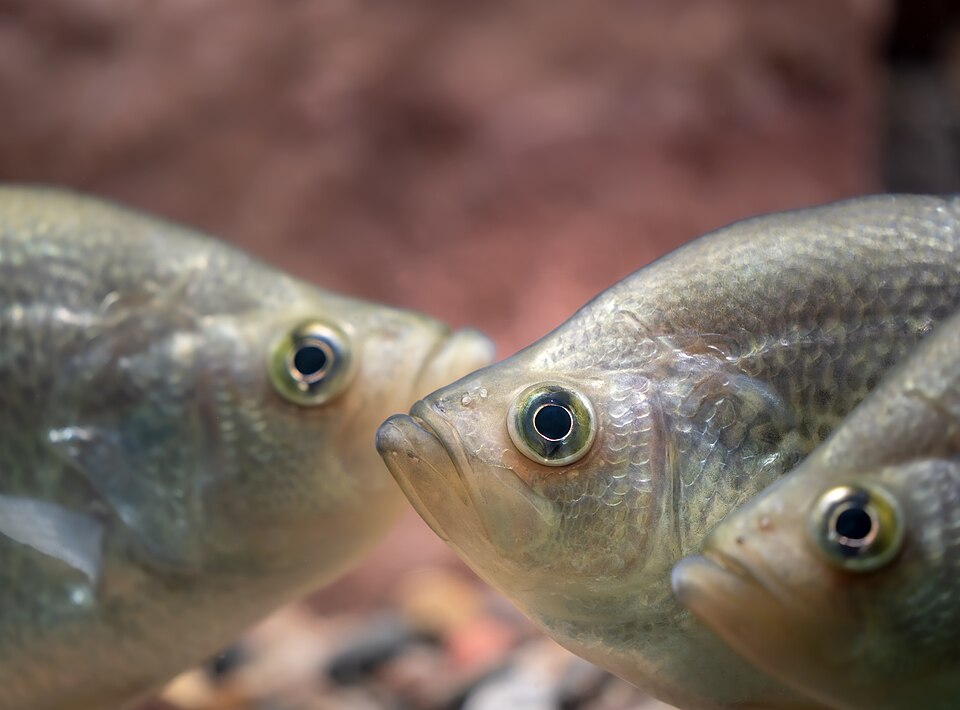
Find the wood and you have found the fish. In spring, crappie want cover in shallow water: deadfall, brush piles, flooded timber, docks, stake beds, beaver dams. A brush pile an angler sank himself, an old Christmas tree with a block tied to it, draws crappie as reliably as any natural cover.
Pre-spawn fish stage on structure near the spawning areas, in 7 to 15 feet of water, and the biggest females hold there longest. Once the water warms, the fish push into 1 to 6 feet of water around the cover. Bank anglers do well in spring precisely because the fish come to them: in Texas, anglers catch spawning crappie in a foot of water from the bank in March.
Fish the warm water first. Shallow bays, the backs of coves, and the upper ends of reservoirs warm earliest, and on a big lake the spawn can be a week ahead in one arm and barely started in another. Small waters warm fast too, so farm ponds and little lakes fish early. Our Pond Hopping: How to Fish Small Water guide covers the approach for those overlooked spots.
The tackle
You do not need crappie-specific gear to start, but the right setup is light. A 6- to 7-foot light-power spinning rod with a small 1000- to 2000-size reel covers most spring crappie fishing. Spool it with 4-pound monofilament, the consensus among crappie anglers, and it matters because crappie mouths are paper thin. A hard hookset tears the hook out, so lift smoothly instead.
Our Best Ultralight Spinning Rods for Panfish & Finesse Bass guide covers the light end of the range, and our Best Spinning Combos Under $100 for Beginners guide has ready-made setups at the right spec.
Jigs. The default spring jig is a 1/16-ounce head with a small soft-plastic body, about 2 inches long. Go lighter, 1/32 ounce, for the shallowest water and the slowest fall, and heavier, 1/8 ounce, when the wind picks up or you need to punch through a grass line. White and chartreuse are the colors anglers name first. Match the water: natural and translucent in clear water, bright and high-contrast in stained water, dark or glow in muddy water or low light. No single color always wins, so carry a few and let the fish pick.
Minnows. A live minnow under a bobber is a reliable choice when the fish are shallow or the bite is slow. Use fathead minnows or shiners, 1.5 to 2.5 inches long, on a number 4 or 6 light-wire Aberdeen hook, a thin-wire hook with a long shank that is easy to remove from a crappie's soft mouth. Hook the minnow through the lips or just behind the dorsal fin, the fin on its back, so it stays lively.
Floats. A slip float is a bobber that slides freely on the line and stops at a small knot or stopper, so you can set the depth precisely and still cast. It holds the bait in the strike zone over brush and shows the lightest bites, while a fixed float works for active fish in shallow water. Load the float correctly: just enough weight to stand it upright, so a fish that lifts the bait lays the float over. Too big a bobber kills bite detection.
Four ways to catch them
Fan-cast the transition water. Before the fish commit to the beds, they hold in 8 to 12 feet of water just off the spawning cover. Fan-casting means casting in an arc across a stretch of water to cover it piece by piece, retrieving slowly and steadily and varying the speed until the bites come. Small paddletails and micro jerkbaits work as search baits here: find the aggressive fish first, then downsize to a jig.
Spider rig. Spider rigging means fishing six or more long rods, 10 to 14 feet, fanned off the bow of the boat while slow-trolling at about half a mile an hour. It is the most systematic way to find scattered pre-spawn fish in open water, and heavy double-jig rigs keep the baits under control at that speed. It is poor in thick cover, where a single rod does the job better.
Shoot the docks. Dock shooting is a bow-and-arrow cast that skips a jig far back under a dock, where a normal cast cannot reach. Use the lightest head you can shoot, 1/32 to 1/16 ounce, on a 7-foot rod with 6-pound line, and start on the docks tucked back into the coves, in 5 to 6 feet of water. Let the jig free-fall and watch the line. Dock shooting takes practice, so give yourself time to learn it before you judge it.
Dip the brush. Dipping means lowering a jig straight down into cover on a long pole, 10 feet or more, and holding it there. Probe every side of a stump or brush pile and hold the jig steady for a full minute: the natural tremble of your hand is enough action, so do not twitch it. Overworking the jig is the most common reason anglers blank on fish right under the boat.
Jigs or minnows?
Both. Minnows win on slow or cold days and for tight-line pole fishing, while jigs win when you need to cover water and find the fish. The workflow most experienced anglers settle on is to find them with a jig, then drop a minnow on the same spot, or tip the jig with a minnow and get the best of both. Carry both every trip: what crappie want changes daily, and the bait that worked yesterday can go ignored today.
Mistakes that cost fish
Fishing too deep. In spring the fish are often only 2 to 4 feet down in 4 to 7 feet of water, so anglers who fish the bottom miss them entirely.
Working the jig too hard. A crappie jig fished with constant twitches looks wrong. Hold it still instead: the dipping advice says the same, and an eight-month owner review of a Crappie Magnet kit traced two blank evenings to overworking the bait. Slow down.
Setting the hook like a bass angler. Crappie mouths tear, and a sharp upward jerk pulls the hook free. Lift the rod smoothly and let the light line do the work.
Waiting until you hear the bite is on. By the time the reports spread, the front of the spawn is over, and the pre-spawn feeding binge, one to two weeks before the fish move up, is often better fishing than the spawn itself.
Spooking shallow fish. In a foot or two of water, a trolling motor or a careless cast clears the flat. Bank anglers and waders have the edge: quiet feet, polarized glasses, a long cast from well back.
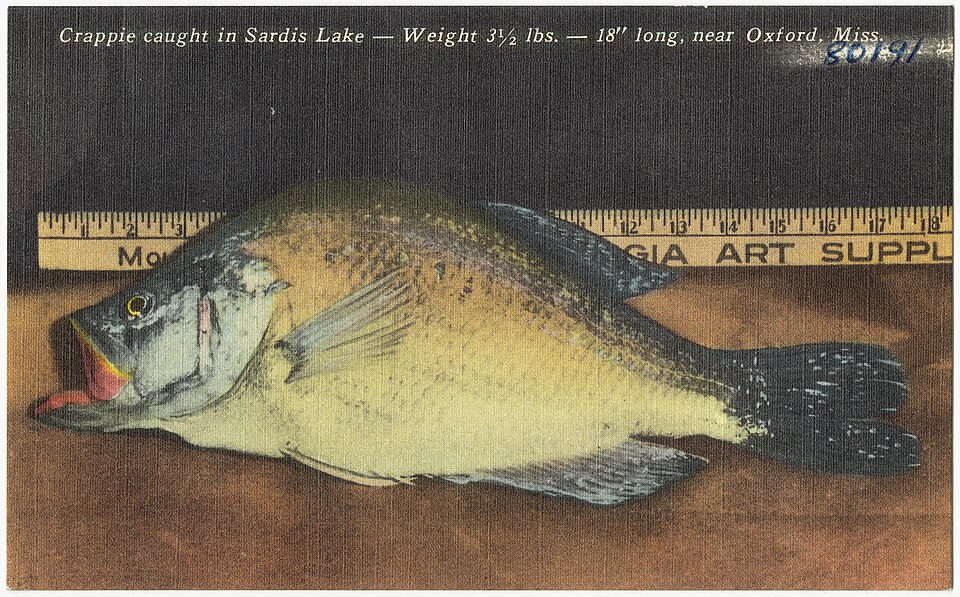
Keeping the big breeders. A crappie over 12 inches is a rare fish on most waters, and the big females carry the next generation, so many states and most serious crappie anglers release the slabs and keep the smaller eaters.
The bottom line
Spring crappie fishing rewards the angler who watches the water instead of the calendar. Start when the water reaches the low 50s, fish the staging areas, then follow the fish shallow as the water warms into the high 50s and low 60s. Fish the wood, bring jigs and minnows, set the hook gently, and let the big females go. The spawn runs in waves for weeks, so a slow day is rarely the end of it.