A whole lake's worth of fish, in one creek
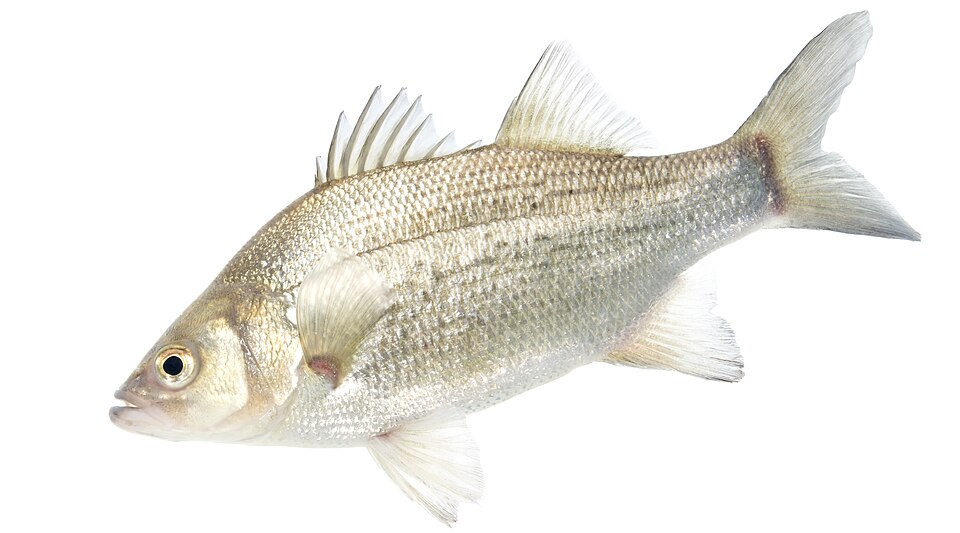
Every spring, the white bass in a lake leave the deep water and swim upstream to spawn. Much of the adult population crowds into creeks and river arms, stacks up below dams and riffles, and feeds hard on the way. For a few weeks, a fish most anglers ignore all year becomes some of the most accessible fishing in freshwater.
The short version: watch the water temperature, not the calendar. Movement starts around 50 degrees, and the peak bite runs from the mid-50s into the low 60s. Fish the creek mouths and the first riffle upstream, throw small shad imitations on light line, and keep them near the bottom. On the right week, a hundred-fish day is a real possibility.
When to go
Water temperature, not the date. White bass start moving up when the water reaches about 50 degrees, and the best fishing lands in the 55 to 65 degree window. The exact peak shifts with latitude and with the water, so treat the numbers as a band, not a single magic reading.
The run marches north with the season. In Texas and the Gulf South, the run starts in February and peaks in late March. Oklahoma, Arkansas, and the Ozarks turn on in March and April. Tennessee and Kentucky follow in mid-March into April, the Great Lakes runs fire in May, and the far north runs into early June. Watch the trees too: when the redbuds bloom, the white bass are running, a saying that shows up in Texas, Oklahoma, and Kentucky because both events answer to the same warming trend. Wisconsin anglers watch the lilacs instead, and Kentucky anglers watch the dogwoods.
Rain moves fish up. Cold fronts shut them down. A modest rain raises the creek and pulls a fresh wave of fish upstream, and each flood pushes them a little farther. A hard cold front can slow the bite to a crawl, even at the peak of the run, and fish you can see holding in clear water may not touch a thing.
Where they stack
White bass do not spread out. They stack where the upstream push stops, and most of the fish sit in a small share of the spots on a creek, so finding the pocket matters more than lure choice.
Below dams and the first riffle. The run ends where the fish cannot pass, so the water below a dam is the first place to look. On an open creek, they stop at the first or second riffle above the lake, the shallow stretch where the water breaks over gravel. Low water years push them less far up.
Deep holes, seams, and eddies. A current seam is the line where fast water meets slow water, and white bass hold just on the slow side of it. The same goes for eddies, the calm pockets behind rocks, bridge pilings, log jams, and bank cave-ins, and the deep bends below a gravel bar. Fish the shaded pockets first: these fish spent the winter in 30 to 50 feet of water, and midday is the slowest window.
Creek mouths. Before the fish commit upstream, they stage where a creek meets the lake, and after a dry spell they fall back there. Boat anglers start at the mouths and follow the fish up. On big water, wheeling gulls mean baitfish pushed to the surface, and white bass are usually underneath. Ease into casting range and throw to the edge of the school, not the middle, since motoring straight at a feeding school puts it down.
The tackle
You do not need special gear. A 6- to 7-foot light or medium-light spinning rod covers the run. Pair it with a small reel, and light tackle is half the fun: a 14-inch white bass on 4-pound line pulls like a much bigger fish.
Line weight is a real decision. In clear, pressured creeks, light line catches more fish: 4-pound fluorocarbon or mono, with 6-pound as the ceiling, is the standard creek setup. Where hybrids mix in, or in heavy tailwater current, step up to 8- or 10-pound line. Match the line to the water, not to a single rule.
Jig heads by depth. A 1/16-ounce head fishes water up to about 6 feet deep, a 1/8-ounce head covers 6 to 12 feet, and a 1/4-ounce head handles deep water or strong current. The fish are usually eating shad 1 to 2 inches long, even the big ones, so start smaller than feels right.
Our Spring Crappie Fishing: Timing, Tackle, and Technique guide covers the same light spinning setup, and our How to Tie the 5 Knots Every Angler Needs guide has the knots for tying on those small jigs.
How to fish it
Fish the jig near the bottom. The default presentation is a 1/16- to 1/8-ounce jig head with a 2- to 3-inch curly-tail grub or small paddle tail, in white, chartreuse, or pearl. Cast upstream, let it sink, and work it back with a slow lift and fall. Most bites come on the fall, so keep a semi-tight line as the jig drops and watch for the line to stop or twitch. In cold water, slow down: a jig fished too fast in 52-degree water looks wrong, and the bite is light.
The jig under a bobber. In water 6 feet or shallower, a small jig under a bobber is the beginner-proof setup. Set the depth so the jig hangs just above the bottom, twitch it a quarter inch at a time, and set the hook when the bobber twitches or stops. It often never goes under.
Inline spinners and spoons. A Rooster Tail or Mepps in white and silver, or pink when the water is stained, retrieved just fast enough to keep the blade spinning, catches fish all through the run. A slab spoon, a heavy flat metal lure that flutters as it falls, is the tool for deep holes and tailwaters: drop it to the bottom, lift the rod, and let it flutter back down.
The Wolf River Rig. Wisconsin's standard rig is a three-way swivel with an egg sinker on one dropper and a plain hook with a minnow, or a deer-hair fly, on the other. Cast it up-current into a hole below a dam and retrieve it in short hops along the bottom.
Fly anglers, bring a sink tip. A chartreuse-over-white Clouser minnow, 2 to 3 inches long, is the fly that shows up everywhere, and a 10- to 15-foot sink-tip line gets it down into the pools and eddies where the fish hold. A floating line only works on the shallow riffles.
White bass or hybrid?
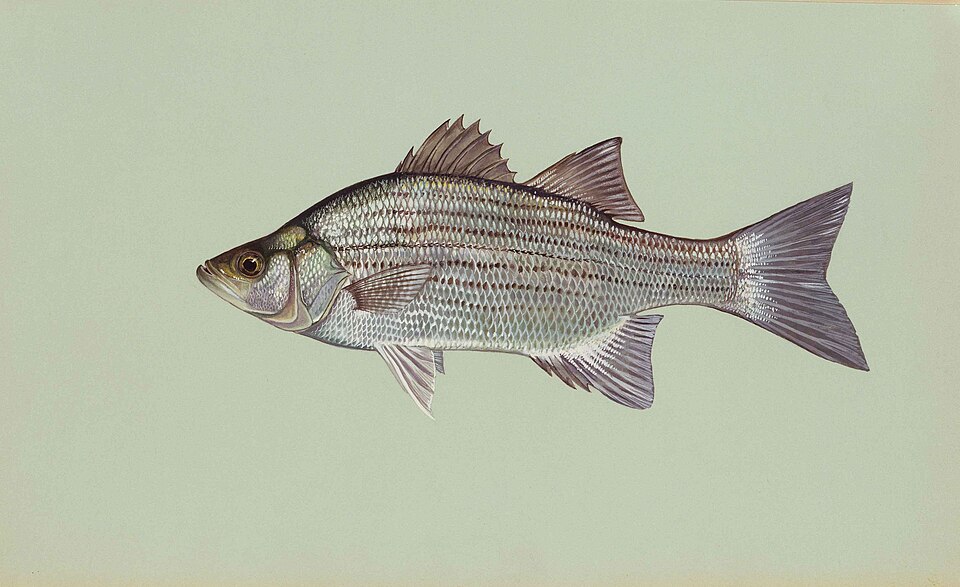
The fish that shares the run is the hybrid striped bass, a cross between a white bass and a striped bass, and it looks close enough to fool people. The mix-up matters because the limits are very different: in Texas, white bass run 25 a day with a 10-inch minimum, while hybrids run 5 a day with an 18-inch minimum, and a misidentified fish in the cooler can mean a fine.
Check the tongue, not the stripes. A white bass has a single tooth patch on its tongue. A hybrid or a striped bass has two. Stripes help, a white bass has faint broken stripes with only one reaching the tail, while a hybrid's stripes are sharper and usually broken, but individual fish vary, so the tongue patch is the check that settles it. Size is a clue too: white bass seldom pass 3 to 4 pounds, so a 4- or 5-pound fish in the same run is more likely a hybrid.
Keeping and eating them
White bass have a bad table reputation they do not deserve, and the reputation comes from handling, not from the fish. A white bass kept in a warm livewell, filleted like any other fish, and frozen for a month tastes like mud. The same fish iced the minute it is caught and cleaned right is sweet, firm, white meat that anglers compare to perch and walleye.
Cut out the red meat. White bass carry a strip of dark red meat along the lateral line, the line running down the side of the fish, and that red meat holds the fishy flavor. Fillet the fish, then skin the fillet leaving a thin layer of meat on the skin, so the red layer stays behind. Then slice out the lateral line itself, leaving an upper and a lower white fillet. Soak the fillets in milk or salted ice water for an hour or two, and fry them fresh. The meat is best within a day or two; it freezes acceptably for a few months but loses quality faster than lean fish.
Mistakes that cost fish
Fishing a creek with no white bass in it. The run is patchy, and a creek that looks perfect can hold nothing. If a creek is dead, move to another one. Finding the right water matters more than lure choice.
Casting at the boiling pods. A pod of fish rolling at the surface during the spawn has one thing on its mind, and it is not eating. Fish the holding water nearby instead, the hole below the riffle or the eddy beside the pod.
Standing on the fish. If you are knee-deep in the creek, you are probably standing on the fish you came to catch. Fish the shaded pockets from the bank first and wade in slowly.
Quitting after one slow trip. The run comes in waves. A river that was dead on Tuesday can be loaded on Saturday after a rain, and the female wave can compress the best fishing into a week or two. Go back.
The bottom line
The white bass run is a lot of fish for very little fuss in spring. Watch the water hit the low 50s, watch the redbuds bloom, and go after a rain. Fish the first riffle and the holes below the dams, throw a small white or chartreuse jig on light line, and keep it near the bottom. Check the tongue before the fish goes in the cooler, and ice the keepers right away. The peak on any one creek lasts a week or two, so when the reports start coming in, go.