The most forgiving fish in the water
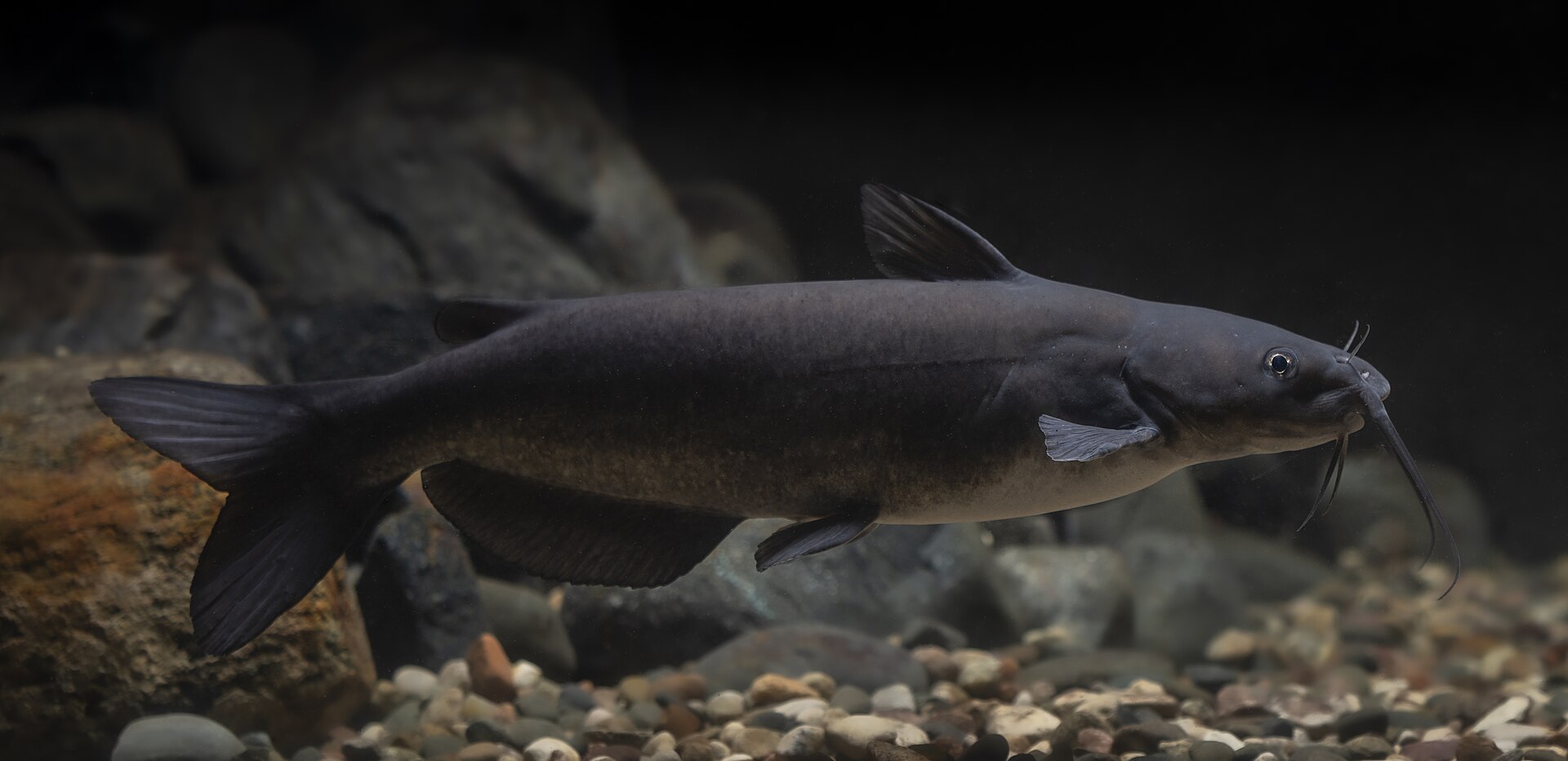
A channel catfish will eat almost anything that smells like food, lives in nearly every river, lake, and pond in the country, and forgives most of the mistakes a beginner makes. That is why it is a great first fish for an angler who wants to catch something big on simple gear. A ten-pound channel on a rod built for bass is a real fight, and it starts with a nightcrawler from the gas station.
The short version: fish deep holes and current seams at night, put fresh cut bait or chicken liver on a circle hook under a slip sinker, and do not set the hook. Just lift the rod and reel. Everything else in this guide is the detail behind those four sentences.
How to tell a channel from a blue and a flathead
Three big catfish share most of the same water, and beginners mix them up constantly. The mix-up matters because the three fish eat differently and grow to very different sizes, so learn the marks.
The tail. A flathead has a rounded tail, almost square at the corners. Channels and blues both have deeply forked tails, like a swallow's. If the tail is not forked, it is a flathead.
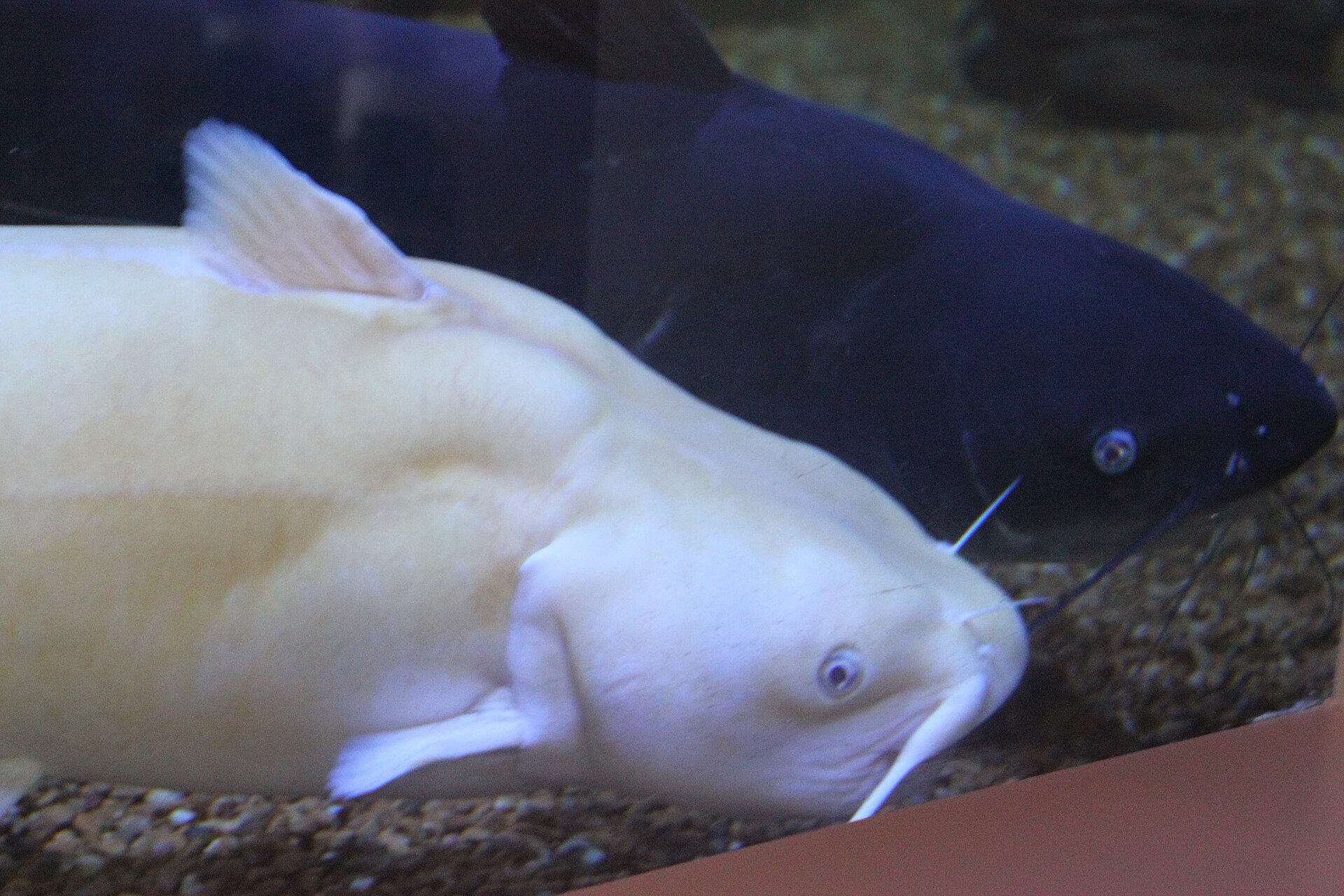
The anal fin. This is the mark that settles channel versus blue, and it is more reliable than color. The anal fin is the long fin on the belly near the tail. On a channel it has a rounded outer edge and 24 to 29 rays (the thin bony supports inside the fin). On a blue it has a straight outer edge and 30 or more rays. Count the rays if you are unsure. Color will fool you: young channels are spotted, most big adults lose the spots, and a big gray unspotted channel gets called a blue all the time.
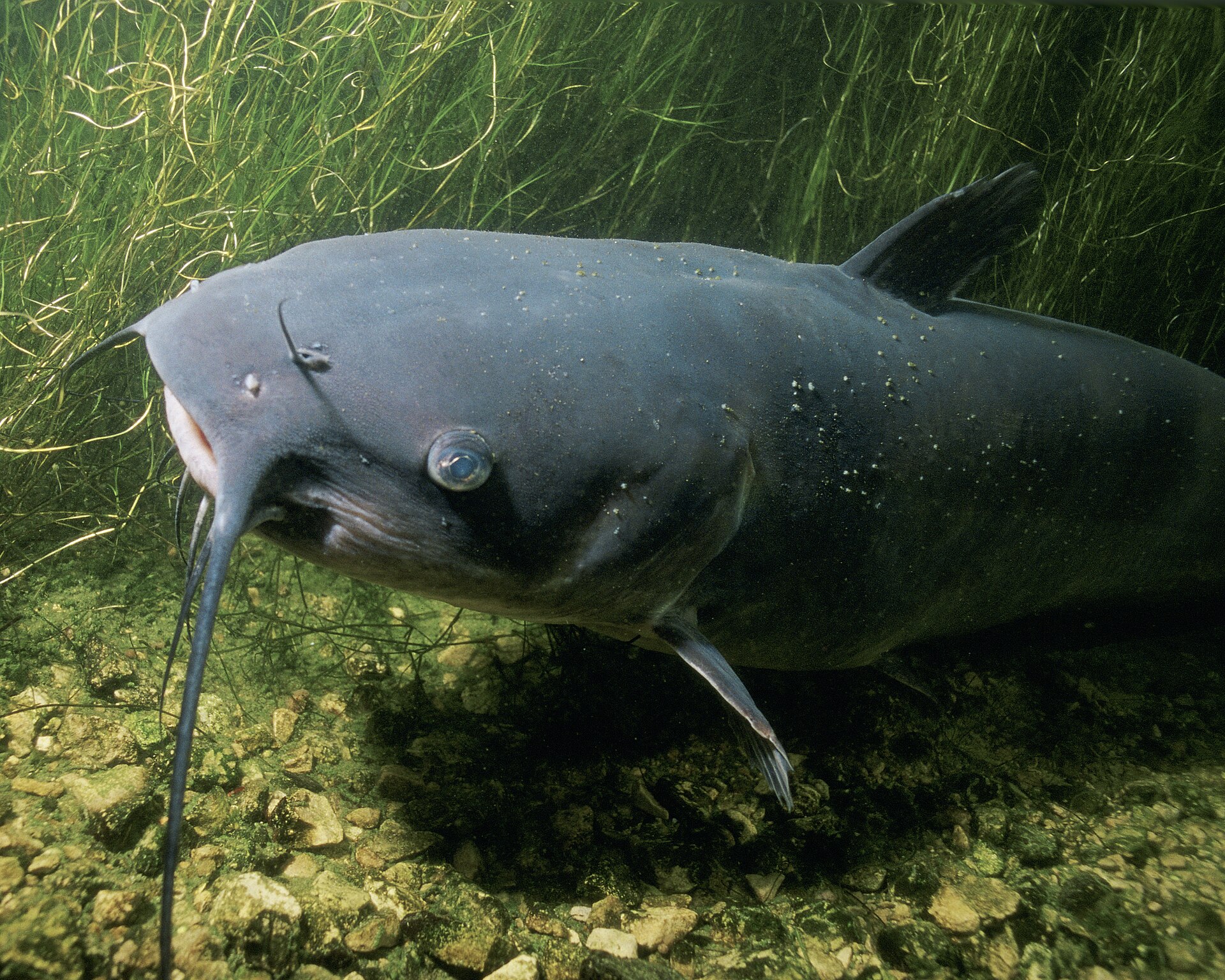
The jaw. A flathead's lower jaw sticks out past the upper jaw, the only one of the three built that way. A channel's upper jaw overhangs the lower. Flatheads are also mottled yellow-brown with a broad, flat head.
The size. Most channels run one to ten pounds, and a ten-pounder is a good fish anywhere. Blues run much bigger, 20 to 40 pounds is routine. The world record channel is 58 pounds (Santee Cooper, 1964), and the Kansas record is 36 pounds 8 ounces (2003).
Where they live
Channels are the most widely spread catfish in North America. They live in big rivers, small prairie streams, reservoirs, natural lakes, and farm ponds, and in Kansas they turn up in nearly every water that holds fish at all. The question is never whether channels are in the lake. It is where they are sitting right now.
In rivers, find the holes. A hole is a deep pocket in the riverbed, and a hole with a snag in it, a fallen tree or a logjam, is the best home a channel can have. Work the outside of a bend, where the current cuts a deep bank, the water below a dam or wing dike, and the seam where fast water meets slow water. Fish the edges of the current, not the middle of it. Cats sit in the slow water next to the fast water and wait for food to drift past.
In lakes, find the channel. Lakes hold channels along creek channels, timber, rock shorelines, drop-offs, and points near running water. In spring they push into the shallow, warm upper end of a reservoir and onto mudflats. In summer they follow shad schools along channel edges. In a pond, fish the dam, the rocks, and any brush or weeds.
Day means deep, night means shallow. By day, channels hold tight to cover in deep water. After dark they slide up onto flats, bars, points, and riprap to feed, often in only five to ten feet of water. A spot that looks dead at noon can come alive at dusk. One depth to skip in summer: in a stratified lake, the water splits into a warm oxygenated top layer and a cold bottom layer that can run nearly out of oxygen, often starting around 10 to 15 feet down in smaller lakes. Little lives in that bottom layer, so if you are fishing deep in summer and catching nothing, you may be fishing below the fish.
What they eat
A channel catfish hunts by smell and taste. Taste buds cover its whole body, and it can pick up dissolved food scents in tiny amounts. That is why a bait that smells strong beats a bait that looks right, and why murky water is no problem for them at all. Young channels eat insects, crayfish, and mollusks. Once they pass about 16 inches, fish, dead or alive, make up most of the diet.
The starter kit. Four baits cover nearly every channel situation, and beginners should start with the first two. Nightcrawlers and chicken liver are cheap, sold everywhere, and catch fish in every kind of water. Fresh cut bait, a chunk of shad, bluegill, or sucker, is the best choice when you want a bigger fish or you are fishing a big river. Prepared stink bait, the cheese-based pastes sold in tubs, is a numbers bait: it catches lots of pan-sized channels, and it works best once the water passes 70 degrees. Shrimp from the grocery store is the easy backup when the bait shop is closed.
Freshness beats bait type. If experienced cat anglers agree on one bait rule, it is that freshness matters more than bait type. A fresh piece of cut bait outfishes a stale piece of the "right" bait, and a nightcrawler that has been on the hook for half an hour is washed out and worth replacing. Change bait every 20 to 30 minutes even if nothing has touched it.
Big channels eat differently. Small channels will eat anything. Big ones, past about ten pounds, turn into hunters and get pickier, and several experienced anglers report their biggest channels came on live bait or big fresh cut bait rather than dip bait. Others in the same threads report 16-pound channels on cut sucker. Bait size should grow with the fish you want: small baits catch numbers, big baits catch big fish, and no single bait wins every night. Bring two or three options and let the fish tell you what they want. As one forum regular put it, the two words that cannot be applied to channel cats are "always" and "never."
The rig: slip sinker and circle hook
The default channel rig is simple, and it is the same rig in every guide and forum thread we read. A slip-sinker rig is a sliding sinker on the main line, then a bead, then a barrel swivel, then a 12 to 24 inch leader to the hook. The sinker slides freely, so when a cat picks up the bait it feels no resistance from the weight. Use just enough weight to hold bottom: a half ounce to two ounces in most water, more in heavy current. A bait that rolls along the bottom gets ignored.
The hook is a circle hook, and the technique is to not set it. A circle hook is a hook with the point curled inward toward the shank, and it slides into the corner of the fish's mouth as the line tightens. Do not jerk the rod when you get a bite. That is the single most common reason beginners lose catfish, and when the rod starts to bend over, lift it slowly and start reeling so the hook sets itself. Quick hooksets pull the bait straight out of the fish's mouth. If you come from bass fishing, where a hard hookset is the habit, this will feel wrong for the first few fish. Trust the hook.
Hook size follows bait size, not fish size. A 2/0 to 5/0 circle hook covers most channel fishing. Go smaller for worms and dip bait, bigger for a large chunk of cut bait. A hook buried inside a bulky piece of bait will not catch a lip, so leave the point exposed.
The second rig to learn is the slip bobber. A slip bobber is a float that slides on the line and stops at a knot you set, so you can fish a bait two to ten feet down in any depth. It is the answer when cats are suspended off the bottom or feeding along riprap and shallow grass, and it lets you drift a bait with the current. Channels do not spend all their time on the bottom, especially in summer when they chase shad. Where the bottom is soft silt or weeds, add a small peg float to the leader to lift the bait a few inches off the mud.
The gear: use what you have
You do not need special gear to start catching channels. Any spinning or baitcasting outfit built for largemouth bass will get the job done, and several guides say so in exactly those words. A seven-foot medium-heavy rod, a 3000 to 4000 size spinning reel, and 15 to 20 pound mono, or 30 pound braid, covers most channel fishing. Longer rods, eight to ten feet, help bank anglers cast farther. Heavier line, 30 to 40 pound braid, earns its keep around rocks and logjams where a fish will run you into cover. A reel with a bait clicker, the alarm that clicks when line pulls out, helps when you are fishing more than one rod. Our How to Tie the 5 Knots Every Angler Needs covers the Palomar knot for tying on that circle hook.
Handle them with respect. A channel has three sharp spines: one on the dorsal fin on top and one on each pectoral fin on the sides. Small cats sting worst, because the serrated spine has not worn smooth yet. Hold the fish from underneath, behind the pectoral spines, and never lift a big fish by the jaw alone. Wet your hands first, the same as with any fish you plan to release.
The seasons
Water temperature runs the whole show for channels. Feeding picks up once the water passes about 40 degrees, real feeding starts in the low 50s, and the prime window is roughly 55 to 70 degrees.
Spring is the best season. Channels leave their wintering holes and hunt hard, following shad into shallow water. The prespawn bite, when the water is 60 to 70 degrees and the fish are feeding up before spawning, is one of the best bites of the year. Fish cut bait on the bottom near backwater mouths and mudflats.
Summer means nights. Once the spawn starts, around 75 degrees with the best action near 80, the bite slows. Males pick a dark cavity, an undercut bank, a hollow log, a riprap crevice, and guard the eggs until they hatch in six to ten days, then keep guarding the fry for about another week, eating almost nothing the whole time. Not every fish spawns at once, so the bite dips rather than stops. After the spawn, summer fishing is a night game: deep channel edges by day, shallow flats after dark.
Fall is the binge. Channels feed heavily before winter, and a warming trend in September can turn the bite on hard. Fish the same deep holes and channel edges, and fish them longer, because the fish are putting on weight for the cold months.
Winter is slow but not dead. Below 50 degrees, channels settle into the deepest holes and barely move. They will still bite, usually on cut bait or nightcrawlers fished slow on a slip-sinker rig, and the bites feel like a light tick rather than a pull. Our Night Fishing for Bass guide covers the low-light hours that matter just as much for cats.
Rain is a trigger. Rising water after a rain washes food into the river and turns channels on, and it is one of the most reliable bite triggers in the whole guide. Falling water does the opposite. If the river is coming up and the water is stained, fish it, even at midday. Stained water erases the night advantage, and cats will feed all day in it. Our Live Bait vs Artificial Lures for Pond Fishing guide covers the pond side of the same bait choices.
Mistakes to skip
- Setting the hook on a circle hook. Lift slowly and reel. A hard jerk pulls the bait out.
- Fishing stale bait. Re-bait every 20 to 30 minutes. Scent is the whole game.
- Too little weight in current. If the bait rolls, the fish ignore it. Go heavier before you go home.
- Fishing the wrong depth for the hour. Deep and tight to cover by day, shallow after dark. The reverse catches nothing.
- Sitting in one dead spot all night. Move every 45 minutes until you find feeding fish. The exception is winter, when you stay on a hole you know holds fish.
- Checking the bait every five minutes. Give each bait 20 to 30 minutes to work. Constant reeling in scares fish and wastes scent.
- Fishing open water with no structure. Channels hold to something: a hole, a snag, a bend, a channel edge. The middle of nowhere catches nothing.
- Grabbing a catfish carelessly. Those three spines are sharp, and the small ones sting worst.
The bottom line
Channel catfish are the easiest big fish a beginner can catch, and the whole method is simple: a slip-sinker rig, a circle hook, fresh bait, and a deep hole fished after dark. Do not set the hook. Re-bait often, and move until you find them. The fish that eats almost anything is waiting in water near you right now.