
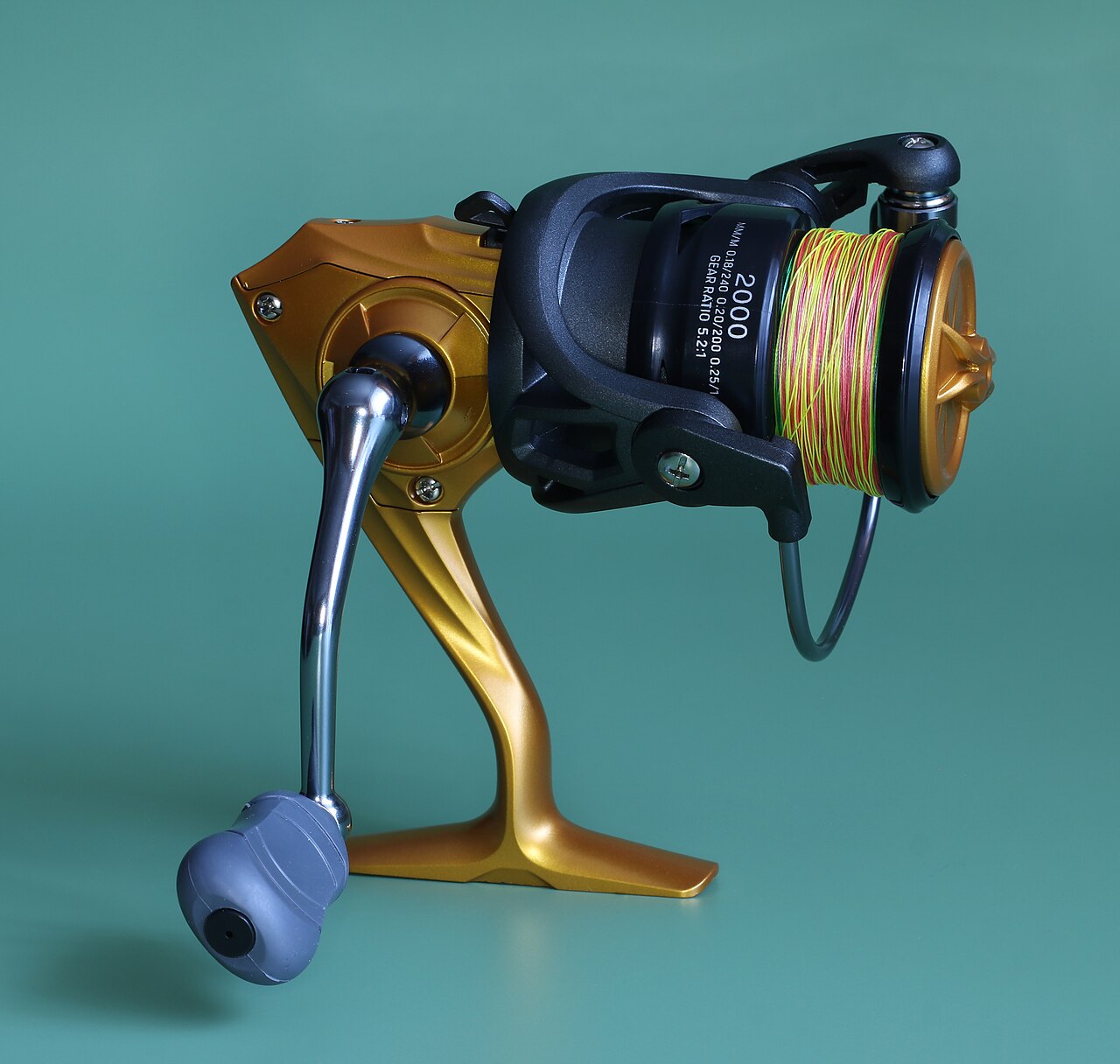
Why your spinning reel twists
Your line twists on a spinning reel because of five minutes of carelessness at the spool. Casts end in wind knots, the little tangles that stop a lure cold mid-flight. Loops spring off the spool in coils before the lure hits the water, and line that fished fine in April goes useless by June. Nearly every one of those problems was decided the day you wound the line on.
The fix is boring and it works. Lay the filler spool flat, keep steady tension while you wind, and check the line for coils as you go, stopping about 1/8 inch below the spool lip. Do that and the reel fishes straight. Skip a step and you will spend the season fighting your own line.
The one rule: flat, same direction, check as you go
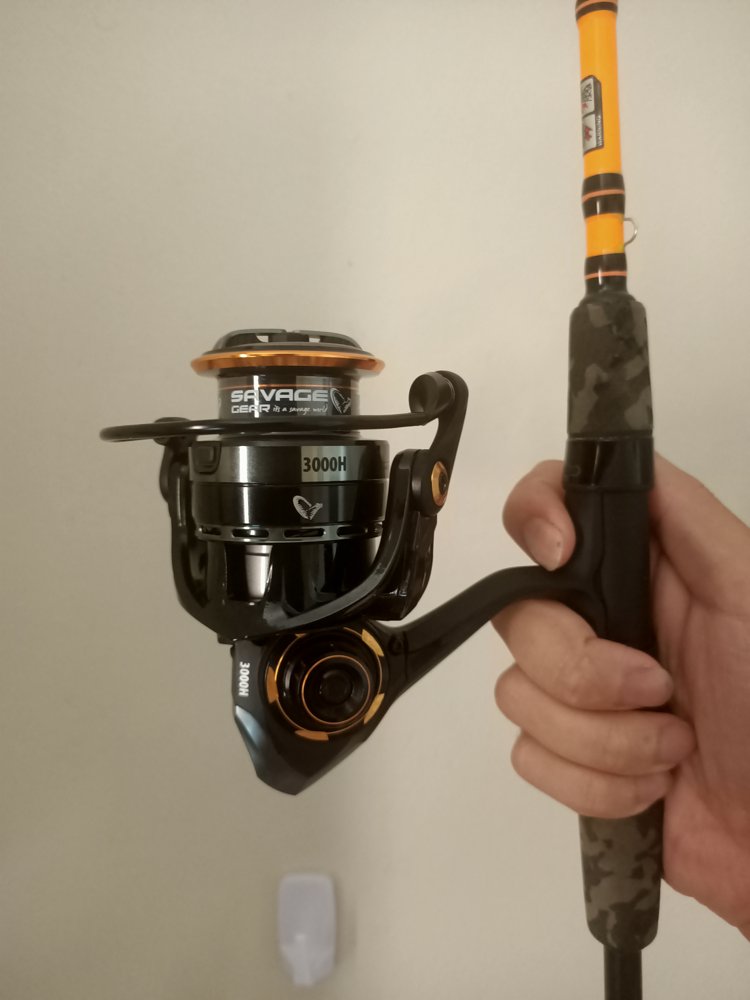
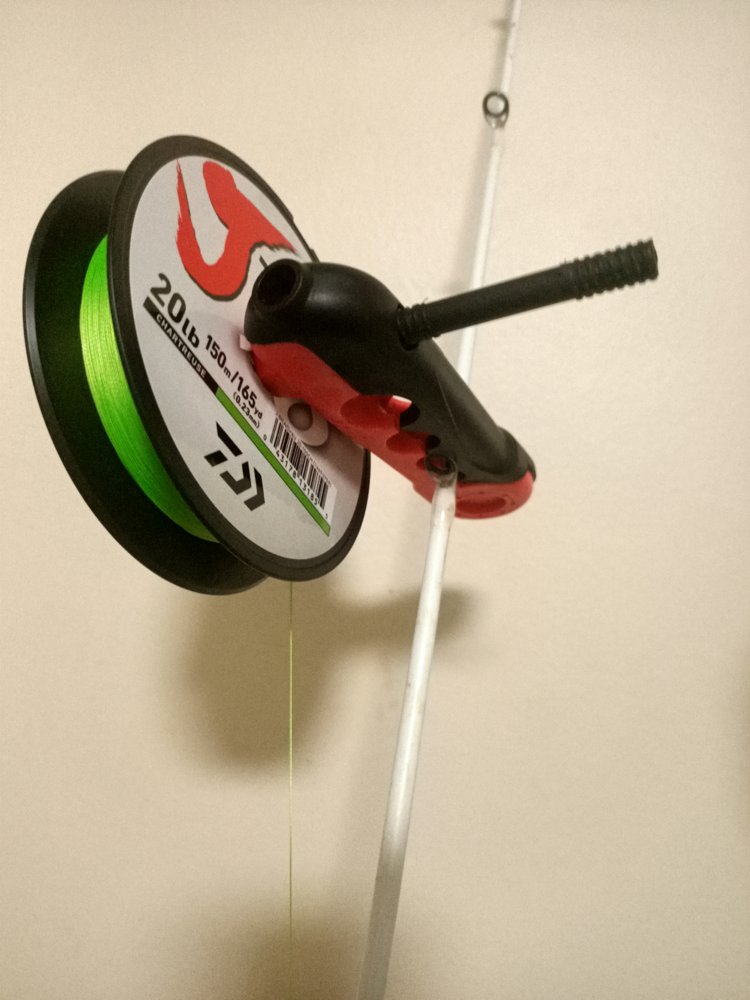
Lay the filler spool flat on the floor (a bucket works too) so the line peels off the end of it, not over the side of a rolling spool. As a starting guess, the line should come off the filler counterclockwise, opposite the clockwise way the bail wraps line onto the reel. Crank ten turns, stop, and drop some slack between the spool and the first guide. If the line hangs straight, you have it right. If it coils into pigtails, flip the filler spool over and keep going.
That check matters more than the guess. Labels are no guide: even within one brand, they land on opposite sides of the spool, and experienced anglers still flip the direction. So watch the line, not the label. Repeat the check every 10 to 20 cranks, because a twist caught early is a flipped spool, while a twist spooled on for 150 yards is a respool.
Two cautions from people who learned the hard way. Never run a pencil through the filler spool and let it spin freely while you wind: that feeds line off at an angle and twists it from the first wrap. And a spooling station only works for spinning reels if the filler spool's face sits parallel to the reel spool's face. Perpendicular feeds line off at an angle and puts twist into the spool right away.
Step by step
- Mount the reel on the rod (or just the butt section of a two-piece rod) and run the line through the stripper guide, the big one closest to the reel. Threading every guide adds drag and invites tip wraps while you wind; save the rest of the guides for when you rig your lure. Open the bail. Tie the line to the spool: an arbor knot for mono or fluoro, or a cinched slip knot with a strip of electrical tape over it for braid.
- Lay the filler spool flat on the floor. Pinch the line between thumb and forefinger (or in a damp rag) a foot or two below the reel and hold steady, moderate tension. Think firm handshake, not death grip.
- Crank slowly, then after 10 to 20 turns stop, slacken the line, and look for coils. Flip the filler if the line pigtails.
- Keep winding with even tension, checking every so often. Fill until the line sits about 1/8 inch below the spool lip. A business card stood upright on the wound line is a good gauge: the lip should just barely swallow it.
- Cut the line, tie on your leader or lure, and close the bail by hand.
Overfilling past that 1/8-inch mark is the most common mistake after wrong-direction spooling. The excess line has nothing holding it, so it springs off the spool in coils on the cast and turns into wind knots by the second hour.
Mono, fluoro, and braid each want something different
Mono is the most forgiving. Wet it while you spool (run it through a damp rag, or give the filler spool a few minutes in a bucket of warm water) to relax the coil memory it picked up in the package. Limp formulations like Berkley XL are the easiest to live with on spinning gear, and our best monofilament fishing line for bass guide covers which ones hold up.
Fluorocarbon is the worst line-twist offender on a spinning reel. It is stiff with a long memory, and it pops off the spool in coils, especially above 8 to 10 lb test. If you run straight fluoro on spinning gear, keep it light. Stretch it after spooling: a firm pull straightens out the working end. Line conditioner helps but is no cure. And the standard fix is simple: a lot of experienced anglers switched to braid mainline with a fluoro leader and never spooled straight fluoro again.
Braid has no coil memory, so it won't spring off in pigtails, but it still twists from the same bad habits, and it has its own quirk: it slips on a bare spool. Half an hour of fishing and your braid can be spinning on the arbor instead of dragging in fish. Prevent it with 20 to 30 yards of mono backing under the braid (a double-uni or Albright knot to join them), or a strip of electrical tape over the arbor knot. Backing also saves money, since only the top layer of braid ever sees the water. Pack braid on tight: loose braid beds down soft and digs into itself on a hookset, which reads as a bird's nest on the next cast. Our best braided line for bass guide has the full breakdown.
If all of this is new, our best fishing line for beginners guide walks through the mono, fluoro, and braid decision from scratch.
The habits that keep it straight on the water
Most of the twist that shows up mid-season isn't from spooling at all. It accumulates while you fish.
Close the bail by hand on every cast, then give the line a short tug to seat it on the line roller. Tripping the bail by cranking lays a slack loop onto the spool, and that loop becomes a wind knot on the next cast. Never reel against a slipping drag: every handle turn while line is paying out loads twists into the line by the gear ratio. A 6.2:1 reel adds roughly six twists per crank, so turning the handle just twenty times against a screaming drag loads over 120 twists into the line. Fight the fish with the rod (lift, reel down, lift again), not with the reel.
Rig your soft plastics straight. A crooked hook turns the bait into a keel that spins through the whole retrieve, twisting the line behind it. After you rig one, drop it next to the boat and look. If it rotates, re-rig it. If you throw a lot of inline spinners or spoons, tie on a ball-bearing swivel above the lure and let it do the spinning instead of your line.
And check the line roller on the bail arm once in a while. If it is seized or gritty, it drags the line instead of rolling with it and adds twist on every retrieve. It is a cheap part, it takes minutes to clean or replace, and it gets misdiagnosed as a spooling problem constantly.
Already twisted? Reset it before you respool
If the line is pigtailing within a few casts, don't strip it yet. Tie off nothing (any lure or weight keeps the twists locked in), walk or idle out 100 or so feet of bare line, then reel it back under light, even tension. Off a boat, idle forward with the line streaming behind. From shore, walk it out across an open field or lawn and reel it back through a damp towel. With a free end, the twists spin themselves out of the line instead of staying trapped in it.
A spray of line conditioner on the rag helps on mono and fluoro. If the twist comes back within a few casts every time, the line's memory is baked in (stale line off a warehouse shelf is a real thing) and it is time to cut the working section off or respool fresh.
The beginner escape hatch
If the whole ritual sounds fiddly, buy your line and have the shop spool it. A tackle counter with a proper line winder does in three minutes what takes twenty at the kitchen table, and most shops spool it free when you buy the line from them. Their winders hold the filler spool face parallel to the reel's with steady tension (the same geometry this guide asks for, not the loose pencil method), so the line goes on clean. There is no shame in it. Learn the ritual when you have a quiet evening, not when the boat is idling at the ramp.
Line twist is a setup tax, not a line defect. Ten careful minutes at the spool, five good habits on the water, and the reel fishes straight.