The pond you drive past every day
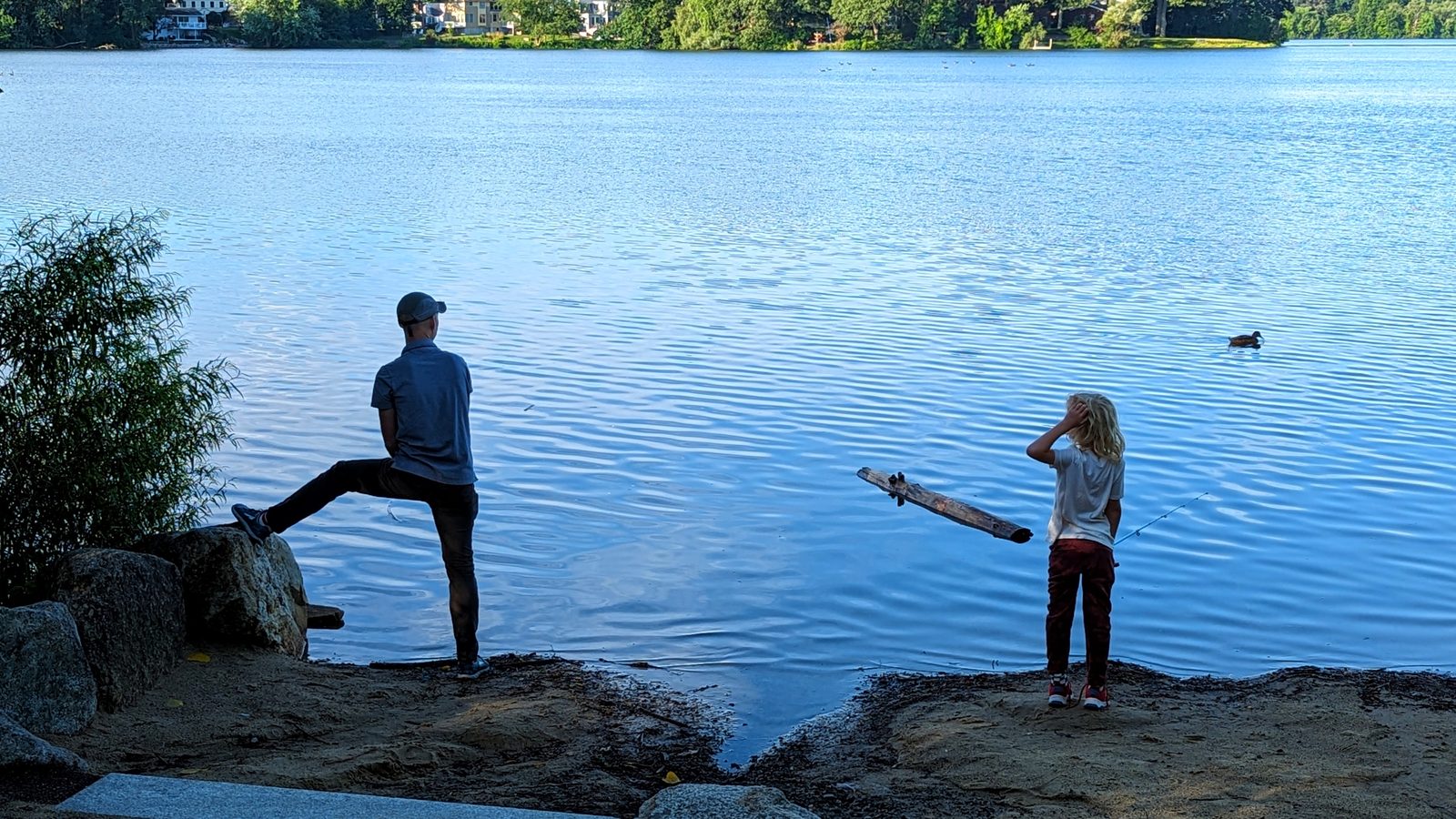
Most anglers drive past a dozen fishable ponds on the way to the lake: farm ponds, neighborhood retention ponds, park ponds, the little water behind the golf course. They hold bass, sometimes big ones, and they fish nothing like a lake. A pond is small enough that one bad cast can put every fish in it on alert, and small enough that the fish have seen your lure before.
The short version: fish small, fish quiet, and keep moving. Downsize your lures and your line, stay back from the bank, work the water in a steady sweep, and leave for the next pond when one goes dead. That is the whole method. The rest of this guide is the detail that makes it work.
Why ponds fish different
A pond is not a small lake. Four facts about it drive every decision that follows.
The fish can see you. The water is shallow, often clear, and the fish live within casting distance of the bank. They learn fast: anglers who fish the same pond every day report that the bass wise up to a lure within days, and a pond fished hard all week fishes noticeably worse than one left alone.
The forage is small. Many small or unstocked ponds have no shad, the silvery baitfish bass chase in big lakes, so pond bass feed on bluegill, minnows, crawfish, frogs, and bugs. Everything on the menu is small, so a big lure looks wrong and lands loud.
The water changes fast. A pond warms up and cools down days ahead of a lake. Spring fishing turns on earlier, summer heat shuts the bite down sooner, and a shallow pond can go from good to dead after one cold snap. The best pond days of the year often come a week before the lake turns on.
The best spots are obvious, and that is the trap. Most ponds share the same handful of features: a dam, an inlet, a laydown, a weed edge. Every angler fishes them, so the fish on the obvious spot have seen every lure in the shop. The anglers who catch the most pond bass fish the second-best spot with a lure the fish have not seen lately.
Read the pond before you cast
Spend five minutes looking before you make a cast. It pays off more on a pond than anywhere else, because the whole pond is in front of you.
Find the deep side. The dam side is almost always the deepest water in the pond, and the dam corners are the highest-percentage spots in it. The inlet side, where water flows in, is the shallow side. A steep bank means deep water close to shore; a flat bank means a long shallow shelf.
Look for the one piece of cover. Most farm ponds are nearly featureless, so the one overhanging tree, the single brush pile, or the lone dock piling holds the biggest bass. Fish it thoroughly, from several angles, before you move on. The same rule holds for weed edges, lily pads, and stumps: in a pond, cover is the whole map.
Watch the water. Bugs flicking on the surface, minnows scattering in the shallows, a bluegill dimpling the surface near a weed edge. All of it tells you where the food is, and the bass will not be far behind it. If you see nothing moving anywhere, the fish may be deep and waiting for low light.
Confirm the pond holds fish. A worm under a bobber still works as a survey tool: if bluegill are biting, bass are likely in the pond too. Asking locals helps as well. A neighbor or a farm worker will usually tell you straight whether the pond has bass in it and whether fishing is allowed.
Stealth is the technique
If there is one skill that separates good pond anglers from frustrated ones, it is this. Pond bass spook easily, and a spooked pond stays spooked for a while.
Stay five to ten feet back from the water's edge. Keep your shadow off the water. Move slowly, talk quietly, and walk the long way around when you change spots instead of stomping along the bank. One angler on a tiny pond put it plainly: botch one cast and every bass in the pond is on alert.
Cast low and soft. A sidearm cast that lands the lure with a light plop beats an overhead cast that slaps the water. Feather the line, which means pinching it lightly with your finger as the lure lands, to soften the splash. Fish the bank you are standing on first: most pond bass sit tight against the shore, and anglers who cast straight out to the middle walk right past them.
Wind helps. A chop on the surface hides you and your line, and several pond regulars say windy and rainy days are their best pond days for exactly that reason. Our guide to How to Fish in the Rain covers the same pattern on bigger water.
What to throw
The pond lure box is small, and that is the point. Five baits cover nearly everything a pond will ask for.
A weightless soft stick bait. A Senko-style stick bait, a straight soft-plastic worm about four or five inches long, fished weightless on a Texas rig (the hook threaded weedlessly through the bait with no weight attached) or wacky rigged (the hook through the middle of the bait so both ends wiggle as it sinks). This is the default pond bait across every source we read, and in heavy weeds or moss it is often the only bait that gets bit, because it slides over the top instead of dragging through the muck.
A soft jerkbait. A fluke, a soft plastic shaped like a small baitfish, fished weightless with short twitches. It covers water faster than a stick bait and draws strikes from fish that ignore a slow worm.
A small inline spinner, or a downsized spinnerbait. A Rooster Tail (Worden's) or a Mepps Aglia, the kind with the blade spinning on the same shaft as the hook, in the smallest sizes. One-eighth ounce is the workhorse. It catches everything that swims in a pond, which makes it a good survey lure and a good fallback when nothing else is working. A small spinnerbait in the one-eighth to one-quarter ounce range, in a bluegill or crawfish color, covers the same water with more flash. Our Best Spinnerbaits and Chatterbaits guide covers the full-size versions; on a pond, start with the small ones, especially on the smallest and clearest water, where a heavier bait lands loud and can spook the fish you are trying to catch.
A topwater, sized down. A small popper or a frog on weedy ponds, fished early and late. On a pond under an acre, a big topwater can be too loud, so go small and fish it slow. Topwater is not automatic in ponds: one regular who fishes neighborhood ponds eight hours a week reported zero hits on frogs all season, while soft swimbaits caught fish every trip.
The muddy-water exception. Everything above assumes clear or lightly stained water. In a muddy pond the rules flip: go big, dark, and loud, with a bulky jig in black and blue, a big Colorado-blade spinnerbait (the wide blade that thumps hardest), or a lipless crankbait worked slow. Dark colors make a silhouette the fish can find, and a rattle helps them find it by feel.
How to work a pond
Pond hopping is a method, not just a walk. The pattern that kept showing up across forums, videos, and blogs is the same.
Sweep the pond. Fan-cast an arc from one spot, covering the water in front of you and along the bank to both sides. Then walk twenty to fifty feet and do it again. Cast parallel to the bank, not just straight out: a lure that travels along the shoreline stays in the strike zone the whole retrieve, while a lure cast to the middle crosses it in seconds.
Cycle lures in a spot. If a spot looks right and nothing bites, change the bait before you change the spot. Start fast, with a moving bait or a topwater, to find out whether the fish are in a chasing mood. Then slow down to a spinnerbait or a fluke, and finish with the weightless stick bait, fished slow on the bottom. Fish can want a chase bait one hour and a slow worm the next.
Then move ponds. If a full sweep of a pond produces nothing, leave and drive to the next one. That is the hopping part, and it is the whole advantage of fishing small water on foot: the next pond is ten minutes away, and a pond you have never fished is worth more than an hour on a dead one. A pond fished once a week fishes better than one fished every day, so rotate through several ponds instead of grinding the same one.
Seasons and timing
Spring and fall are the best pond seasons. The fish are shallow, they are feeding, and the water is comfortable. In spring, bass move shallow to spawn, and in a pond that move can be a single cast from deep water to the bank. Fish the shallows with a weightless fluke or a small spinnerbait, and stay off the bottom so the bait does not drag through the muck. Fall brings heavy feeding before winter, and it is the best season for inline spinners and spinnerbaits fished fast along the bank.
Summer is a low-light game. Fish dawn and dusk, and fish the shade: overhanging trees, docks, lily pads, the shadowed side of the dam. Midday in July is the hardest pond fishing of the year, and the fish that are catchable then are usually deep near the dam or buried in the thickest cover. Winter is the slow season: the fish sit in the deepest water, usually near the dam, and want a slow presentation. A pond only three or four feet deep may not hold fish through a hard winter at all.
Within a day, the rotation is the same: dawn means shallow water and topwater, midday means the deepest water or the thickest shade, and late evening brings the fish shallow again. Overcast days stretch the good hours longer.
What to carry
One rod can do all of this. A medium-light spinning rod, six to seven feet, with six or eight pound line, covers the whole pond box. If you want a second rod, make it a finesse setup for the weightless plastics, or a slightly heavier rod for frogs and jigs in thick weeds. Our Best Ultralight Spinning Rods for Panfish guide covers the light end of this range.
Carry the tackle in a small box or a fanny pack, not a boat bag. A single 3600-size box holds the whole pond kit: a few stick baits, a few flukes, two or three spinners, a small spinnerbait, a popper, and a handful of hooks and weights. Add needle-nose pliers for deep-hooked fish and a pair of rubber boots for muddy banks. The anglers who carry five rods and a tackle backpack use one or two rods all day, so pack light and you will fish more ponds.
Panfish are a feature, not a fallback
A pond's best fish is not always a bass. Trophy bluegill and slab crappie are legitimate pond targets, and on some ponds they are the main event. Bluegill hold tight to cover: logs, stumps, lily pads, grass mats. A red worm or a cricket on a small hook under a bobber, fished right against the cover, is the classic approach, and it still catches fish that ignore every lure in the box. Crappie sit on the drop-offs next to shallow weedy flats, and a two-inch tube or grub on a light jighead is the bait for them.
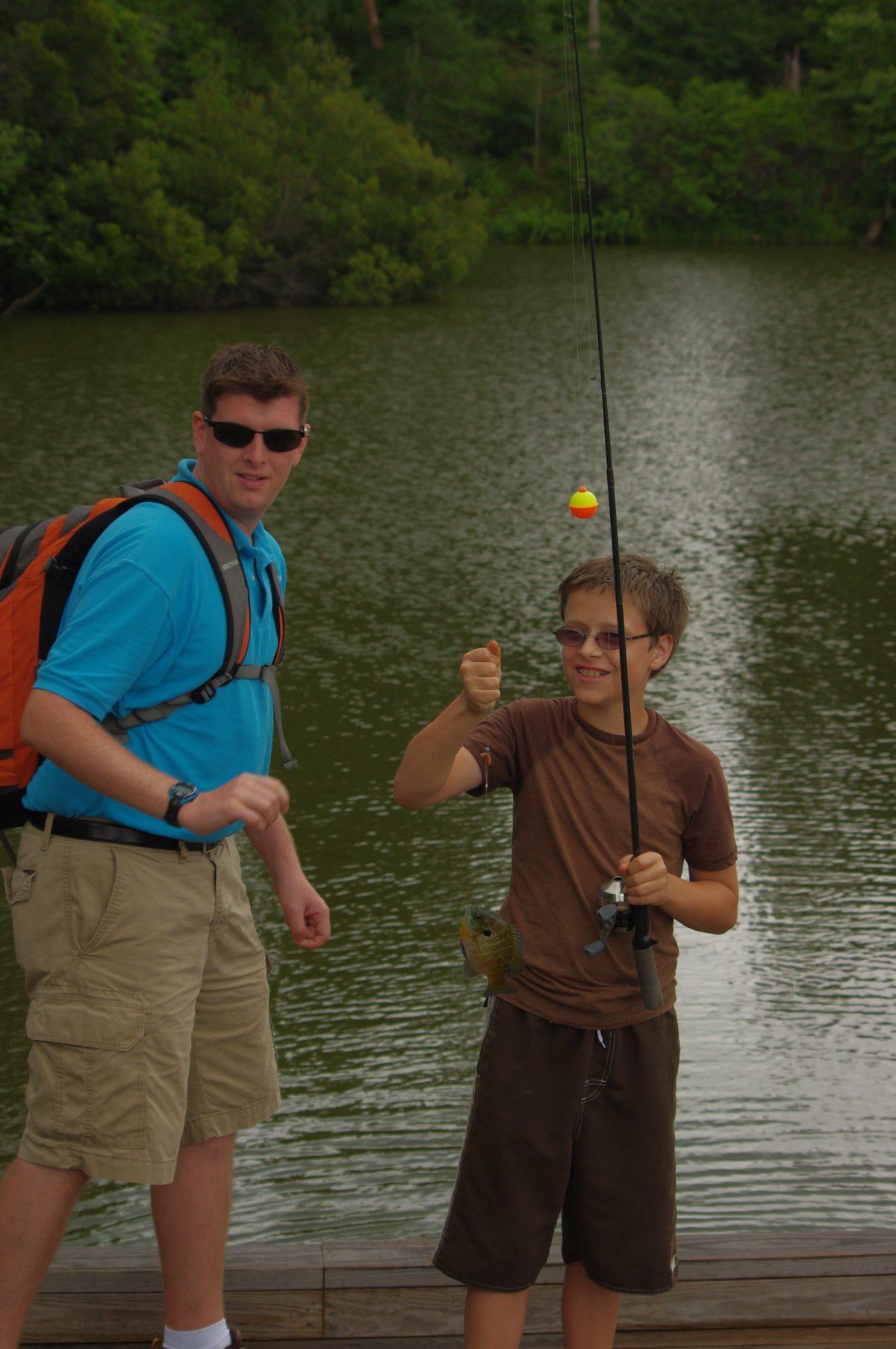
An ultralight rod makes a hand-size bluegill feel like a real fish. If the bass will not bite, switch to panfish instead of going home.
Access and etiquette
The best ponds are usually private, and the rules for fishing them are simple. Ask first, and ask in person. A polite knock, a clear introduction, and a promise to leave the place as you found it will open more farm ponds than any amount of scouting. Written permission is best when you can get it.
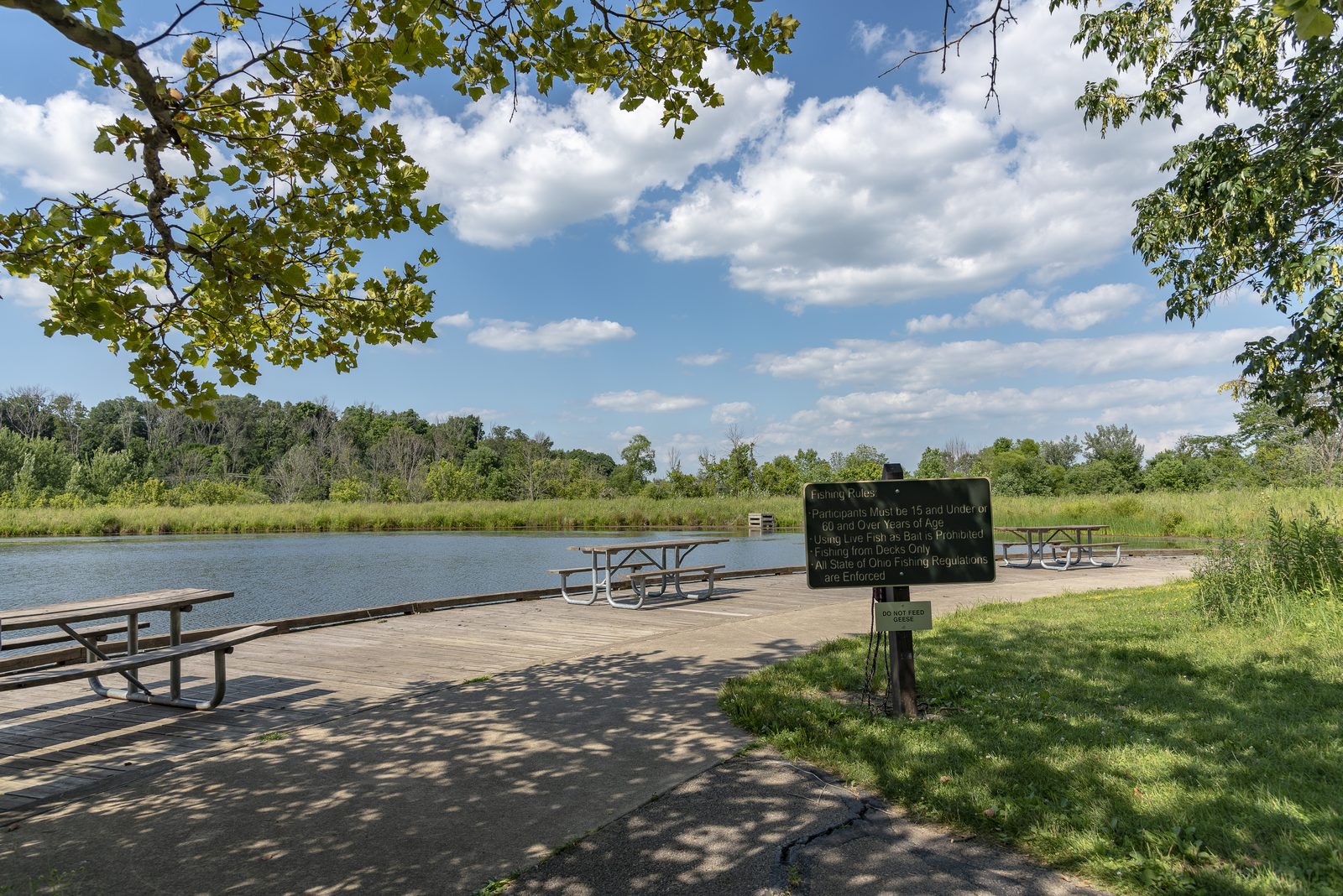
Public park ponds and neighborhood ponds are the accessible default, but they carry more pressure and more rules. Check the signs: some ban live bait, some are catch-and-release only, some are posted no fishing at all. Never trespass. A refusal costs you nothing; fishing a pond you were told to stay out of costs you the next pond too, because word travels.
And check the license rules. In most states, guests need a license even on a private pond, while owners are exempt in many states but not all. Our Kansas fishing license guide covers the home-state rules; your state's wildlife agency site has yours.
The bottom line
Pond hopping works because it plays to the strengths of small water. The fish are findable, the water is walkable, and the next pond is always a short drive away. Fish small lures on light line, stay back from the bank, sweep each pond in a steady arc, and move on when one goes dead. The anglers who catch the most pond bass are not the ones with the biggest tackle boxes. They are the ones who read the pond first, fish it quiet, and know when to leave.