Start with monofilament, learn your knots, and move to braid with a fluorocarbon leader later. One sentence. Ask the question on any forum and that's the answer you'll get, over and over.
But "mono" doesn't mean "any mono." And sooner or later, clear water or heavy cover will have you reaching for something else. Here's the full breakdown so you buy right the first time.
The three lines in plain English
Monofilament (mono) is a single strand of nylon. It stretches. That stretch is a shock absorber, forgiving when a fish surges or you set the hook too hard. It floats, it's cheap, it ties the easiest knots, and it's the most forgiving line to learn on. Its weaknesses: it stretches (so you feel less), it degrades in sunlight over time, and it's thicker than braid at the same strength.
Fluorocarbon is a denser line with nearly the same refractive index as water. Fish struggle to see it. It sinks, stretches less than mono, and shrugs off abrasion around rock and wood. But it's stiff and springy. It can fire off a spinning-reel spool like a slinky and coil into memory loops that'll drive you nuts. It's also the fussiest line to tie knots in. Cheap fluorocarbon, in particular, has a long reputation for snapping at the knot.
Braided line (braid) is woven fiber. Incredibly thin and strong for its diameter, with zero stretch. You feel everything, cast farther, and one spool lasts years instead of months. The tradeoffs are real: zero stretch means zero forgiveness on a bad hookset. It's the most visible line in the water. It's slippery, and the wrong knot can cut its strength in half. And on a spinning reel it'll tie itself into wind knots if you don't stay on top of it. Nearly all braid is woven from the same fiber: ultra-high-molecular-weight polyethylene (UHMWPE), sold under trade names like Dyneema and Spectra. So you're mostly paying for the weave, the coating, and the label.
| Mono | Fluorocarbon | Braid | |
|---|---|---|---|
| Stretch | High, forgiving | Low | Zero, maximum feel |
| Visibility | Low | Lowest | High, use a leader |
| Knot friendliness | Easiest | Fussiest | Slippery, needs the right knot |
| Abrasion resistance | Moderate | Best | Good, but frays on sharp rock |
| Longevity | Replace yearly | Replace yearly | Lasts multiple seasons |
| Price | Cheapest | Pricey | Mid, but lasts longer |
Our picks
Berkley Trilene XL 10 lb ~$6–10
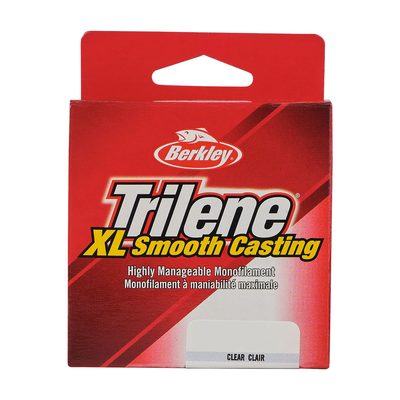
Trilene XL is the line everything else gets measured against. Veteran forum anglers have used it for decades and keep coming back. It's smooth-casting, low-memory for mono, ties strong knots, and at six to ten dollars for a full spool it's the best value in fishing line. It won't be the last line you ever buy. But it's the right first one: forgiving, predictable, and cheap enough to respool when you inevitably mangle it learning. Ten-pound test on a spinning reel covers everything from pond bass to catfish.
Berkley Trilene XL 10 lb — the default answer for a reason — link goes live soon
Seaguar InvizX 8–10 lb ~$20–25
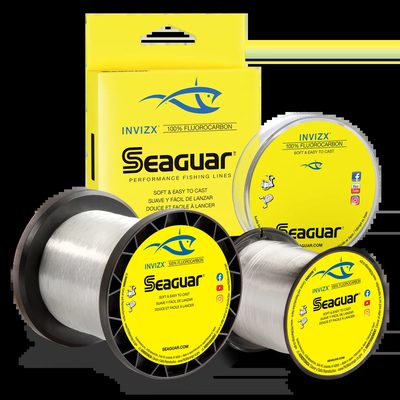
Fluorocarbon earns its keep in clear water, on bottom-contact rigs like jigs and Texas rigs, and as leader material. InvizX is the one fluoro that long-term owners consistently praise for actually casting well on a spinning reel. That's the failure mode that kills most cheap fluoro for beginners. It springs off the spool like it's trying to escape. It's also the fluoro veteran anglers reach for when fish are line-shy. Spool it as your second setup's main line, or keep it in the bag as leader material tied to braid.
Seaguar InvizX — the fluorocarbon that actually casts — link goes live soon
PowerPro 20 lb ~$20–30
PowerPro is the braid old hands default to. Thin, sensitive, casts well, lasts for seasons. For a beginner's spinning reel, 20-pound braid (roughly the diameter of 6-pound mono) is the sweet spot. Easy to handle, strong enough for anything in fresh water. Two caveats from the critics: braid frays faster than fluoro on sharp rock, and on a spinning reel it demands attention to avoid wind knots. In clear water, tie on a fluorocarbon leader (the double-uni knot handles it). In stained water, tie direct and don't overthink it.
PowerPro 20 lb — the braid that lasts seasons — link goes live soon
What line for what situation
This is the cheat sheet most beginners actually need:
- Just starting out, one rod: 10 lb mono (Trilene XL). Learn knots, learn fish, learn the water.
- Crystal-clear water: fluorocarbon main line or a fluoro leader. Invisibility is the whole point, and this is where matching line to conditions genuinely matters (the same conditions-first thinking behind our research method).
- Heavy cover, pads, frogs: braid, 30–50 lb. No stretch means fish come out of the salad.
- Topwater: mono or braid. Both float (or sink slowly). Fluorocarbon sinks and can drag a topwater plug down.
- Bottom contact (jigs, worms, drop shots): braid main line, fluorocarbon leader. Braid's sensitivity and casting up top, fluoro's stealth and abrasion resistance where it meets rock. Most serious anglers end up here eventually. Retie that leader every trip. It takes the beating.
- Treble-hook lures (crankbaits): mono's stretch is a feature here. It keeps fish from tearing hooks out during surges.
Line sizes that work
- Spinning reel (bass, general): 6–10 lb mono, or 20–30 lb braid
- Baitcasting reel: 12–17 lb mono to learn on (thinner line backlashes harder); 30–50 lb braid once you're comfortable
- Fluorocarbon leader with braid: 8–12 lb, 3–6 feet
- Panfish/ultralight: 4–6 lb mono
Thinner isn't better when you're learning. It's harder to manage and punishes every mistake.
What to skip
Cheap no-name fluorocarbon. Berkley Vanish is the classic example. It has defenders (it's been reformulated, and some anglers fish it for years without issue), but the recurring theme in critical reviews is that it punishes mediocre knots and doesn't age well. A beginner's knots are mediocre by definition. Don't make your first line the one that grades your knots the hardest.
Straight fluorocarbon on a spinning reel as your first line. It's the stiffest, springiest setup, and the most likely to produce a bird's nest that sends you back to the store. Learn on mono. Add fluoro as a leader later.
Overthinking brand loyalty. Trilene XL vs. Stren Original vs. Sufix Elite is a fine barstool argument. But any name-brand mono within your budget will catch fish. The anglers who catch the most are the ones who retie often and replace worn line, not the ones who agonize over the label.
The bottom line
Buy the Berkley Trilene XL in 10 lb, spool your spinning reel, and go fishing. Best six to ten dollars in the sport. When you're catching fish consistently and start noticing clear water spooking bites, add a second setup: PowerPro 20 lb braid with a Seaguar InvizX leader. That's the full progression, and it costs less than one premium lure box. The line was never what was holding you back. Knowing when to change it. That's the skill.