The last ten feet are where bass get lost
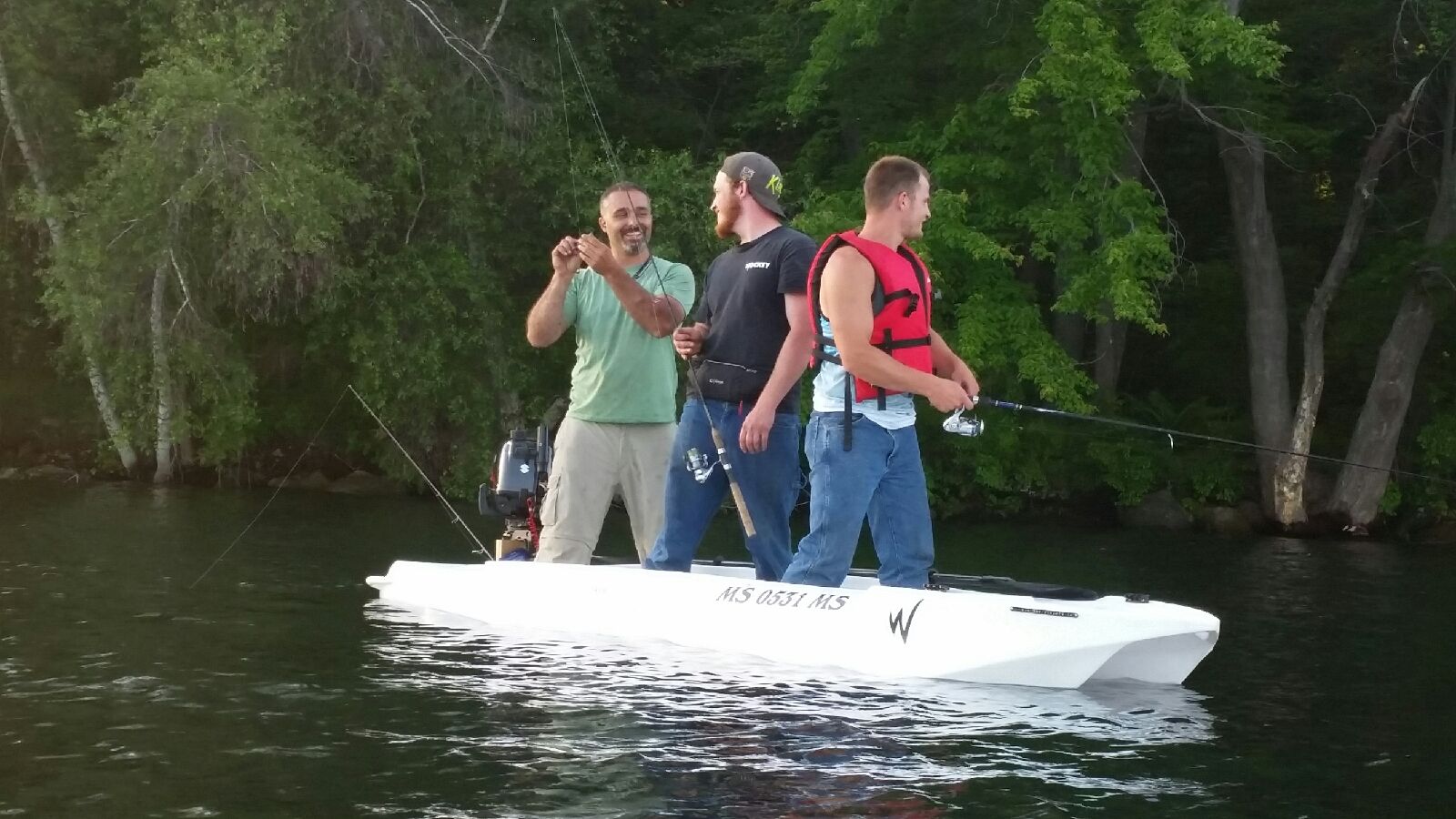
Landing a bass from a kayak is a different job than landing one from a bass boat. You are seated inches above the water, the fish is beside a hull you cannot stand on, and you have exactly one free hand. You are the angler, the skipper, the netter, and the net-wielder all at once, and every job falls to you.
Here is the conclusion up front, because it changes everything else: the landing is decided before the bite, not during it. Where you staged the net and how you fight the final twenty feet matter more than anything you do once the fish is at the side. Get those two right and the rest is mechanics.
Stage the net before you hook the fish
A kayak instructor tells a story that has become a cautionary classic. His student stored the net behind him in a crate rod holder, where it tangled with stored rods. Mid-fight with a citation-class smallmouth, he turned his back on the fish to free the net. The slack let the smallmouth throw the spinnerbait. Guides have a name for the maneuver: one kayak instructor calls it the net pirouette. It wastes time and hands the fish the slack it needs.
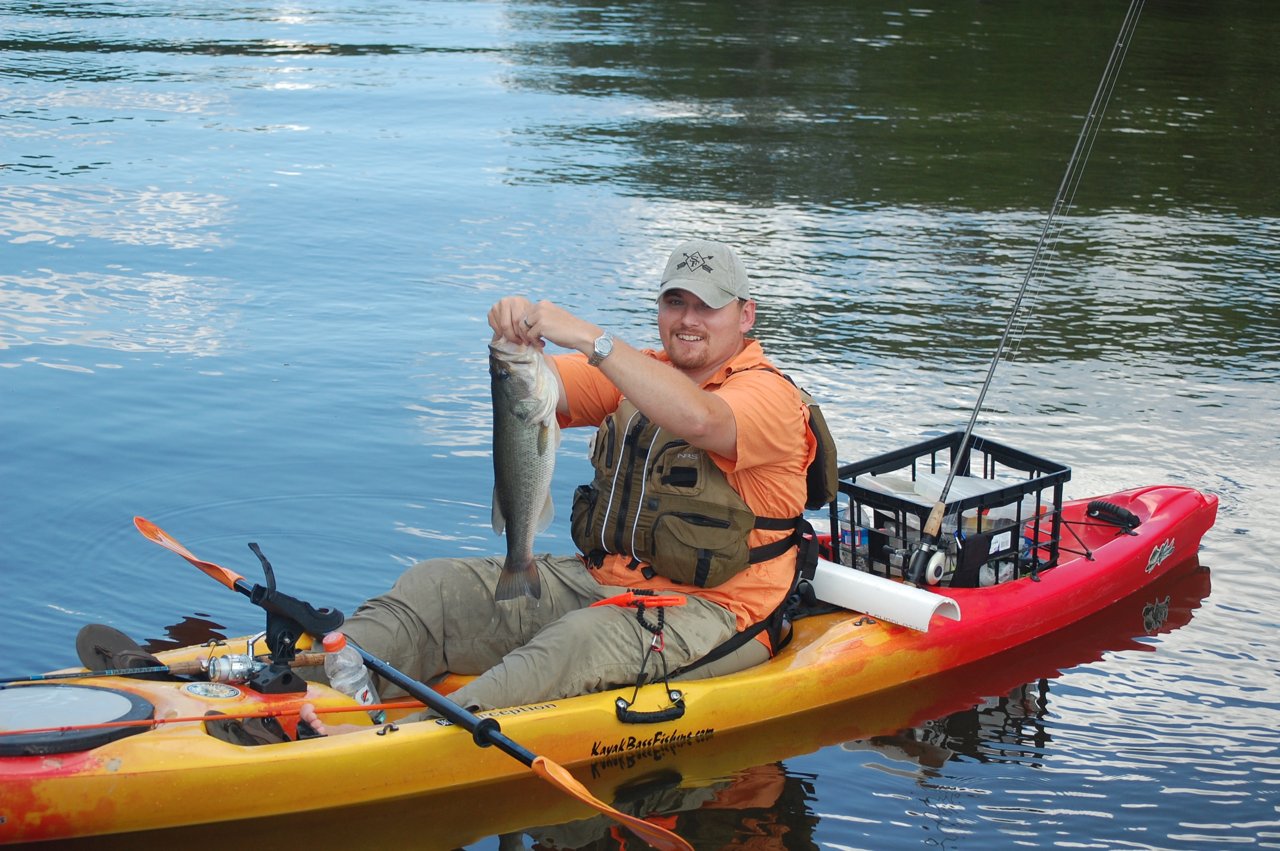
Your net lives in front of you: between your legs, across the bow, or on the front deck, untangled and grabbable without turning around. If reaching it means twisting your torso while a fish is on, it is stowed wrong.
The mesh matters too. Nearly every experienced kayak angler who weighs in on this landed on the same answer: rubber or coated knotless mesh, never knotted nylon. Knotted nylon strips the slime coat and fouls treble hooks, which is worse than an inconvenience when one hook is in the fish, one is in the net, and the exposed point is in your lap. A rubber-mesh net also lets you keep the fish in the water while you unhook it, which is the whole point of the next section. Our Best Landing Nets covers the hoop styles and handle lengths that work one-handed from a seated position.
Two more things to stage before the first cast: pliers on your belt or vest (on a retractable holder, not buried in a hatch), and one empty rod holder. An empty holder is where your rod goes the instant the fish is in, because a celebration that knocks a loose rod overboard is the most common post-landing disaster among kayak anglers.
Fight the last twenty feet right
When the fish is close, do three things and refuse to do a fourth.
First, keep the line short: no more than a rod's length from the tip to the lure, about six feet on most kayak rods. Reeling the fish to the rod tip is the classic rookie mistake at the boat: it puts the bend in the tip section (which is where rods snap), and it hands the fish slack the moment it surges. With the line short and the rod tip raised high, a deep bend of the rod brings the fish right alongside the cockpit, within reach of a short net.
Second, keep a steady angle of pressure. The single most repeated piece of fight advice from experienced kayak anglers is that sudden changes in rod angle are what throw hooks. The hook sits at a set angle in the fish's mouth, and every time you sweep, drop, or redirect, you give it room to work free. Seated anglers add a wrinkle: horizontal sweeps from a low seat create brief slack moments that a jumping smallmouth will exploit, so keep the sweeps vertical and the line tight through every jump. Keep continuous tension through every jump, because slack line is the number-one hook thrower.
Third, do not horse the fish. This is where the self-diagnosed losses cluster: an angler who lost four big smallmouth in twenty minutes traced it to a too-tight drag and pulling hard to stop fish from running under the kayak. Overpowering a bass enlarges the hook hole, and an enlarged hole is a spit hook. Loosen the drag, let the fish run, and play it until it quits. Expect one last hard surge the moment the fish sees the hull. The sources warn about it constantly, which means it is real, and it means your job is to be ready, not surprised.
Fourth, when the fish runs under the kayak, do not yank it back. Swing the rod around the bow and keep pressure on, or pivot the kayak with a hand paddle to bring the fish back alongside. Your rod needs to be long enough to reach past the bow and stern, and yanking a fish out from under the hull is how both fish and rods get lost.
The scoop: lead, don't chase
The single most repeated technique from seven independent sources is this: lead the fish to the net; never chase the fish with the net. One instructor puts it bluntly: if you chase a fish with the net, the fish almost always wins.
The mechanics: the net goes in the water before the fish is anywhere near it, hoop submerged, held steady off the side. Use the rod to walk the fish in headfirst, toward you, tip high. When the fish's head is over the hoop, lift the line and the net handle together in one motion, keeping the line tight as you come up. Tight line during the lift is what keeps the hook from fouling in the mesh.
Once the fish is in, cover it or slide it low. A thrashing bass in an open net at chest height is how prize catches flip back over the gunwale and swim off, which happened to at least one angler who tells the story on himself. Low and contained beats high and dramatic.
No net? Land it by hand
Some kayak anglers skip the net. Hand-landing works if you match the technique to the lure, and it punishes the wrong match.
Single hooks and heavy line: the lip lock. Slide your thumb into the lower jaw, fingers straight along the outside of the jaw, and lift. For a small fish on a stout single hook, experienced anglers will swing it aboard with a rod's length of line and lip it once it clears the gunwale (that is a two-pounds-and-under move, not a technique for the bass you will remember).
Treble hooks: never lip. The belly-cradle is the move. With a rod's length of line, guide the fish along the surface, slide an open palm under its belly, and lift and roll it low into the cockpit well, keeping the fish in the water or at your feet. Never press a treble-hooked bass against your body, chest, or lap. A thrashing fish will drive exposed treble points into clothing, skin, and thighs. Fish handled this way usually go still. Re-grip by the mouth immediately once the trebles are clear.
What never works from a kayak: the rod-tip yank and the boat flip. Yanking a fish overhead has broken more rod tips than car doors, according to one instructor, and flipping a bass aboard from a kayak is a documented bad idea. The hook often pulls during the flip, and a green bass thrashing loose in a twelve-foot cockpit with exposed trebles is an emergency-room trip waiting to happen. Boat flips belong on bass-boat decks, not in sit-on-tops.
Whatever you do, keep your body centered. The rule from the instructors is body over hips, weight over the centerline, and never lean or reach past the gunwale. One writer watched a kayak flip when an angler reached out to lip a big bass. Where the head goes, the body follows, and in a kayak the water follows the body.
The first five seconds after
The fish is in. Do these in order, rod first.
Put it in the empty holder or open the bail and rack it immediately. The celebration rod-overboard is real, and it always happens during the best fish of the day.
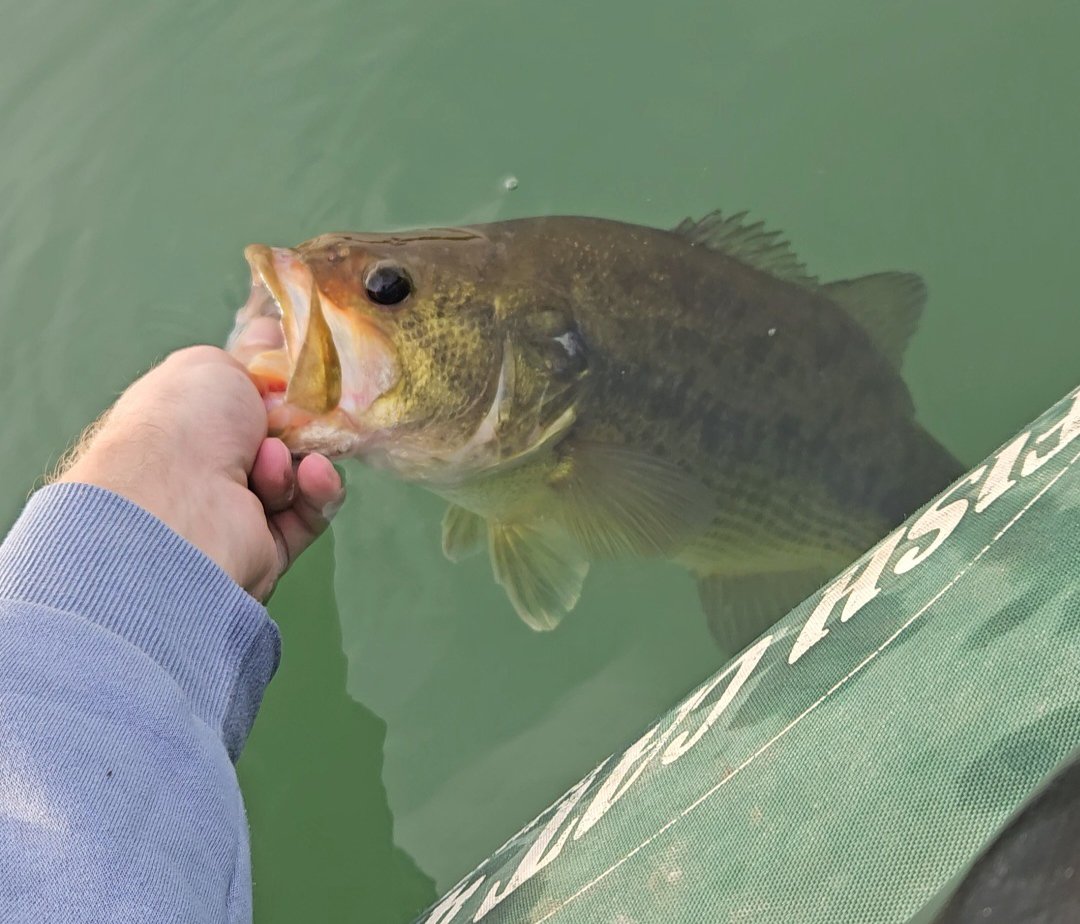
Then unhook the fish while it is still in the net, in the water. This keeps air exposure near zero and gives you a contained fish to work on. Wet hands only. Hold the fish horizontal with belly support. Never vertical jaw hangs on a big bass, never fingers in the gills. Crush barbs if you are practicing catch and release; every dehooking gets faster. Our Catch and Release Done Right covers the full unhooking and handling sequence.
For the release, face the fish into any current or wind drift, support it until it holds itself level, and let it kick away on its own. In still water, a slow forward push works; never drag it backward. When the dorsal fin rises and you feel a pulse in your hand, it is ready.
The bottom line
Landing bass from a kayak is won with setup, not strength. Stage the net in front of you before the first cast, fight the last twenty feet with six feet of line and a steady rod, lead the fish to a submerged net instead of chasing it, and rack the rod the second the fish is in. Do that, and the fish at the boat stops being the one that gets away.