The fish that turns kids into anglers
Ask a room of anglers what their first fish was and most of them will say the same thing: a bluegill, maybe a crappie, something small caught on a worm under a bobber, probably at a pond, probably before they were ten. Bluegill are widely considered the most common first fish in American fishing, and the reason is not sentiment.
Bluegill are everywhere, they bite all day, they school up so one catch usually means several more, and a hand-size fish on light tackle fights like something twice its weight. A first trip needs action, not patience.
The short version: a small hook, a piece of worm, a bobber, and a spot with cover. That rig has introduced more beginners to fishing than any other.
Meet the family
Panfish is a loose name for a group of small, deep-bodied freshwater fish that fit in a frying pan. They are not one species, and knowing which one is on the line matters, because they do not all behave the same way.
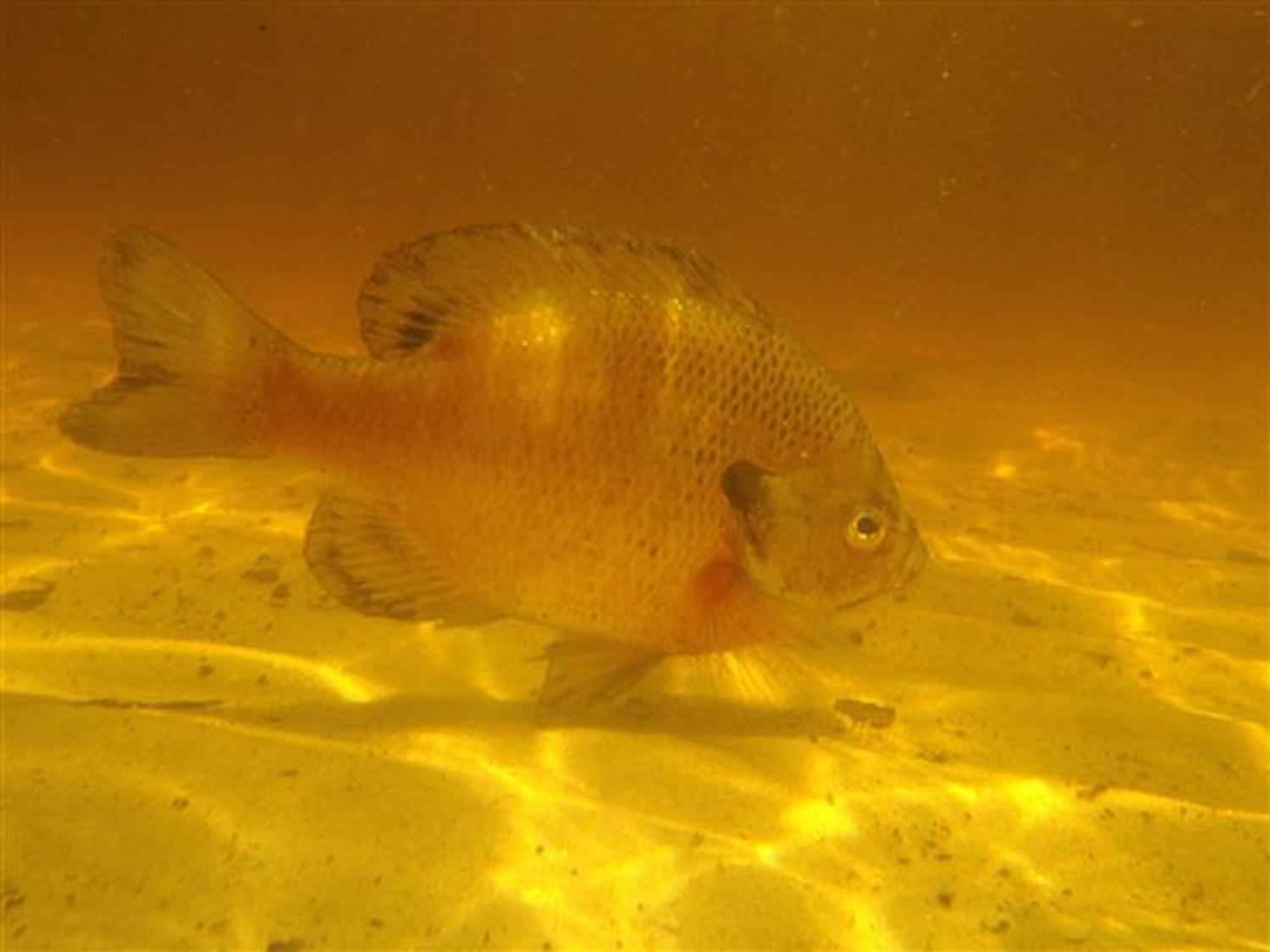
Bluegill is the one to start with. A round, plate-shaped sunfish, usually six to ten inches long, with a dark ear flap and often an orange belly. They live shallow near cover and bite a worm fast.
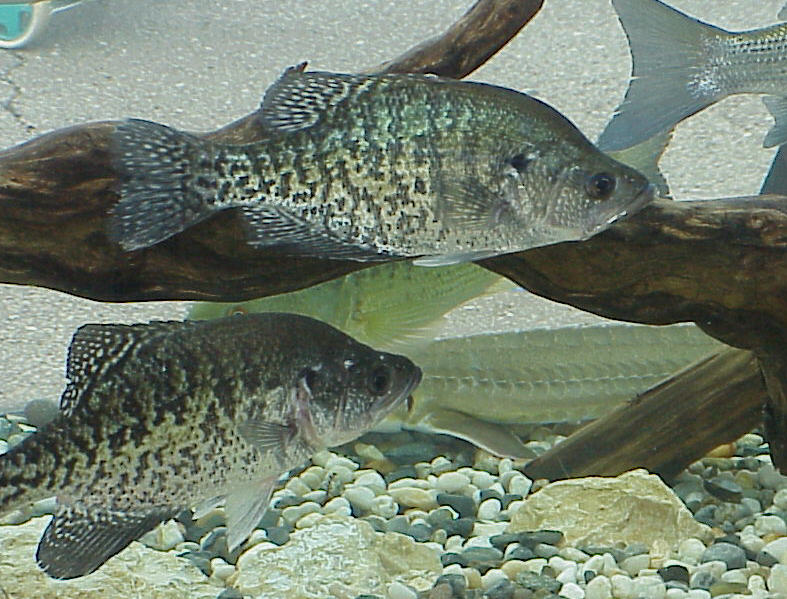
Crappie is the step up. Black crappie are speckled and compact, white crappie carry faint vertical bars and run taller and thinner, and both have bigger mouths than a bluegill. White crappie run nine to fifteen inches; black crappie run shorter, roughly five to twelve. They school in open water at a set depth, and their mouths are soft, thin as paper, so a hard hookset tears the hook out. Crappie are a fine second fish, once the bluegill are handled.
Yellow perch are the third member of the family, long and yellow-gold with six to eight dark bars and orange lower fins. They school by size over deeper flats and hug the bottom, where small minnows and worm pieces catch them, and they are the fish-fry prize of the group. Redear, pumpkinseed, and green sunfish round out the family, and they all bite the same rig.
The rig: bobber, hook, worm
This is the whole first-trip setup, and it has not changed in generations because it works.
Start with a bobber, the little float that sits on the line and tells you when a fish bites. Use the smallest bobber that will float your bait. A bobber that is too big drags, and a bluegill feels the resistance and spits the bait.
Below the bobber, pinch one or two small split shot, tiny weights that crimp onto the line, about a foot above the hook. Then the hook: a #6 to #10 Aberdeen, a long-shank hook, which makes it easier to get out of a small mouth. The #8 is the consensus middle. Use a #10 or #12 only when the fish are small-mouthed or picky, and know they set deep, so they suit keeping fish better than releasing them.
Set the bobber one to three feet above the hook to start, with two feet as a good default. If the bites are not coming, change the depth six inches at a time, because sometimes six inches is the difference between no bites and nonstop action.
The bait is a piece of worm, not a whole one. Half an inch is plenty, because a whole worm lets a bluegill nibble the free end without ever touching the hook. Crickets work just as well, and they are the top panfish bait in the South. Wax worms are the cold-water option, and bread balls and canned corn work in a pinch. Bluegill are not picky: anglers report them biting bread, corn, hot dog pieces, and shrimp.
Line should be light monofilament, the standard clear nylon line. Two to six pound test works, with four pound the usual pick, because four pound is forgiving around brush, where two pound snaps when a jig hangs up.
Where to find them
Panfish live on cover, not in open water: weeds, docks, brush piles, fallen trees, lily pads, and shade lines. Fish the edge of the cover, not the middle of it. The fish sit just inside the weed line, looking out.
Farm ponds hold excellent bluegill fishing, and city park ponds are the accessible default. Docks and piers are prime, especially the shady side. Our guide to Pond Hopping: How to Fish Small Water covers reading a pond in detail.
If you do not get a bite in five to ten minutes, move. A few yards down the bank is enough. Panfish school, so a spot with no bites is usually a spot with no fish, not a spot with fussy fish.
When to go
Late spring into early summer is the prime window, when bluegill move shallow to spawn in water above about 70 degrees. The fish fan out circular beds in the shallows, pale dinner-plate circles you can see from the bank, so fish the edges of the beds, not the middle.
Crappie spawn earlier and cooler, moving shallow once the water stabilizes around 60 degrees, as early as February in the South and into late May or June farther north. Fall is the strong second peak for both species.
Within a day, morning and evening are best, and bluegill are daylight feeders that bite all day long. Summer midday heat pushes the fish deeper and into shade, so fish the shadowed side of a dock.
How to fish it
Cast past the cover and let the bobber drift back to it. Then wait. This is the hardest part for a beginner.
Do not strike at the first twitch, because a bluegill will bump the bait and the bobber will dip and come back up. Wait until the bobber goes under and stays under, then lift the rod firmly with a steady lift, not a hard bass-style hookset, since a hard yank just pulls the hook out of a small mouth. Our guide to How to Set the Hook covers the timing in detail.
Once the fish is on, keep the line tight and reel steadily, and let a kid reel it in themselves, even if it takes a while.
If the bobber keeps going down and coming back up without a hookup, the bait or the hook is too big. Downsize both. If small fish keep stealing the bait, go the other way: a #6 hook and a slightly bigger piece of worm will get past the little ones.
Taking kids: be the charter captain
Fishing with kids is a different trip from fishing alone, and the parents who enjoy it most are the ones who accept that. When you fish with kids, it is not about you. You are the charter captain: baiting hooks, untangling line, unhooking fish, and handing the rod over for the fun part.
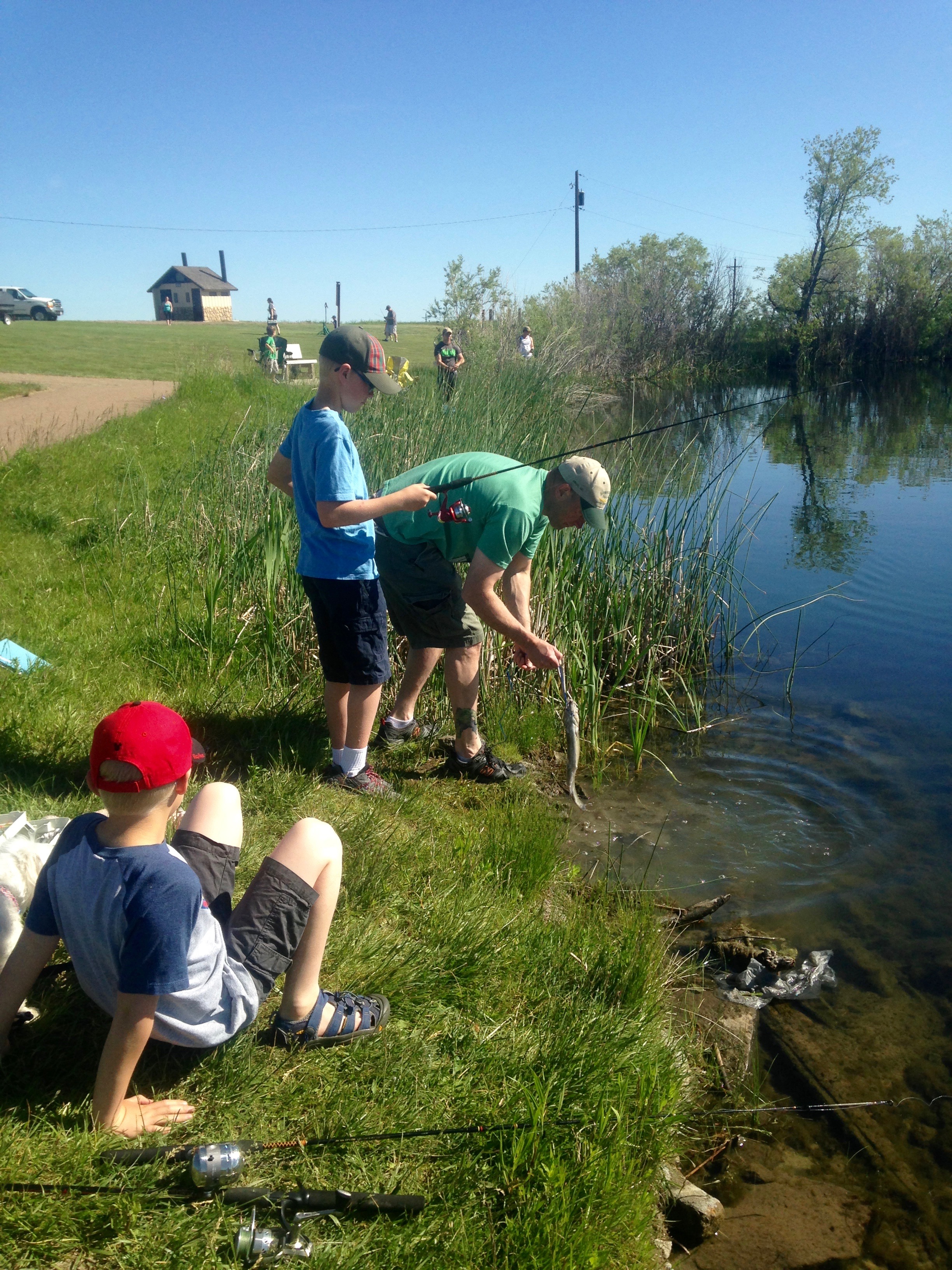
A few tricks from parents who have done it a lot make the day run smoother. Pre-tie leaders at home, short lengths of line with a hook and bobber already tied on, and swap them in with a snap swivel, a small metal clip that joins two lines without a knot. Buy bobbers in bulk and toss tangled rigs in a bucket to fix later. Bait one child's hook at a time, and use bait that is harder to steal, like scented dough baits.
Handling a panfish
Bluegill have a sharp dorsal fin, the spiny fin along the top of their back. Fold it flat by sliding your hand from head to tail along the back, then grip the fish firmly. Wet your hands first. Dry hands strip the slime coat that protects the fish from infection.
Long-shank hooks come out easier than short ones, which is why the Aberdeen is the standard. If a fish swallows the hook deep, cut the line close to the hook and release the fish rather than digging for it. Crimping the barb down with pliers makes unhooking faster and safer, and it is worth doing on a first trip.
The gear: cheap and simple
A first panfish setup does not need to cost much. A light or ultralight spinning rod, five to seven feet long, with a small spinning reel, covers everything in this guide. Spool it with four pound line. A push-button spincast reel, the kind where you press a button to cast, is the simplest option for the youngest kids. A cane pole, a long pole with no reel at all, is the oldest option and still a good one for a small child on a bank.
Our guide to Best Ultralight Spinning Rods for Panfish covers the light end of the range in detail, but the short version is to spend twenty-five to fifty dollars on a combo, and the reel is the part worth upgrading first, not the rod.
Do not buy a serious panfish rod for a first trip. The sensitive graphite rods that experienced panfish anglers love, the ones in the hundred-to-two-hundred-fifty dollar range, exist to feel the lightest bites at depth, and a beginner fishing a bobber in three feet of water does not need that.
Leveling up: tiny jigs, crappie, and perch
Once the bobber rig is second nature, the step up is a tiny jig. A 1/32 or 1/16 ounce jighead, a small lead head with a hook, tipped with a one-to-two-inch soft plastic tube or grub, a small soft lure shaped like a hollow tube or a curled tail, catches bluegill and crappie both. The Trout Magnet and Bobby Garland's Itty Bitty baits are the ones that come up most often in panfish circles. Fish them slow. Most strikes come while the bait is sitting still.
Crappie are the next species to chase. Find a school suspended, hanging in open water, at one depth, drop a jig or a live minnow straight down to just above them, and hold it there. Crappie feed upward, so a bait below the school gets ignored. Keep the line tight, because a crappie mouth tears easily and a slack line loses fish.
Perch want the bottom, so a small minnow or a piece of worm on a #6 hook, fished just above the bottom on deeper flats, is the setup. Perch school by size, so if all you are catching are little ones, move or go deeper. A small popper, cast within a few inches of vegetation and fished dead slow, is the fun step up for bluegill.
Eating what you catch
Bluegill are good eating, and several long-term anglers rate them as good as crappie, if not better. The flesh is firmer than crappie, and a mess of bluegill fillets fries up the same way: milk soak, cornmeal batter, hot oil. Keep only what you will eat in a meal or two, and let the biggest fish go.
The bottom line
Bluegill are the perfect first fish because they remove every barrier between a beginner and a bite. They are everywhere, they bite simple bait on simple tackle, they school up so the action keeps coming, and they fight hard enough to make a small fish feel like a big deal. Start with a bobber, a #8 hook, and a piece of worm near cover in late spring.