The tap is the easy part
You feel the tap, you swing, and the fish is gone. Every angler has a version of this story, and most of them blame luck. The forums and the pros tell a different story: missed fish are usually a hookset problem. Set too early and you pull the bait out of the mouth. Set too late and the bass has already spit it. Set with the wrong motion for the hook and you do the fish's work for it.
There is one rule that covers all of it: match the set to the hook. A jig wants a hard set, a crankbait wants a lean, a frog wants patience, and a drop shot wants almost nothing at all. Get that rule and the details below, and you will start turning taps into fish.
The one thing every good set shares
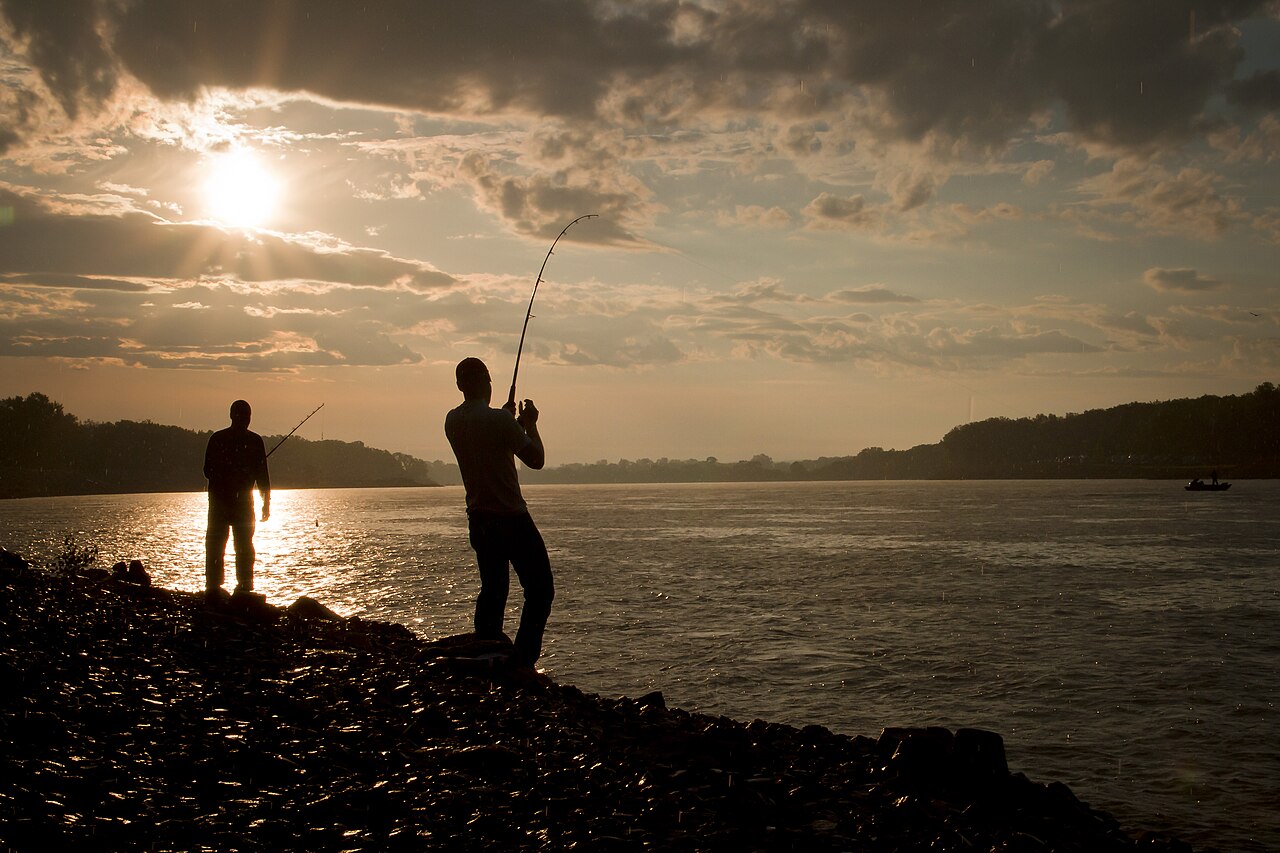
Before the hook type matters, the sequence matters. Point the rod tip at the fish, reel fast to take up the slack, and feel the weight before you set. That is the universal pattern across forums and videos alike, and a hookset on slack line is just waving a rod around: the energy never reaches the hook.
Keep the rod tip low while you work the bait, around 9 or 10 o'clock, so you have room to sweep. If the tip is already at 11 or 12 when the bite comes, there is nowhere left for the set to go. Reel down fast and feel the fish before you move. Then commit. A half-hearted set loses as many fish as a bad one: once you decide to set, set with everything the hook type calls for.
Power sets: jigs and Texas rigs
Single hooks buried in plastic or skirted with a jig get the hard set. Drop the rod tip, reel the slack, and pop the rod up hard. This is the famous "cross their eyes" set, and for jigs in cover it is exactly right: a big single hook has to punch through skirt, plastic, and hard jaw. Pair the motion with the right tool: our Best Jigs for Bass covers the trailers and weights that belong with each presentation.
One refinement matters. When a bass clamps down on a jig, reeling drum-tight wedges the bait against the fish's mouth so the hook cannot move: you just drag the fish. Instead, reel down to position, then at the last instant drop the tip a hair and add a whisper of slack before the pop. The rod tip gets moving first, like cracking a whip, and the hook punches through. BassResource's Glenn May has shown this for years and buries the hook to the bend nearly every time.
Distance changes the motion. Close in, under about 30 feet, a vertical snap set works. On long casts, especially with stretchy mono, point the tip at the fish, reel fast until the line comes tight, then sweep back firmly: the reel set. The stretch eats a snap at 50 feet, so you trade the pop for sustained pressure.
In heavy mats the set has a second job: move the fish off the mat and keep it coming, or it wraps you in the grass. Set hard and keep cranking.
Treble hooks: lean, don't slam
Treble hooks are the opposite problem. They are thin, sharp, and they catch almost anything they touch. Hammering a crankbait the way you would a jig bends trebles out, tears tissue, and pulls the bait free. Nearly every experienced voice says the same thing: with trebles, the fish often hooks itself. Your job is to lean into it and keep the line tight.
The motion is a quick lift or a side sweep, not a vertical snap. Lock your arms and rotate your hips; reel steadily while you lift. The hook finds its own home. If you have been losing crankbait fish to hard sets, you have found one of the most common hookset mistakes in bass fishing.
To unlearn the reflex, cast a crankbait and tell yourself: if a fish bites, do not set the hook. Just keep reeling. Three or four reps teaches you how long a bass holds the bait, and then you layer in the quick lift. Our Best Crankbaits for Bass covers what to throw while you practice.
Frogs and topwater: the pause is the set
Frog fishing loses more fish to impatience than to any other mistake. The blowup is spectacular, and swinging at the splash is instinct. But the blowup is not the bite. Big fish slurp a frog quietly; the splashy ones are often small fish that never had it.
Wait. Let the frog disappear, reel down during the pause, and set when you feel the weight of the fish or see the rod load. "Go by feel, not sight" is one constant refrain in frog-hookset threads. A count to two, one Mississippi, or a slow breath is the training-wheels version. A reliable cue is the rod bending under a load that is not the lure.
Experts split on the exact beat: a vocal camp sets the moment the frog goes under, since a bass can crush and spit a frog in a fraction of a second. Both camps agree on the principle, though: never set on the visual. Reel during the pause so the slack dies and the set has something to work with.
Two gear notes help frogs. Bend the frog's hooks out slightly to widen the gap (check it against the lure body: the gap should clear twice the body's diameter). And when a frog fish misses, throw back immediately with a Texas rig or wacky worm. A fish that blew up on a frog is in a predatory mood, and they come back more often than you would think.
Finesse: the reel set
Drop shots, Ned rigs, and wacky rigs use light-wire hooks with tiny barbs on light line. They penetrate past the barb with almost no force. A hard snap straightens the hook or breaks the line. So do not snap at all: reel down on the fish and sweep the rod back in one steady motion. The fish's own struggle finishes the job.
With a long cast and stretchy line, you cannot generate hook speed at the lure. Reel until the rod is fully loaded and the line is tight, then keep the pressure coming. The load does the work the snap would have done.
The cheap fixes: sharp hooks, right rod, right line
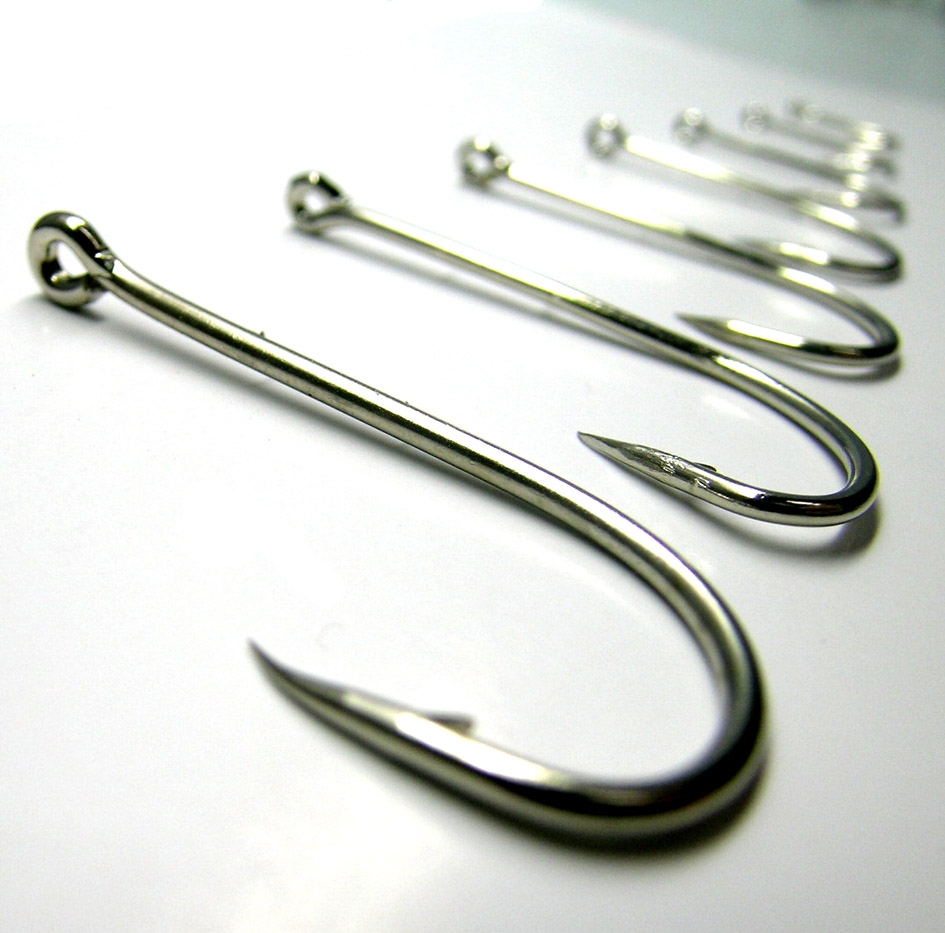
Before you blame your timing, check your hooks. Dull points cost fish, and even new hooks are not always sharp out of the package. The fingernail test takes two seconds: drag the point across your thumbnail. Sharp catches; dull slides. Keep a hook file in the boat or the bank bag and touch up points before they cost you a fish. Our Best Fishing Hooks for Bass breaks down what to sharpen and what to replace.
Match the rod to the hook. A heavy-wire hook on a medium-light rod will never penetrate: the rod bends and the energy dies. Power sets want fast, stout rods; trebles and moving baits want a moderate action that loads and forgives.
Line stretch changes the math. Braid has almost no stretch, so it needs less set than mono: with 65-pound braid and sharp hooks, a firm lift is plenty, and a gorilla set can rip the hook free or tear the fish's mouth. Mono stretches, so it needs more set, especially on long casts. That reflex is a relic of the stretchy-mono era: on short rods, it took a huge motion to overcome the stretch. Modern braid and longer rods changed the equation. The goal is only ever one thing: drive the point past the barb.
Learn to read the bite
Most hookset arguments are really bite-detection arguments. The anglers who miss the fewest fish see their bites, not just feel them. Watch the line where it enters the water. A sideways twitch, a line going slack on the fall, a sink rate that stops early: those are bites before your hand knows anything. One forum regular put it well: if you are casting into 12 feet of water and the lure only fell 8, you have been bit.
Learn what "not a bite" feels like, too: how each bait normally feels through that cover, so anything different stands out. With weightless presentations, lay a fingertip on the line above the reel.
And after a miss, do not just cast again. Pause the bait and let it sit. Follow up at the same spot. The diagnostic the pros use is simple: if you miss three fish in a row on the same rig, change the timing or the force. Something in the setup is wrong, and swinging harder is rarely the fix.
Practice until it is automatic
Hooksets are free, so practice them where nothing is at stake. On frogs, practice the pause on every blowup: count to two, reel down, feel for the weight. On crankbaits, run the no-set drill until the reflex loosens. In the yard, tie a hook to a rubber band on a branch and practice the drop-and-pop and the sweep until the motions live in your hands.
Nobody lands every fish. Even the best frog anglers miss blowups: a good day runs roughly three hookups out of four. The goal is not perfection; it is stacking the odds. Match the set to the hook, reel down first, commit fully, and let sharp hooks do their share of the work.
The bottom line
A good hookset is not one motion. It is a quick decision: what hook is on the line, and what does it need? Single hooks in cover get a hard pop, trebles get a lean and sweep, frogs get a pause, weight, and set, and finesse gear gets a steady reel set. Learn those four, and the fish you are losing today start coming to the boat.