Wading puts you on fish other anglers cannot reach: the creek bend behind the brush, the river ledge fifty yards from the ramp, the pond edge where the bank drops off. The problem is the price of staying dry. Good waders cost $500 or more, and cheap ones have a reputation for leaking on the first trip out.
Our verdict up front: buy the Frogg Toggs Hellbender, about $100 to $150. It is the most recommended budget wader we found, the only one under $150 with real breathable fabric, reinforced knees, and a multi-year owner record. If money is truly tight, the Frogg Toggs Canyon II costs about $80 to $90 and lasts as long on easy water. If you want boots built in, the TIDEWE Neoprene Chest Waders run about $80 to $140 all-in. And if you can stretch to about $300, the Orvis Clearwater is the stretch pick.
One warning before the picks. A stockingfoot wader ends in a soft neoprene sock, so it needs separate wading boots at about $90 to $110. A $100 wader is really a $200 kit, so price the kit, not the wader. Every angler we read agrees on one rule: all waders leak eventually, which means price buys time, not immunity.
Frogg Toggs Hellbender ~$100–150
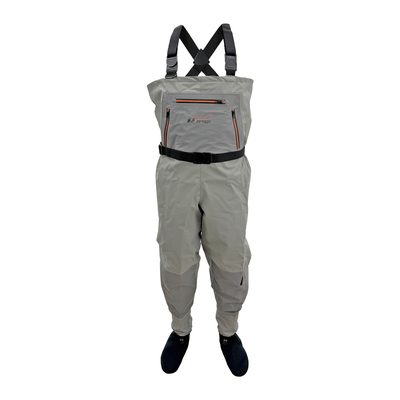
The Hellbender is a breathable stockingfoot chest wader. Breathable means the fabric lets sweat vapor out while keeping river water out, so you stay dry from both sides on a warm day. The upper is 4-ply nylon with Frogg Toggs' DRIPORE Gen 2 membrane, and the knees are double-reinforced for gravel and brush. It comes with a fleece-lined handwarmer pocket, an oversized chest pocket, gravel guards (flaps that keep stones out of your boots), and a wading belt. No other wader near this price packs that much in.
Owners keep it for years. One long-term owner quoted in a roundup fished his for more than 50 outings without a leak. The praise repeats the same three things: real breathable fabric at this price, knees that survive brush, and pockets that actually hold gear.
Two downsides, starting with the seams. The Hellbender has more seams than a simpler wader, and seams are where budget waders leak. Owners report leaks at the knees and at the neoprene booties, the socks at the bottom of the legs. It is a minority of owners, but it is the consistent complaint. Second, it will not last like a $500 wader. Expect one to three seasons of regular use, longer if you fish a dozen days a year and hang them to dry after every trip.
Not for: anglers wading more than 40 days a year, or anyone who wants a buy-it-once wader. That angler should read the Clearwater section.
Frogg Toggs Canyon II ~$80–90
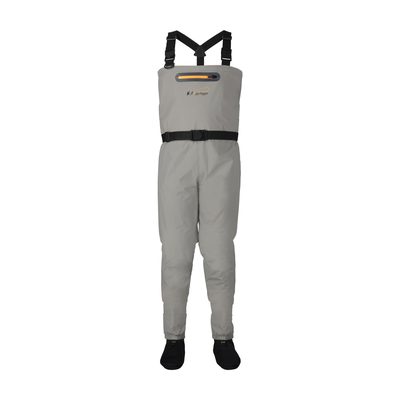
The Canyon II is the Hellbender's simpler little brother, with the same 4-ply nylon upper and DRIPORE Gen 2 membrane, minus the reinforced knees and handwarmer pockets. What it keeps is the part that matters most, a genuinely breathable wader for under $90.
It has the best durability record at this price. The IntoFlyFishing team fished a pair for two full years, 50 to 60 outings a season. They took it through northern Canada and Colorado streams and had zero leaks. One forum angler is on year four with his, cleaned after every trip and hung to dry, and says they outlasted two pairs of Simms that leaked in the crotch within a year. Field & Stream names it their best budget wader.
Two downsides. The knees have no reinforcement, so brushy creeks wear them faster than the Hellbender. The neoprene bootie seams are the known weak spot: the stitching around the boots can start leaking after a season or two of hard use. Sizes run large, so check the size chart instead of ordering your usual size.
Not for: brushy rivers where you kneel and crawl. On pond edges and light creek days, and packed down to about 10 by 4 inches for travel, the Canyon II is the smarter buy.
TIDEWE Neoprene Chest Waders ~$80–140
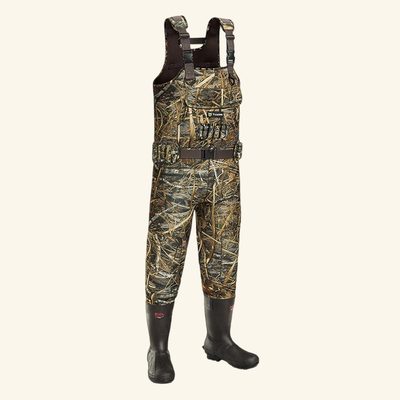
Bootfoot waders have the boots built in, so there is nothing else to buy. The TIDEWE neoprene chest wader is the cheapest way into that setup. It has a 3.5mm neoprene upper with triple-finished seams (stitched, glued, and taped). The built-in boot carries 600 grams of insulation for cold water, and the price usually lands between $80 and $140. Amazon shows more than 12,000 reviews on the bootfoot line, the biggest owner base of any wader in this guide.
The case for it is simple. Neoprene is warm. For cold water, muddy pond edges, and short sessions, built-in boots beat lacing up separate wading boots every time. One breakdown of 27 owner reports found four leak or boot failures. Of the six owners with three seasons or more behind them, five reported no leaks at all.
Two downsides, both real. Neoprene does not breathe, so in summer heat you will sweat inside them, and the insulated boot makes that worse. The boots are the weak point: in that same 27-owner sample, complaints about the boots outnumbered praise two to one, and three of the four failures were confirmed neoprene. Buy these for cold water and pond edges, not rocky rivers.
Not for: summer wading, long hikes to the water, or rocky rivers. A stockingfoot wader with separate boots is the better tool there. One note on the name: TideWe's site now sells this wader as the Seeker, with an 800-gram boot instead of 600, from $139.99. The 600-gram version still sells on Amazon, which is where our link goes.
Orvis Clearwater ~$298
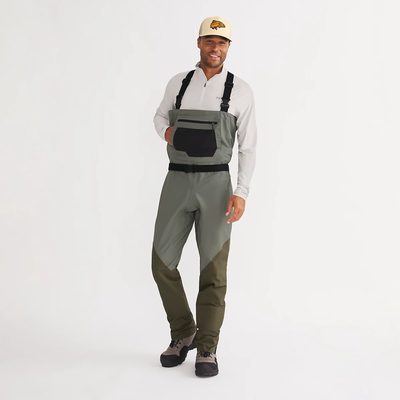
The Clearwater is what you buy when the budget stretches to $300. It is a breathable stockingfoot chest wader with a four-layer lower, low-profile seams, and a fit that testers keep praising. GearJunkie calls it the best budget option of 2026, and Reddit threads recommend it more than any other wader over $200. One outfitter runs Clearwaters as client waders every day, twelve months a year.
The extra money buys three things. Four layers on the lower half instead of three, which is where most budget waders leak first. Seams built by a company that has made waders for decades, plus a warranty and repair program that actually answers the phone. The wader also converts to waist-high: opposing buckles on each side let the top fold down, which is handy on warm days.
Two downsides. It runs cold: the fabric is thin, so layer underneath in cold water. Our Fall Bass Fishing guide covers how cooling water changes the fishing, and thin waders feel that cold too. And it costs three times the Hellbender, real money for a wader that still leaks eventually. One Reddit user reported five years from his pair, but that is the long end of the range, not the promise.
Not for: anyone whose budget stops at $200. At that price the Hellbender is the right call, and the Clearwater is the upgrade to save for, not the reason to overspend.
What to skip
Simms Tributary. This is a common recommendation in older budget guides, and it is the one to avoid right now. Simms lists it at $300, not the $180 of a few years ago, and the current generation has a real leak problem: one Reddit thread reports thigh-seam leaks after eight uses and four pairs leaking in a row. Another owner had a knee seam blow out fifteen minutes into the first use. A few owners report two or three hard seasons with no issues, so quality looks hit or miss. At $300, hit or miss is not good enough.
Caddis Deluxe. The price is right, but leak reports converge: one owner sent a pair back for patching and it still leaked. Skip it.
Compass 360 Deadfall. Leaks on short runs and unfinished seams, and at about $180 it competes with waders that have real owner records. Skip it.
Redington Crosswater. The old budget favorite has gone quiet: it no longer appears in current roundups, and the Escape has taken its place as Redington's budget wader at about $230. If you find Crosswaters on clearance, check that your size is actually in stock.
Buying advice: fit, soles, and care
Size up. Buy one size larger than you think you need. Climbing over rocks and logs stresses seams, and a tight wader pulls at every stitch. Try them on with your wading boots and thick wool socks.
Stockingfoot for rivers, bootfoot for pond edges. Stockingfoot waders with separate boots give better ankle support and a better fit, and the boots outlast the waders: when a stockingfoot wader leaks, you replace the wader and keep the boots. Bootfoot waders win on mud, sand, and short sessions where you step in and out. Felt soles grip slick rock best, but a few states ban felt to slow the spread of invasive species, so check your local rules before you buy. Rubber soles with studs are the safe default. Wading puts you close enough to sight-fish, and our Best Polarized Sunglasses for Fishing covers the glasses that make reading the water possible.
Wear the belt, snug. The wading belt keeps the waders from filling with water if you slip, and a wader full of water is heavy enough to drag you down. Cinch it every time.
Care is half the lifespan. Hang waders to dry, inside out first, after every trip. Never fold them into a ball in a hot car. Rinse sand out of the booties. A wash and a fresh coat of DWR (durable water repellent, the coating that makes water bead) can save a pair that has started seeping at the seams.
Waist-high is the sleeper pick for bass anglers. If you mostly fish pond edges and creeks where the water stays below your thighs, waist-high waders run cooler, move better, and cost less. Chest waders earn their keep on deep crossings and cold water. A short-handle net matters when you are waist deep: our Best Landing Nets covers the ones that work waist-deep in the water.
Bottom line
Buy the Frogg Toggs Hellbender for the best budget wader: the most features, the best knees, and the longest owner record under $150. Buy the Frogg Toggs Canyon II if $90 is the ceiling: the same breathable fabric, minus the extras. Buy the TIDEWE Neoprene Chest Waders if you want boots built in for cold water or muddy pond edges. Save for the Orvis Clearwater if you wade often enough to care about warranty and fit. Whatever you buy, budget for boots, wear the belt, and hang them to dry.