
Sun on water is the one condition every bass angler fishes in and nobody enjoys. Glare flattens the surface into a sheet, and the stump, the grass edge, and the cruising bass underneath it all disappear. Polarized lenses cut that reflected light. The difference between a good pair and a bad pair is not subtle: with good ones you see structure and fish, with bad ones you see your own reflection.
The four pairs below are the ones that held up across forums, owner reviews, and tested roundups. Our pick if you buy one pair: the Costa Fantail 580G, the glass lens that owners trust most for reading shallow water. If the price stings, the KastKing Skidaway at around $25 does the core job for a fraction of the money.
Costa Fantail 580G ~$230–300
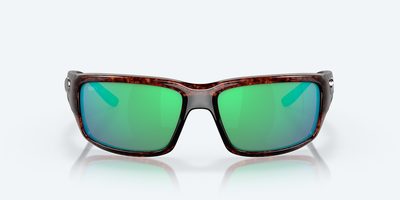
The Fantail is the smaller sibling of Costa's Blackfin, in a medium fit that suits most faces. Its 580G Lightwave glass filters yellow light at 580 nanometers while boosting reds, greens, and blues, which is why shallow cover and cruising fish stand out instead of blending into the bottom. Owners back up the clarity claim again and again: in Guide Recommended's head-to-head test of 17 pairs on the water, the Fantail ranked third overall and earned a 9/10 fish-spotting score.
Buy it in green mirror for bass water. Green mirror sits on a copper base, so it keeps contrast high in the stained and variable water where most bass live, and it lets through around 10 percent of visible light. Blue mirror, on a gray base, belongs on bright open water, not on a stained reservoir. The 580P polycarbonate version costs less, weighs less, and survives drops better, but it scratches sooner, which is why glass is the pick here.
Two downsides, and both matter. First, the fit: several owners report fogging and frames that slide, and a run of recent owner reviews complains that rubber nose and temple pieces failed within months. Costa sells a separate 12-month protection plan for about $40, with a $40 copay per replacement, but it does not cover loss or theft, so it will not rescue a pair that goes overboard. A retainer is the real protection here. Second, these sink. Use the keeper slots with a retainer, or accept that one bad lean over the side ends the story. Costa Fantail 580G is the pair for the angler who fishes shallow water often and wants the clearest view available.
Smith Guide's Choice ~$237–327
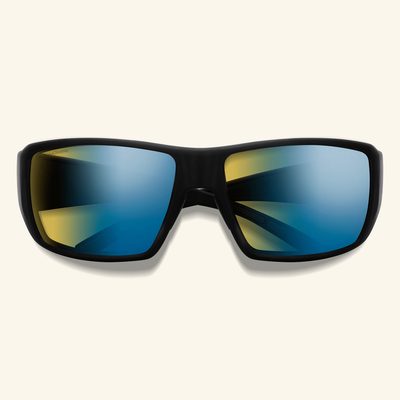
If Costa wins on raw clarity, Smith wins on color separation. The Guide's Choice uses ChromaPop lenses that filter out overlapping wavelengths of blue, green, and red light, so a bass over sand reads as a shape instead of a smudge. In the same Guide Recommended 17-pair comparison that ranked the Fantail near the top, the Guide's Choice finished first for seeing fish. Its 8-base wrap and wide temples block side light, and Megol nose and temple pads grip harder as they get wet. The integrated leash comes in the box, which is the detail that saves a $300 pair on a kayak.
Choose the lens for your light. The standard ChromaPop glass or polycarbonate covers most days. The Polarchromic glass version shifts tint as light changes, which makes it the one-lens answer for dawn-to-dusk trips and the fast-changing light of Fall Bass Fishing. Polycarbonate runs $237 and glass runs higher, with Polarchromic at the top of the range.
The drawbacks are fit and fog. The frame slides down some noses when the angler looks down, the spring hinge divides opinion, and the tight wrap fogs during hard exertion. Smith's limited lifetime warranty covers defects, which is a better backstop than most brands offer. Smith Guide's Choice is the pair for the sight fisherman who values contrast over everything and fishes water clear enough to see into.
Oakley Split Shot ~$230–290
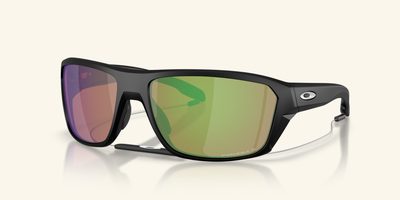
The Split Shot is the pair built for running a boat. Its O Matter frame is light and flexible, Unobtainium nose pads grip more as you sweat, and the Three-Point Fit keeps the lenses aligned instead of pressing on your temples. The headline feature is the integrated retainer: a coated steel leash that snaps into the temple ends and comes off when you do not want it.
The lenses are the reason to pay Oakley prices. Prizm Shallow Water, with a green mirror, is tuned for creeks, rivers, and shallow lakes, and it is the lens bass anglers should order. Prizm Deep Water suits bright open water, and Prizm Tungsten covers everyday bright conditions. All three filter all UVA and UVB up to 400 nanometers, and the frame takes prescription lenses.
Two things to know before buying. The frame fits medium to large faces, so small faces should try it on first or look at Smith's smaller frame instead. And Oakley's polycarbonate lenses scratch more easily than Costa's glass or Smith's glass, so the hard case is not optional. Oakley Split Shot is the pair for the boat angler who runs between spots, fishes in a hat, and refuses to lose another pair to the lake.
KastKing Skidaway ~$24–30
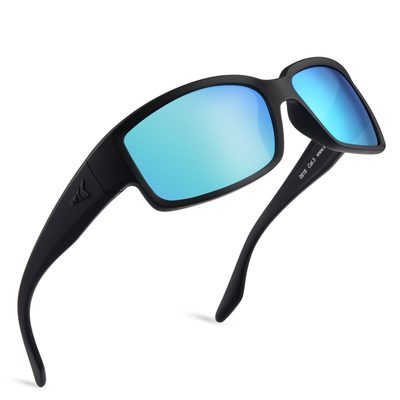
The Skidaway is the pair that makes the rest of this guide a choice instead of a requirement. Its TAC lenses are polarized and impact resistant, the Grilamid frame is the same flexible nylon used in far pricier frames, and the PuriVex coating sheds water, oil, and dirt. A molded hard case and a microfiber pouch come in the box, which is more than some $200 pairs include. Owners report years of use on bass boats, kayaks, and banks, with clarity that several compare directly to Oakley.
Pick the lens color on purpose: smoke suits bright sun and keeps colors true, while brown adds contrast for partly cloudy days, and copper suits moderate to low light. The frame fits medium wraps, and wider heads may find it snug.
The trade is lifespan. Budget coatings wear faster than premium glass, and a few owners report coating wear after weeks of hard use, where the premium pairs measure life in years. At under $30, that trade is easy: buy two, keep one in the truck, and stop mourning sunglasses. KastKing Skidaway is the pair for the angler who loses glasses, loans glasses, or just refuses to spend $250 to see a stump.
Picking the lens color
Lens color matters more than brand for most bass water. Copper and amber bases boost contrast, which is what you want over weeds, sand, and stained water. Green mirror, built on a copper base, is the most versatile single lens for freshwater. Gray keeps colors true but adds less contrast, so it suits bright open water better than a weedy flat. Blue mirror belongs offshore. In stained water, no lens works miracles: premium glass helps most when the water is clear enough to see into.
Glass or plastic is the second decision. Glass gives sharper optics and resists scratches, which is why it wins for boat anglers who wipe lenses often. Polycarbonate weighs less, survives impacts, and costs less, which is why waders and kayak anglers often prefer it. Either way, check two things before buying: the lenses must be polarized, and they must block all UV. Polarization and UV protection are separate features, and a dark lens without UV blocking is worse than no lens at all, because it opens your pupils to light it does not filter.
Low light needs a different lens. The standard lenses in this guide let through around 10 to 12 percent of visible light, which is too dark for rain, heavy overcast, dawn, and dusk — they cut glare you do not have and leave the scene dim. For those conditions, both premium frames in this guide take a brighter lens: the Costa Fantail takes the Sunrise Silver Mirror at around 30 percent, and the Smith Guide's Choice takes the Low Light Ignitor at 40 percent, on Smith's Techlite glass. Swap the lens for the light instead of buying a second pair.
Fit beats brand on the water. A wrap frame that seals out side light matters as much as the lens, and grippy nose and temple pads matter more than either when you are sweating through a July afternoon. Try frames on with your fishing hat. If the temples lift the brim or press behind your ears, that pair will live in the truck by August.
What to skip
Skip non-polarized sunglasses for fishing, full stop. They darken the world without cutting surface glare, which is the entire job. Skip blue mirror lenses for stained or shallow bass water: they are built for bright open water and they mute the contrast that shows fish over weeds. Skip dark gray lenses for dawn, dusk, and overcast days, when they turn an already dim scene darker. And skip buying any premium pair without a retainer. The most common way to lose $250 glasses is not breakage, it is a lean over the side of the boat, and the premium pairs in this guide either include a leash or take one.
One more caution: cheap lenses can distort. A few owners report headaches from bargain lenses with uneven polarization, and one forum angler could not tell his $18 pair from non-polarized lenses at all. Test any new pair the day it arrives by holding it over a phone screen and rotating it: a truly polarized lens should darken the screen sharply at one angle. If it does not change at all, send it back inside the return window.
Bottom line
Buy the Costa Fantail 580G if you want the clearest view of shallow bass water and you will wear a retainer. Buy the Smith Guide's Choice if sight fishing is the point and contrast matters most. Buy the Oakley Split Shot if you run a boat and want a steel leash that will not quit. Buy the KastKing Skidaway if you lose glasses or just want the core job done for under $30. Whichever pair you choose, put it in green mirror or copper for bass water, keep it in its case, and use a retainer.