
Respooling is the least fun part of fishing. You sit at the kitchen table with a reel in one hand and a spool of line rolling around in the other, a pencil through the middle if you planned ahead. Halfway through, the line goes on loose. Two trips later it digs into itself, throws loops off the spool, and costs you a fish. A line spooler holds the filler spool (the spool the line comes on) under steady tension while you crank, so the line packs tight and even. It is not magic. It is a third hand with a drag setting.
Our verdict up front: buy the Piscifun Speed X Fishing Line Spooler, about $30 to $35, if you respool several reels a season. The KastKing Kalibrate Line Spooler runs about $30 to $40 and is the one for splitting spools between reels or measuring backing (cheap line under the good line). The THKFISH Fishing Line Spooler costs about $15 and is the cheapest spooler worth owning. The PLUSINNO Fishing Line Spooler runs about $20 to $25 and strips old line off as well as winding it on. The Berkley BLMLS3 Line Stripper costs about $16 and gets dead mono off a reel fast before a respool.
Do you even need one
Be straight about this first. A spooler is not necessary. Anglers with fifty years on the water spool with a pencil, a dowel, or a spool flat on the floor, and they catch fish. Veterans in the forums say they can finish a reel with a pen before they could get a station out of the closet. For one or two reels, they are right.
The math changes when you own six reels and change line twice a year. Speed X owners report about a minute a reel once the tool is set up, against 20 to 30 minutes by hand. Many tackle shops spool a reel free with a line purchase, which is the real competition for a $20 to $40 tool. Buy one if you respool often or fish $30 braid. If you change line once a spring on two reels, the pencil works fine.
Spinning reels and baitcasters spool differently
This is the fact that decides whether a spooler helps you or hurts you. Line twist is the coils that form when line goes on in the wrong direction, and it shows up later as loops and tangles on the cast. A spinning reel and a baitcaster wind line on in different ways, so the filler spool has to sit differently for each.
For a spinning reel, lay the filler spool flat with the label up, and flip it over if the line starts twisting. For a baitcaster, line comes off the top of the filler spool and onto the top of the reel spool, with the filler spool turning under tension. Most forum arguments about twist trace back to that mix-up. Fluorocarbon punishes a wrong setup hardest, and braid forgives it.
The picks
Piscifun Speed X Fishing Line Spooler ~$30–35
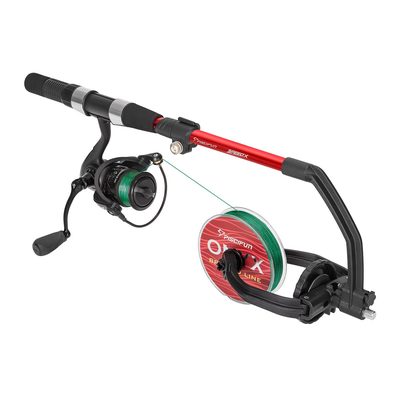
The Speed X has the largest owner base of the five picks here, about 4,200 Amazon ratings at 4.5 stars. Owners keep coming back to two things: speed and the rewind function, which winds excess line back onto the filler spool, so an overfilled reel takes seconds to fix and no line is wasted. One owner respooled eight reels in one session.
The catch is the spool holder. The plastic fingers and tapered cones that grip the filler spool draw the most complaints in the reviews we read: collars breaking after three reels, holders snapping off after a year, cones that will not grip small or thin spools. Tension is another weak spot, with several owners saying there is no real adjustment, so light line and thin braid can still twist. Spinning reels are the trouble spot, with uneven spooling and spools that must be rotated by hand. The instructions are thin enough that owners learn the tool from YouTube demos.
Buy it for baitcasters and bulk respooling sessions. Check the fit on your smallest filler spools first, and keep the receipt: failures cluster in the first few uses or just after the return window. Our Best braided line for bass guide covers what to load once the tool is set up.
KastKing Kalibrate Line Spooler ~$30–40
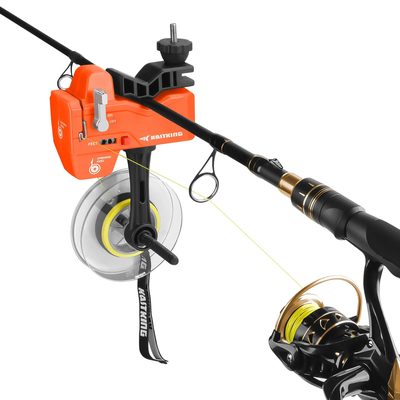
The Kalibrate is the only pick with a built-in line counter, a small mechanical dial that counts how much line has gone on. It sounds like a gimmick until you split one spool between two reels or put a measured amount of backing under expensive braid. Molded setup cues make the orientation problem harder to get wrong, and it comes with braid scissors. Tackle Warehouse lists it at $39.99; roundups put it closer to $30.
The counter is also its weakest part. Owners across several sources report it reading wrong, especially on thin braid. The body is plastic, and "feels cheap" recurs in reviews, though we found no reports of the tool actually breaking. It takes spools up to 3.5 inches wide and 4.5 inches in diameter, so bulk spools are out. Buy it if you split spools or measure backing. Otherwise the Speed X does the same spooling job for less money.
THKFISH Fishing Line Spooler ~$15
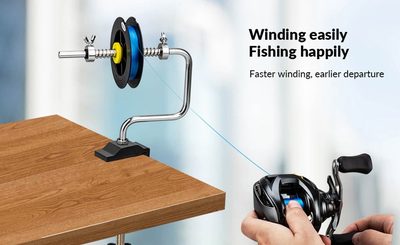
The THKFISH is a clamp-on winder that grips a table edge, a tailgate, or a boat rail up to about 2.4 inches thick. Suction-cup spoolers fail on wood and carpet. This one grips an edge and stays put. It carries 4.6 stars across about 2,000 ratings, with 74 percent five-star, and a cloth carry bag comes in the box.
It is a simple tool with simple limits. Tension comes from a spring you tighten by hand, and owners say high tension is harder to reach than on a knob-controlled spooler. It takes spools up to about 3.15 inches wide in the long style, so wide bulk spools are out. The same silver spring-arm design is sold under several names, so check the clamp and spool size on the listing you buy.
PLUSINNO Fishing Line Spooler ~$20–25
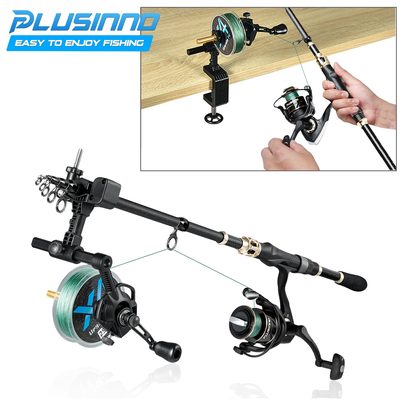
Most spoolers work one way. The PLUSINNO winds line on and strips it back off onto an included empty spool, which matters when you overfill a reel, want to save line for another reel, or strip old line to recycle. It clamps to a rod or stands on a desk, and works on spinning, baitcasting, and trolling reels. A Live 2 Fish demo shows it moving braid back to mono on a Lew's combo without wasting line.
Setup takes more care than a clip-on spooler: the filler spool hole has to be at least 10 mm across, or the adapters will not fit. Roundups note durability questions, and its long-term owner record is thinner than the Piscifun or Berkley camps. Buy it if you strip line as often as you wind it on. Otherwise the Speed X is simpler.
Berkley BLMLS3 Line Stripper ~$16
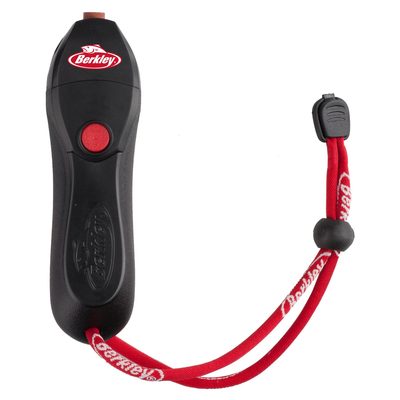
Stripping old line is half the respooling job, and the half most anglers do worst. The BLMLS3 is a battery-powered stripper built for one job: pulling dead line off a reel fast. Two AA batteries run a small motor that strips up to 300 yards a minute, and a grinding stone sharpens hooks. It carries 4.3 stars across about 1,600 ratings, and it weighs almost nothing in a tackle bag. Pair it with any spooler above and the whole respool takes minutes, not most of an evening.
Berkley rates it for 2 to 80 lb line, and the listing specifies monofilament, though the current Amazon title also claims braid. If your reels are spooled with braid, the PLUSINNO above is the safer stripping tool, since it winds braid back onto a spare spool.
What to skip
Berkley Portable Line Spooler Max. Berkley redesigned its popular station, and owners hate the new one. Tackle Warehouse rates the Max 1.5 out of 5 across four reviews, with owners calling the plastic tension springs useless and the tool the worst item Berkley has ever put its name on. Do not buy the Max.
The original Berkley Portable Line Spooling Station, new. The original station is the most loved spooler in the forums, with owners reporting 15 to 20 years of use. If you find the original PLSSNS model used, buy it. If the listing says Max, walk away.
The original Piscifun winder. It still sells with 12,000 ratings at 4.4 stars, but its owners say to buy the Speed X instead. Same holder problems and no rewind function. The Speed X costs a few dollars more and does more.
How to spool without twist
Set the filler spool for your reel type first: flat on the floor, label up, for a spinning reel; line off the top, spool turning, for a baitcaster. Tie on with an arbor knot, a simple overhand knot cinched against the spool. With braid on a spinning reel, start with a few wraps of mono backing or tape so the braid does not slip. Wind under steady tension at an even pace, guiding the line with your fingers through the first guide so it packs evenly. Stop about an eighth of an inch below the lip. Overfilling throws loops on the first cast.
If the line twists as you wind a spinning reel, stop and flip the filler spool over. That one move fixes most twist complaints. After spooling, let about 100 feet of line out behind a boat or across grass and reel it back in. Wet monofilament first: it softens the line and helps it lay down. Our How to spool a spinning reel without line twist guide walks through the full setup, and our Best fluorocarbon leader line for bass guide has the picks for the line that punishes a bad spooling job hardest.
What to do with old line
Never throw loose line in the trash or leave it on the bank. Wildlife tangles in it, and it does not break down. Wind old line onto an empty spool with the PLUSINNO, or strip it with the BLMLS3, and take it to a recycling bin at a marina, boat ramp, or tackle shop. If no bin is available, cut the line into short pieces first. Fluoro and mono take on the shape of the reel, so stripped line rarely fishes as well again. Braid has no memory and can be reversed onto another reel.