Braid casts farther, cuts through grass, and never stretches. It also shines underwater like a neon sign, and bass in clear water notice. A fluorocarbon leader fixes that: a short length of nearly invisible line between your braid and your lure, tied on with a knot slim enough to slide through the guides. The catch is that fluorocarbon varies more than any other line type. One spool fishes for two seasons without a complaint. Another snaps on the hookset or frays after one fish.
Our verdict up front: buy the Sunline Super FC Sniper, about $26 to $31 for a 200-yard spool, if you want one leader that covers finesse to power fishing. The Seaguar Tatsu runs about $35 to $70 and is the softest, most castable premium fluorocarbon we found. The Seaguar Red Label costs about $14 to $18 and is the cheapest leader worth tying on. The Seaguar Blue Label runs about $12 to $17 for a 25-yard leader spool and is the workhorse for heavy cover. The Seaguar Gold Label costs about $17 to $23 for 25 yards and is the thinnest leader for clear, pressured water.
What size leader to buy
Pound test is the breaking-strength rating printed on the spool, and it is the first choice to make. For finesse spinning, drop shots and shaky heads, buy 6 to 10 lb. For general bass fishing, 10 to 15 lb covers jigs, Texas rigs, and crankbaits. For flipping and heavy cover, go 15 to 20 lb, up to 25 lb when you are punching mats. Keep the leader lighter than your braid so a snag breaks at the leader instead of costing you fifty yards of mainline. Our Best braided line for bass guide covers the braid side of the setup.
Two to four feet is the standard length for most bass fishing. Flipping and pitching anglers run shorter leaders, 12 to 18 inches, because the knot stays outside the guides. In very clear water, some pros run leaders over 20 feet. Short leaders are easier to manage and quicker to retie, while long leaders put the knot through the guides on every cast.
The FG knot, and when to skip it
The FG knot is the braid-to-fluorocarbon connection most serious bass anglers settle on, and the test numbers explain why. In a measured test on the Tom Rowland Podcast, 50 lb braid tied to 40 lb fluorocarbon, the FG knot held 28.84 lb and the leader broke before the knot did, twice in a row. The double uni held 18.04 lb in the same test. The FG knot wraps the braid around the fluorocarbon in tight coils, then locks them with half hitches, making the slimmest braid-to-fluoro connection there is.
The cost is time and practice. An FG knot takes three to five minutes to tie, and the first few attempts will come undone while you learn it. Tie it at home a few times before you need it on the water. Wet every knot before cinching it tight, because fluorocarbon burns and weakens when pulled dry. Retie after any hard snag or fish, and check the leader for nicks after every catch.
There is one case where the FG knot is the wrong call. Slick 8-carrier braid and the FG knot do not mix. In one angler's controlled home test, PowerPro Slick 8 tied with an FG knot slipped every time with Blue Label leader and about three times out of four with Yo-Zuri leader, and Salt Strong gives the same warning. If your braid is a slick 8-carrier, tie the Alberto knot instead. The Alberto is faster to tie on the water, and it is the knot Spencer Shuffield uses for flipping. The double uni is the easiest fallback, and the weakest in the test.
Fluorocarbon is not always worth its price. In Salt Strong's repeated abrasion testing, monofilament beat fluorocarbon at matched diameters, and mono leader costs about nine cents a yard against roughly 79 cents for fluoro. If you fish stained water and retie often, a mono leader is the cheaper call, and our Best monofilament fishing line for bass guide has the picks. Fluoro earns its price in clear water, where its near-invisibility is the point.
What to skip
Seaguar AbrazX. Pros use it at 17 to 20 lb, but the light-test record does not back the name up. Tackle Warehouse rates it 3.3 out of 5, with break-offs at 8, 10, and 12 lb in tournaments and mid-line breaks that repeated on a second spool.
Berkley Vanish. The strongest negative consensus in this guide. One ten-year user put it plainly: they call it Vanish for a reason, because that is what your fish do when you use it. TackleTour's lab test rated Vanish Transition the worst of 14 fluorocarbons at 72 percent of its rated strength.
Seaguar Fluoro Premier. A dedicated leader line with a brittle streak. It rates 2.6 out of 5 across five Tackle Warehouse reviews, with owners reporting breaks while tightening knots and line that went weak after a single trip.
Gamma Edge. Lab numbers that look good on paper and fall apart in use. TackleTour scored it 6.83 out of 10: material strength ran above average, but stretch hit 11.5 percent, near the worst of 14 lines tested, and sensitivity lagged the premium lines.
Sufix Invisiline. Loyalists call it the best fluorocarbon, period, and fish it for years. Anglers who switched away report fibers peeling off after a few casts and snaps on the hookset with no nick in the line. The split runs close to fifty-fifty.
Worth a look
Two more lines earned a mention without making the pick list. Seaguar InvizX runs about $17 to $24 for a 200-yard spool and is the versatile mid-price full spool. TackleTour's lab gave it the best knot strength of 14 lines tested. The catch is stretch: it has the most of any fluorocarbon TackleTour tested, and two owners switched to Sniper after abrasion failures around heavy wood. It suits crankbaits and moving baits, where the stretch keeps treble hooks pinned.
Daiwa J-Fluoro Samurai runs about $23 to $40 for a 220-yard spool and is the best-reviewed fluorocarbon in this guide by count, 4.6 out of 5 across 51 Tackle Warehouse reviews. Owners report 25 to 40 feet of extra casting distance. One warning: buy the Samurai, not the plain Daiwa J-Fluoro, which rates 2.3 out of 5.
Sunline Super FC Sniper ~$26–31
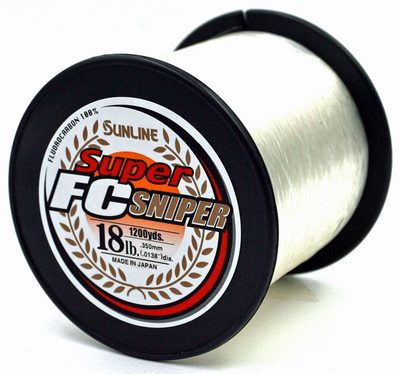
The Sniper wins because it does the most jobs without a real weakness. Sunline's triple-resin coating gives it abrasion resistance and low memory, and the result is limp, thin, and easy to handle on spinning and casting gear alike. The 200-yard spool covers 2 to 14 lb, with heavier tests on 165-yard spools. The Wired2Fish crew fished it for months, then flipped 16 lb jigs in blowdowns and chunk rock with zero break-offs.
Two downsides. First, knot strength is average in lab tests, so add extra wraps and wet the knot every time. Second, the pound test runs light: Sniper 20 lb fishes light for its rating, so size up a test if you fish heavy cover.
Not for: crankbait anglers who want the softest line, where InvizX and its extra stretch help treble hooks stay pinned.
Seaguar Tatsu ~$35–70
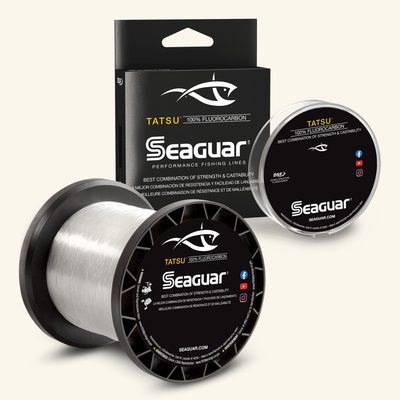
Tatsu is the softest, most castable premium fluorocarbon in this guide, and the reason is its double-structure build. Seaguar fuses two fluorocarbon resins into one line, a strong core inside a soft exterior. TackleTour named it Editor's Choice, the highest-rated fluorocarbon in their performance index.
Two downsides. First, price. It costs about one and a half times the Sniper per yard, and the only complaint that repeats across sources is the cost. Second, the light tests can break too easily: a few owners report 6 and 8 lb breaking on hooksets, and one bad spool snapped mid-line. Buy from a reputable seller: counterfeit Seaguar spools show up on marketplaces.
Not for: anyone on a budget. The Sniper does the same job for less money.
Seaguar Red Label ~$14–18
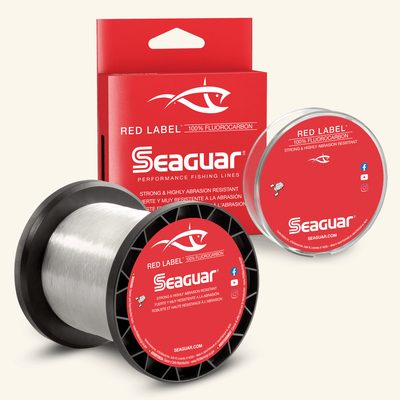
Red Label is the cheapest leader worth tying on, and the gap to the next-cheapest pick is real. A 200-yard spool runs about $14 to $18, and it covers 4 to 15 lb, with 20 lb on a shorter 175-yard spool. It is 100 percent fluorocarbon in an everyday package. Tackle Warehouse rates it 4.2 out of 5 across 14 reviews. Long-term users report up to five or six years of use.
Two downsides. First, memory. Three owners call it bad, and the line coils off the spool if you leave it sitting. Second, durability is a step down: one owner says never tie it to a lure over $15, and owners retie often.
Not for: mainline use on spinning reels, or anyone who hates retying.
Seaguar Blue Label ~$12–17
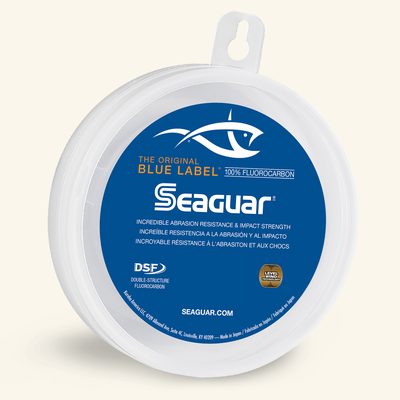
Blue Label is leader material built for the job. Leader lines are stiffer than mainline fluorocarbon, with less stretch and stronger knots in short lengths. It comes on 25-yard spools from 2 to 80 lb, and a 20 lb spool runs about $13 to $14. A tackle shop owner in the forums put it plainly: they sell more Blue Label than any other fluorocarbon, and it is not even close. Paddle Round The Pier tested it for two seasons: the FG, Alberto, and uni-to-uni knots never slipped on 50 lb braid.
Two downsides. First, it is stiff, so do not spool it as mainline on a spinning reel. Second, a 25-yard spool runs out fast at heavy tests if you tie long leaders.
Not for: finesse leaders under 10 lb. Gold Label is the supple choice there.
Seaguar Gold Label ~$17–23
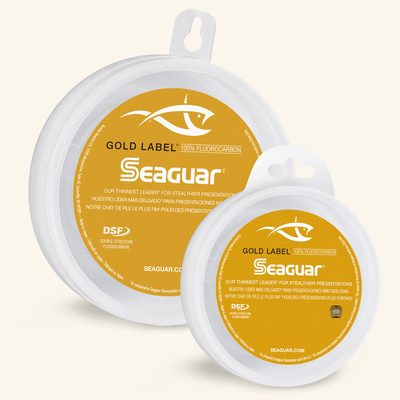
Gold Label is the thinnest leader for clear, pressured water, and the numbers back that up. It uses the same double-structure build as Tatsu, a strong core inside a soft exterior, but as a dedicated leader material. A 15 lb Gold Label measures 0.297 mm, nearly the same as 12 lb Tatsu. TackleTour's drop test gave it the best impact load of 15 leader materials tested.
Two downsides. First, price per yard: about 40 percent more than Blue Label, so it adds up fast as an everyday leader. Second, it is a leader-only line on 25-yard spools, so heavy users go through spools.
Not for: stained water or heavy cover. Blue Label does that job for less.
The bottom line
Buy the Sniper for one leader that does everything well, the Tatsu for the softest premium line, Red Label for a tight budget, Blue Label for heavy cover, and Gold Label for clear, line-shy water. Whichever you pick, tie it with a wet FG knot, check it for nicks after every fish, and retie before it costs you one.