
Every bank angler learns the same lesson twice. First you bring everything, and the bag gets heavier with every step until you stop fishing and start hauling. Then you bring almost nothing, and the one bait the fish want is sitting in the truck. The answer is not a bigger bag or a smaller one. It is a short list of gear that earns its weight.
Our verdict up front: buy the Plano Weekend Tackle Backpack, about $75, if you want one bag for a full day on foot. The Tackle Warehouse Sling Pack costs about $45 and is the better pick for short sessions and constant moving. The Shimano Convergence D Travel 4-Piece Spinning Rod runs about $80 to $90 and is the travel rod that actually fishes like a rod. The Gamakatsu G-Box 388DD costs about $10 to $12 and holds a whole terminal session in a shirt pocket. The Rapala Mag Spring Pliers run about $36 to $40 and are the tool you will reach for most.
The loadout: what actually goes on your back
The anglers who catch the most fish from shore are the ones who fish five spots in an hour, so you have to carry the whole kit on foot, and every piece has to justify itself.
One or two rods, three at the most. The consensus across every forum and thread we read is two rods with different jobs: a medium spinning rod for finesse work (Ned rig, drop shot, wacky Senko) and a medium-heavy casting rod for power fishing (jigs, frogs, spinnerbaits). A third rod only earns its place if it does something the other two cannot. Carry them tip-behind-you while you walk in, and leave the rest in the truck.
Two utility trays, not a tackle library. One tray for hard baits, split into topwater, shallow, and deeper sections. One tray for terminal tackle: hooks, weights, and jig heads in thirds. Soft plastics stay in their bags, and spinnerbaits lie flat in a freezer bag. That is the whole system, and it fits in one small pack.
Braid mainline with a fluorocarbon leader. This pairing came up in nearly every source. The leader is the part that breaks at a snag, so you lose a foot of leader instead of yards of line. From the bank you cannot motor over to free a hung bait, so the leader is what keeps a snag cheap. Our Best braided line for bass guide covers the setup.
Pliers on your strap, never buried. Needle-nose pliers with a cutter were the single most-named tool in this research. They ride in a holster or a top pocket, where your hand finds them without looking. Add braid scissors and a spare spool of leader, and the tool kit is done.
The small stuff that saves trips. A scale, water, sunscreen, bug spray, polarized sunglasses, your license, and your phone and keys in a waterproof pouch.
What to skip
The 30-pound tackle bag. This was the most repeated regret in the research. Anglers described starting with a shoulder bag holding four boxes, then downsizing to a small backpack or a sling after one too many long walks. If the bag invites you to fill it, it is too big.
Big packs that carry like furniture. The Evolution 3700 backpack came up by name in a 92-comment thread, and the owner who had one called it an absolute beast to carry very far before downsizing to a KastKing sling.
Cheap telescopic rods. Telescopic rods collapse small, and that is their only real advantage. The joints are the weak point, the guides drift out of line, and the tips are soft. One verified buyer reported a KastKing Blackhawk II snapping mid-cast, and a roundup tester had a Goture travel rod snap its middle section while casting. Both come from owner and tester reports in this research, not lab tests, but they match what the roundups say about telescopic weak points. Telescopics work as a backup rod in the truck, not as a daily bank rod for bass in cover.
Deep-diving crankbaits and treble-heavy hard baits. From the bank you cannot chase a snagged lure, so a bait that hangs up is a bait you lose. Leave the deep divers home and keep the treble count low, or fish them only where you know the bottom is clean.
Plano Weekend Tackle Backpack ~$75
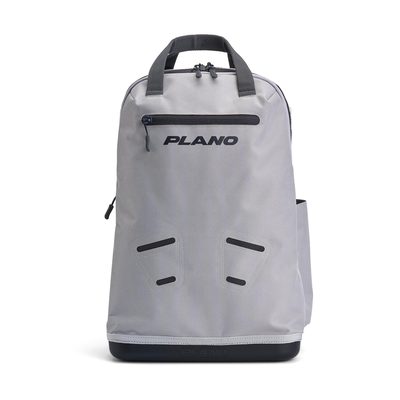
The Weekend is the most-recommended bank pack in this research, and the reason is the base. It is molded waterproof plastic, and every tackle bag ends up sitting in a puddle sooner or later. The pack is built from 600-denier polyester with a water-resistant backing, and it holds up to three 3700-size trays (two included). Die-cut tool sleeves on the outside hold pliers and scissors where your hand expects them, with a water bottle pocket and daisy-chain attachment points for the rest. Wired2Fish named it their best compact tackle backpack, and Kayak Angler called it the best budget backpack in their 2026 roundup.
Two downsides. First, the shell is sprayproof, not fully waterproof, so a hard rain will find its way in eventually. Second, the capacity invites overpacking: three 3700 trays plus the bottom pocket's two 3600 trays is more tackle than a bank session needs.
Not for: anglers who fish in real rain and need a fully sealed bag. For them, a waterproof roll-top pack is the answer, at three times the price.
Tackle Warehouse Sling Pack ~$45
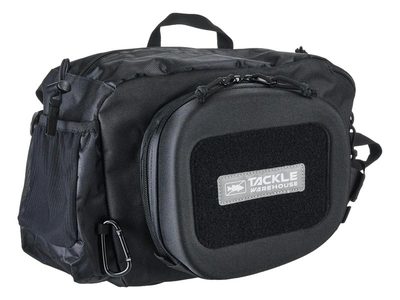
When the session is short and you move every few casts, a sling beats a backpack. The Tackle Warehouse sling holds two 3600-size boxes, and it doubles as a hip pack: swing it around front and the front pocket opens into a small workstation for tying knots and changing lures, no need to take it off. Outside it carries a plier holster, a water bottle pouch, and a carabiner loop. Wired2Fish named it their best sling pack, and the author behind that pick has fished his across plenty of states.
The owner evidence is thin but positive. Tackle Warehouse shows a single review, four stars out of five, from a minimalist who calls it perfect for a day of pond hopping with one box, some plastics, and a scale.
Two downsides. First, it is a tight fit: two 3600 boxes fill it, so a freezer bag of plastics has to squeeze in around them. Second, a single strap carries the whole load on one shoulder, so it is not the bag for a heavy all-day load.
Not for: all-day sessions with four or five techniques. That is the backpack's job, and the Weekend above is the one to buy.
Shimano Convergence D Travel 4-Piece Spinning Rod ~$80–90
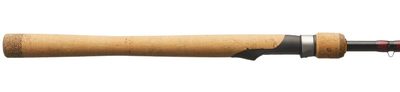
A bank rod that breaks down small earns its place twice: once on the walk in, and once in the trunk the rest of the week. The Convergence Travel is a four-piece spinning rod with a hard travel tube, and it collapses to 25 inches including the case. The model to buy is the 7-foot medium (CVS70M4D): rated for 8- to 12-pound line and 1/4- to 1/2-ounce lures, with a fast taper, SeaGuide guides, a Fuji reel seat, cork grips, and a one-year warranty. A 2500-size spinning reel balances it; our Best budget spinning reels under $100 guide has the shortlist.
The owner reviews are the strongest of any travel rod we found: 4.5 out of 5 across eight Tackle Warehouse reviewers. A six-month owner landed bass from one to five pounds with the joints staying secure. Another took the 7-foot medium to Florida and caught a 30-inch bull redfish, plus black drum and a small shark.
Two downsides. First, the rod is a little heavy for its price, which one reviewer noted. Second, one reviewer broke his on the second cast with an appropriate-weight lure, a reminder that a four-piece rod still has joints that can fail. The failure rate in this small sample is one in eight, and the warranty is only a year.
Not for: a rod that lives in the truck and never breaks down. A one-piece rod is stronger and cheaper for that job.
Gamakatsu G-Box 388DD ~$10–12
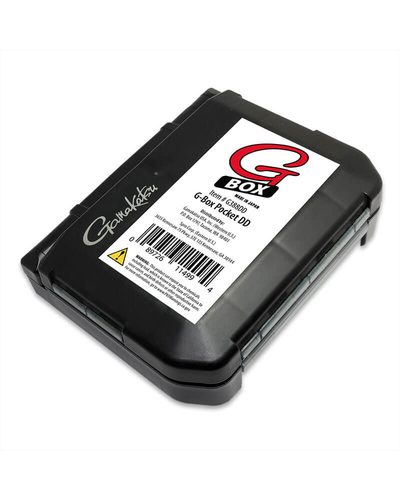
The lightest loadout in this research is not a bag at all. It is a pocket case and a rod. The G-Box 388DD is a polycarbonate utility case, made in Japan, measuring 4.8 by 3.8 by 1.3 inches, with a one-handed clasp that opens with a thumb. It holds hooks, weights, and jig heads for a full plastics session, and it fits in a cargo pocket.
Twenty-one Tackle Warehouse reviewers rated it 4.9 out of 5, the highest rating of any pick in this guide with more than ten reviews. Reviewers called it a must-have for pond hopping, and one said it is perfect for the times you do not want the hassle of a sling bag or backpack. The one size complaint in the set is that it could be a little bigger.
Two downsides, both small. First, it holds terminal tackle only: no room for hard baits or a scale. Second, at 1.3 inches deep it fits standard hooks and weights but not bulky jig heads in quantity.
Not for: anglers who carry hard baits. Pair it with the sling or backpack above.
Rapala Mag Spring Pliers ~$36–40
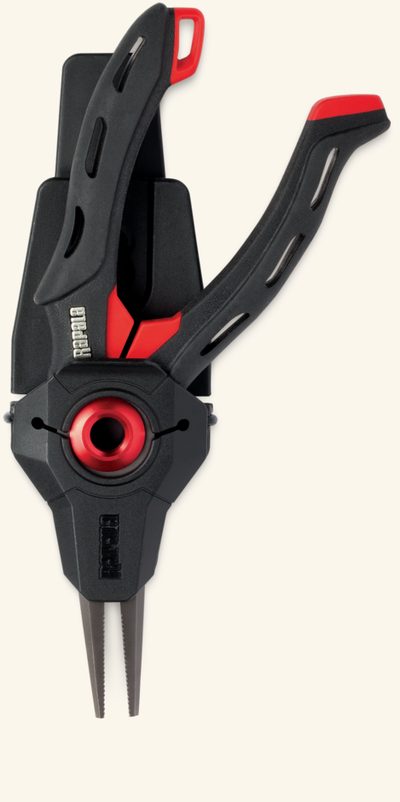
Pliers are the one tool every bank angler forgets exactly once. The Mag Spring pliers stay open on their own, thanks to magnets in place of a steel spring, so you can work a hook out of a fish's mouth one-handed. They are built from 420 stainless steel with a tin-nickel alloy plating, with serrated jaws and a line cutter that handles heavy braid. A quick-draw sheath comes with them.
The owner base is small but the long-term report is the one that matters: a reviewer who kept his on the bow of his boat for a full year said they were as good as day one. The magnets are the design point. A normal plier spring rusts, weakens, and breaks. Magnets do not.
Two downsides. First, the price: $36 to $40 puts them well above the cheap pliers that flood tackle shops. Second, the owner base is thin, two reviews on Tackle Warehouse, so the long-term evidence rests on a few voices rather than a crowd.
Not for: anglers on a tight budget who will lose pliers in the grass. Buy a cheap pair and a lanyard instead, and accept that you will replace them.
Pairing it: line and the first trip
Spool 10-pound braid with an 8-pound fluorocarbon leader for finesse work, or 30-pound braid to a 12-pound leader when you fish cover. If you are still choosing your water, our Pond hopping: how to fish small water guide and our Best bank fishing spots near Lawrence, Kansas guide are the places to start.
The bottom line
Buy the Weekend backpack if you fish all day on foot. Buy the Tackle Warehouse sling if you move every few casts and fish short sessions. Buy the Convergence rod if your rod needs to pack down. Buy the G-Box if you want to leave the bag behind entirely. Buy the Mag Spring pliers because forgetting pliers ruins a trip and cheap ones rust. And whatever you buy, carry less than you think you need. The bank rewards the angler who is casting, not the one who is unpacking.