The short list
Lawrence sits inside a ring of fishable water, most of it public. The two reservoirs west and north of town hold the biggest fish, while the river through downtown holds the biggest catfish. Two small lakes south of town fish better than they look, and a few stocked ponds sit inside the city limits.
Five names cover it: Clinton Lake, Perry Lake, the Kansas River below Bowersock Dam, Douglas State Fishing Lake, and Lone Star Lake. Here is where to stand at each one, what bites there, and what it costs to get in.
Clinton Lake: the big water
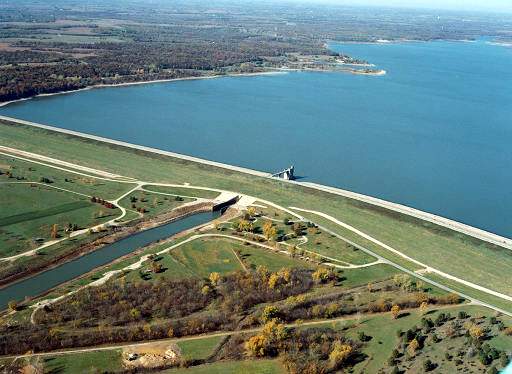
Clinton Lake is the largest water near town, about 7,000 acres on the Wakarusa River, ten to fifteen minutes west of Lawrence. The Corps keeps the whole shoreline open, but outside the developed areas the bank is rough walking, so fish the public-use areas.
The dam face and Outlet Park. The tailwater, the river directly below the dam, is the classic spring spot. Outlet Park sits below the dam at 1316 E 902 Rd, open 6 AM to 10 PM, and the basin below it concentrates channel catfish in spring. The dam riprap, the loose rock piled along the dam face, is where bank anglers cast jigs and crankbaits for walleye and white bass at low light.
Bloomington East. On the south side, the beach and boat ramps 5 through 7 give you shoreline, a fishing dock, and brushy banks that hold crappie in spring. A $5 Corps day-use fee applies in season; ramp 4 is free.
Clinton State Park and the marina. On the north shore, the state park holds the marina area, ramps 1 through 3, and brush piles near ramp 3. Fish the shoreline, not the ramps or docks. The park needs a state park vehicle permit, $7 a day or $39 a year under the fee schedule that took effect November 1, 2026. The park also holds Lake Henry, a 3-acre pond with stocked catfish and winter trout.
Rock Creek and Coon Creek arms. Mid-lake on the south side, the flooded brush in these creek arms is the spring crappie water. Fish move into 2 to 6 feet to spawn in April and May, when the water runs 58 to 65 degrees. There is no marina at Rock Creek, just a ramp and shoreline.
Woodridge, the quiet pick. Woodridge Park is a primitive park on a remote peninsula on the west side, with a trail circling the shoreline. It is a hike-in spot, not a drive-up one, with the gate closing to vehicles from November through mid-March, so go here when Clinton is busy and you want the bank to yourself.
What bites. Crappie are the spring prize, rated good by KDWP. Walleye are present along the dam but not in big numbers, and the stocked saugeye, a walleye and sauger cross, are the better bet: KDWP stocked equal numbers of walleye and saugeye in a 2021 four-year study, and the saugeye outperformed walleye nearly ten to one. White bass and wipers push into the creeks and along the dam face in spring, and locals report the wiper bite peaking at sundown in summer. Bass run 1 to 5 pounds in the creek arms, and blue catfish reach 40 pounds, with a limit of 10 a day and only one over 30 inches.
Perry Lake: the second reservoir
Perry Lake sits about 25 minutes north of Lawrence on the Delaware River, around 11,000 acres. It is the better of the two reservoirs for crappie and sauger. The Corps reintroduced a $5 day-use pass at Perry's main ramps in 2026, so check Recreation.gov for the current list before you go.
Slough Creek. The Slough Creek arm on the east side is a strong bank spot. The Devil's Gap ramp inside Slough Creek Park has good shoreline access, and KDWP rates the arm among the best on the lake for largemouth.
Rock Creek. On the southwest shore, Rock Creek Park has a ramp and shoreline access. The private Rock Creek Marina is a different place.
The Outlet below the dam. The Outlet Public Use Area sits below Perry Dam on the Delaware River at the southeast end of the lake. Current breaks below the dam hold channel catfish when water is released.
What bites. Guides call Perry the best place in Kansas to fish for sauger, and the dam area at night under lights is the way to do it. Crappie run to about a pound and a half, shallow in spring on minnows and jigs and on brush piles in 15 to 25 feet in summer, and around the bridge pilings year-round. Largemouth to about 5 pounds favor the bottom half of the lake, especially the Slough Creek arm. Channel cats run to 10 pounds and blues to 25 on cut bait and nightcrawlers, and white bass run up the Delaware River in spring.
The Kansas River in Lawrence
The Kansas River, the Kaw, runs through the north side of town, and its bank fishing is mostly a catfish game: channel cats, plus freshwater drum, walleye, white crappie, and largemouth bass.
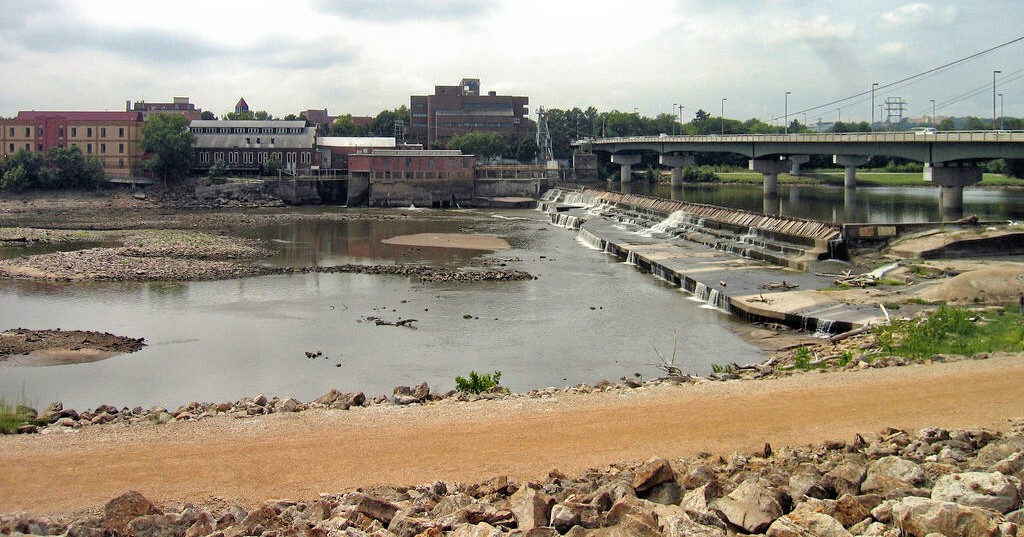
Below Bowersock Dam. The 8th Street access, at N 8th and Oak, is the below-dam spot, 1.4 miles downstream of the dam on the river's left bank. It has a gravel lot and gets busy on warm-season weekends. Bowersock is a low-head dam, a low wall the river pours over, and the water curling back below it can trap a person. Never wade below the dam, anchor near it, or take a boat over it. Fish from the bank.
Burcham Park. Above the dam, Burcham Park (200 Indiana St) has shoreline fishing and trails, open 5 AM to 10:30 PM. It is the calmer side of the dam.
Riverfront Park. The main Lawrence put-in sits at 1594 N 3rd Street, about 1.7 miles above the dam, with a concrete ramp and gravel parking.
Eudora, the platform. East in Eudora, the ramp on Main Street sits on the Wakarusa River just above where it meets the Kaw. It has a fishing platform near the ramp.
Fish the river with heavy gear and cut bait, shad or sunfish, or nightcrawlers, around deeper bends, current breaks, logjams, and holes. Much of the riverbank between access points is private land, so stay at the public accesses or below the high-water mark.
Douglas State Fishing Lake and Lone Star Lake
Two small lakes south of town are easy to overlook. Both are about 180 acres, both are free to fish, and neither needs a state park permit.
Douglas State Fishing Lake. Twenty minutes south of Lawrence, near Baldwin City, this 180-acre state fishing lake sits inside a 538-acre wildlife area. Shore fishing is good here, with two boat ramps, two floating docks, and a handicapped-accessible fishing dock. Largemouth bass are the draw: a 2025 survey found bass to 6 pounds, and the slot limit is 13 to 18 inches, five a day. Channel catfish run to 10 pounds on nightcrawlers along rocky shorelines and brush piles. Crappie to 12 inches work the brush piles on jigs or minnows under a slip bobber, a bobber that slides on the line so you can fish deeper water.
Lone Star Lake. Ten miles southwest of Lawrence, this 185-acre lake sits in a 422-acre county park built in the 1930s, at 665 E 665 Rd. The park surrounds the lake, with picnic areas along the edge. Some of the shoreline is private frontage, so stick to the park areas, the beach, and the dock. Largemouth bass run to 6 pounds along the weed edges, with topwater lures at dawn and dusk. Crappie, bluegill, and wipers round out the lake. No fishing is allowed in the swimming arm from May 1 through September 15, except from the designated accessible fishing dock.
In-town ponds
Mary's Lake. Inside the Prairie Park Nature Center at 2730 Harper Street, Mary's Lake is about five acres with a paved trail, a boardwalk, and a fishing dock. It is stocked with channel catfish, and bass live there too. No swimming or boating. The park sets its own rules, including a two-catfish daily limit and a rule that bass under 16 inches must be released, so read the sign at the dock.
Pat Dawson Billings, Sandra Shaw, and Potter Lake. The Pat Dawson Billings lakes and Sandra Shaw Pond are two more stocked city waters in KDWP's urban fishing program. Potter Lake on the KU campus is also legally fishable, but it is a small pond, not a destination. All three are good for an hour after work.
What to skip
Lake View Lake. The oxbow lake a mile north of Lawrence looks tempting on a map, and fishing-spot aggregators list it without a word about access. It is private club water, maintained by the Lake View Club. Do not trespass there.
Mud Creek. The Kansas River access at river mile 47 is no longer maintained: foot traffic only, park along the road, and sandbars block the entrance at low water. Skip it.
The swim beach in summer. Bloomington Beach is a swimming beach from May through September. Fish away from the buoyed swim area, or come back in the fall. For what changes when the water cools, see Fall bass fishing: how cooling water changes everything.
Licenses, fees, and the rules that catch people out
A Kansas fishing license is required for residents ages 16 through 74 and for nonresidents 16 and older. Kids under 16 fish free, and residents 75 and older are exempt. The resident license costs $27.50 all-in and lasts 365 days from purchase (seniors 65 to 74 pay $15). The full rundown, including where to buy one and the extra permits, is in the Kansas fishing license guide.
State park vehicle permits cost $7 a day or $39 a year under the schedule that took effect November 1, 2026. The Corps charges a $5 day-use fee at Clinton's Bloomington East areas in season, and Perry's main ramps now need a $5 day-use pass too. Zebra mussels are in both reservoirs and milfoil is in Lone Star Lake, so clean, drain, and dry your boat and gear before moving between waters. Check the signs at every park: local limits beat anything you read online.
The bottom line
Start with Clinton Lake in spring, Perry Lake when the crappie move shallow, and the river below Bowersock Dam when you want a big catfish. Douglas State Fishing Lake and Lone Star Lake cover the small-water days, and Mary's Lake covers the hour you have after work. Bring the license, check the signs, and skip Lake View Lake: the best-looking water on the map is the one you cannot fish.