The fish that lives on rock
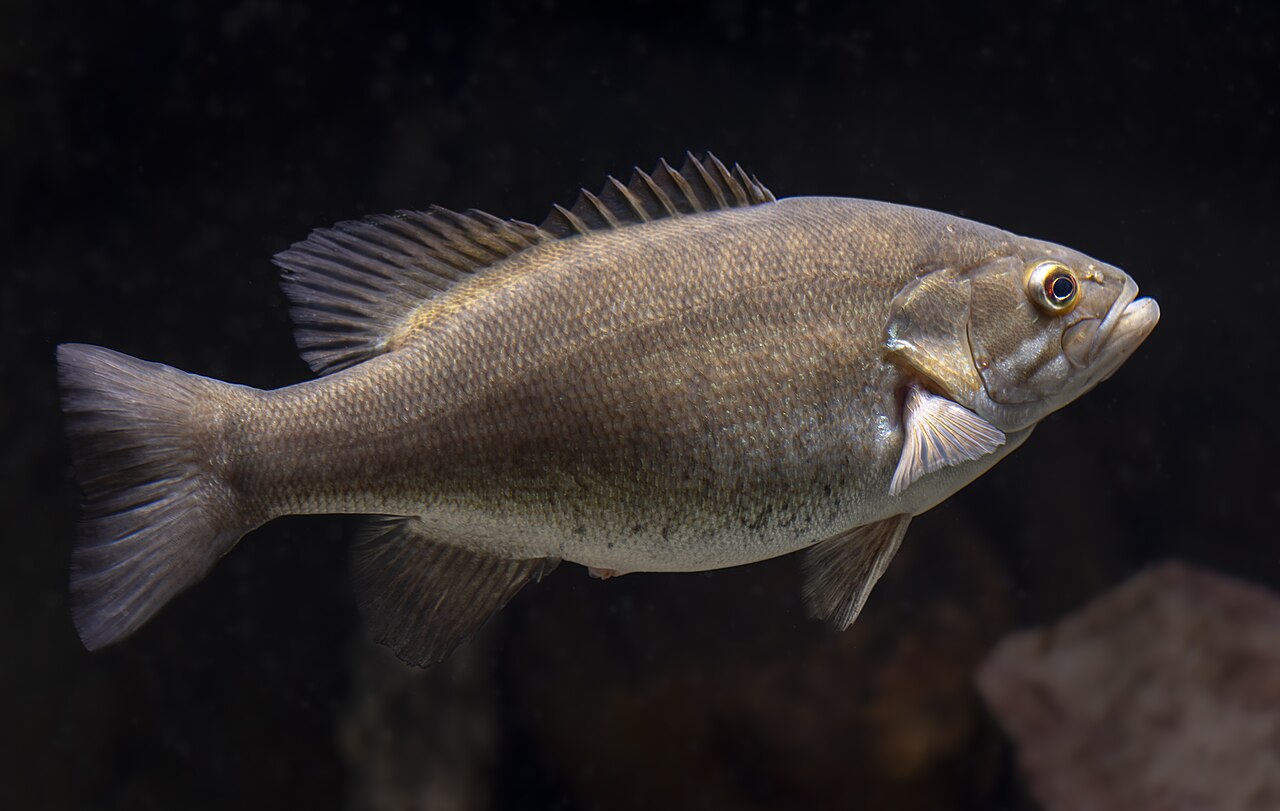
A smallmouth bass is the fish that makes grown anglers grin like kids. Pound for pound it fights harder than a largemouth, and it lives in the prettiest water in the country: clear rivers running over rock, gravel bars, and the rocky points of deep northern lakes. The trade is that it does not live where most beginners look. Skip the weeds and the lily pads. That is largemouth water, and a smallmouth wants rock, current, and clean water.
The short version: fish rock and current breaks, throw small lures in crawfish colors, and fish slower than you think in cold water. A tube jig or a Ned rig will catch smallmouth in every season, and a jerkbait fished with long pauses is the cold-water answer.
How to tell a smallmouth from a largemouth
The two fish get mixed up constantly, and the mix-up costs you fish, because they live in different water and eat different things.
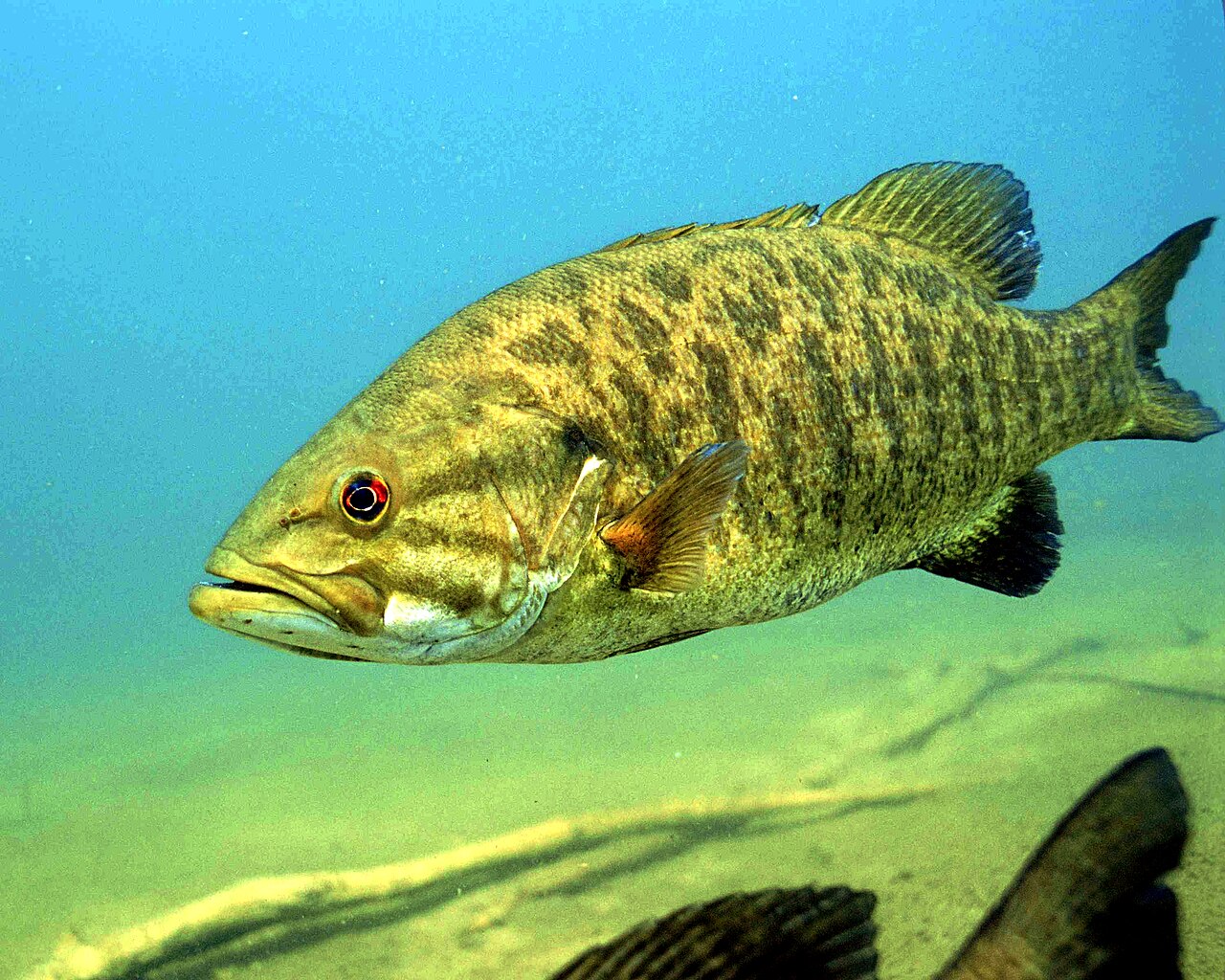
The jaw. A smallmouth's jaw ends at or before the eye. A largemouth's jaw runs past the eye. Close the mouth and look: if the hinge stops under the eye, it is a smallmouth.
The color. Smallmouth are bronze or brown-gold with dark vertical bars down the sides. Largemouth are greener with a dark horizontal stripe. In clear water a smallmouth looks like a little bronze torpedo, and the red eye helps too.
The water. This is the fastest field check. Weeds, lily pads, and warm still water mean largemouth. Rock, gravel, and moving water mean smallmouth. The fish follow the water, and the water tells you which one to expect. Our Largemouth Bass: The Complete Beginner's Guide covers the largemouth side in full.
Where they live: rivers
Rivers are the classic smallmouth water, and the fish are easier to find there than in a lake because the current does the sorting for you. A smallmouth sits in slow water next to fast water and darts out to grab food as it drifts past. Find the seam and you find the fish.
Current seams are the lines where fast water meets slow water. A seam is the boundary between the main current and the slack water behind a boulder, a bridge piling, or a point of land. Fish hold right on that line, facing upstream, waiting. Cast upstream of the seam and let the lure drift down through it.
Eddies are the pockets of slow or backward-flowing water behind an obstruction. A boulder makes a perfect eddy, and so does a log laydown (a fallen tree lying in the water) or a bridge piling. Fish the head of a pool and the tail, the riffle where shallow fast water drops into a deeper pool, and every place the current changes speed.
Fish both sides of a boulder. The textbook says to fish the downstream side, where the eddy forms. That is true, and it is also incomplete. River anglers kept telling us the same thing in thread after thread: the upstream side holds fish too, in the slack pocket where the current hits the rock and piles up. That pocket is called the cushion, and several experienced anglers called it the most overlooked productive spot on a river, often holding the biggest fish in the run. Work a boulder from every angle before you move on.
Follow the flow. In low, slow water, smallmouth scatter out to mid-river, sometimes holding near nothing at all. In high, fast water, they tuck tight to the banks, the bridges, and the current breaks. Check the river gauge for height and flow before you go, and never run a river by memory.
Shallow rivers are wading and kayak water. Anglers who wade the best smallmouth rivers say some stretches run a foot deep or less in summer, and the fish hold in spots the size of a dinner plate. That makes casting accuracy the whole game: cast too far and you snag, but cast short and you never get bit.
Where they live: lakes
Lake smallmouth are the same fish in a different setting. The rule does not change: rock and hard bottom, not weeds. Work rocky points, humps, ledges, riprap (the loose rock piled along dams and bridge supports), and gravel flats. A point with rock on it usually beats a point with weeds on it, and structure plus cover together beats either one alone. A hump with weeds on top of rock, or a point with laydowns on it, is the kind of spot worth fishing twice.
Depth is where the advice splits, and the split is geographic. On southern reservoirs and natural lakes, most big smallmouth come from less than ten feet of water, on hard bottom with sand nearby. On the Great Lakes and deep clear reservoirs, fish suspend over deep structure and get caught 20 to 50 feet down, sometimes deeper in fall. Both are true. Fish shallow hard bottom first, and if the lake is deep and clear, do not be afraid to fish deep.
Smallmouth like cooler, clearer water than largemouth. They prefer water in the high 60s to high 70s, and they get sluggish when it drops toward 40 degrees, turning active again as it climbs back past 50. They spawn on gravel and rock in water around 60 degrees. That temperature window is the key to the seasonal pattern below.
The seasons
Spring. Smallmouth move shallow as the water warms, first to feed and then to spawn. The prespawn bite is one of the best of the year: fish stage on warming flats in two to six feet of water, and they are eager. Jerkbaits rule the cold early weeks. Fish them with long pauses, sometimes 30 seconds or more, because a cold smallmouth will not chase. As the water warms past the mid-50s, topwater starts working, and during the spawn, soft plastics fished slow around gravel beds catch fish. One caution from the old hands: prespawn and spawning smallmouth are shallow, eager, and easy to catch, which makes them easy to overharvest. Green Bay ran a catch-and-release-only spring season through June 30, 2026, and other waters have similar spring protections. Check the local rules before you keep a fish in spring.
Summer. Summer is the hardest season, and the answer is to go deep or stay shallow but get subtle. Deep fish hold on rock points, humps, and ledges. Shallow fish are still there, but they are spooky, so long casts, light line, and quiet boat handling matter. On southern reservoirs, July water can climb into the 90s and daytime smallmouth go lethargic, so fish early, late, or at night. On rivers, July and August bring warm water and aggressive fish.
Fall. Fall is the trophy window. Smallmouth feed heavily before winter, and the big fish get active. Tubes, crankbaits, jerkbaits, and topwater all produce, and fall fish want a bigger meal, so do not be shy about sizing up. In rivers, the move happens when water drops into the mid-50s: fish leave the shallow rocky stretches and slide downstream toward deep wintering areas, holding on rock and gravel banks near deeper water.
Winter. Winter is the thin season in what anglers report. River fish settle into wintering holes and barely move, typically five to fifteen feet deep in big rivers and shallower in small streams. Lake fish winter deeper, 25 to 35 feet down over offshore structure. A slow jerkbait can still catch them, but expect fewer bites. This is the season to scout and plan, not to chase numbers.
What to throw
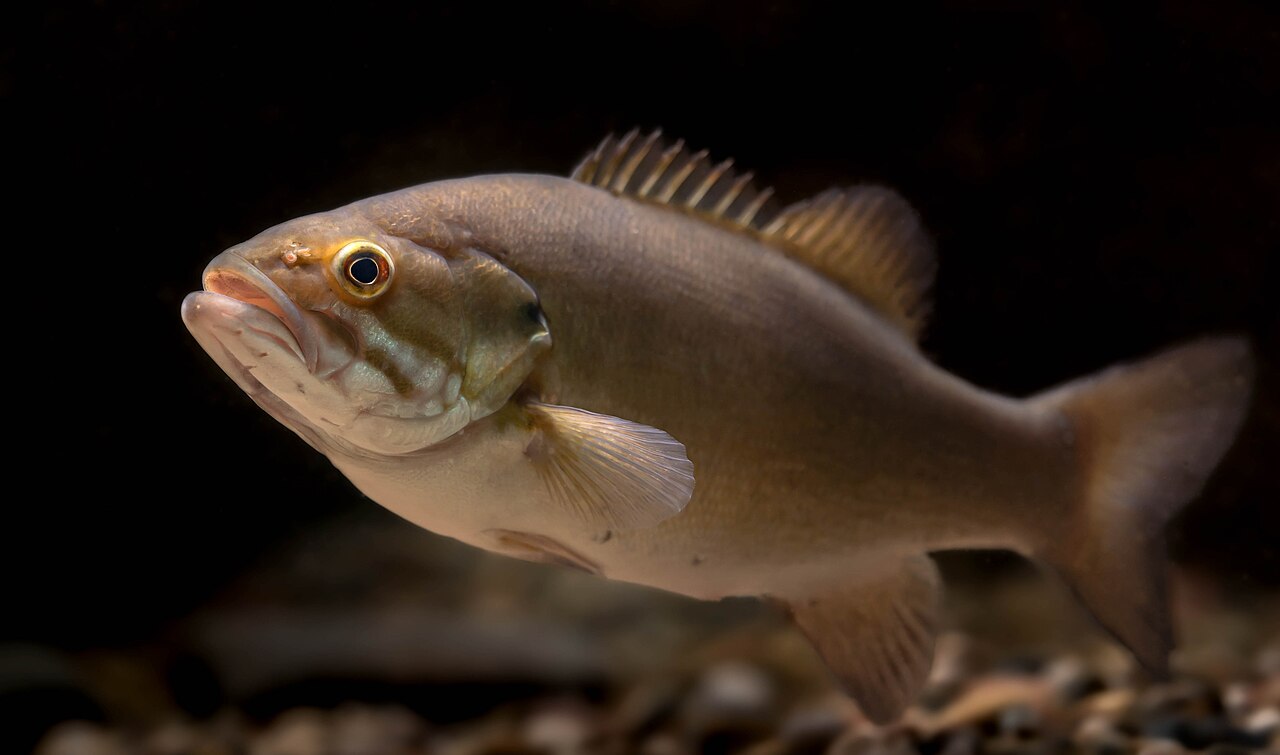
Six baits cover nearly every smallmouth situation. The throughline is small and crawfish-colored: crawfish and baitfish are the two foods that matter, and which one leads depends on the water. Crawfish rule rocky rivers, while baitfish and gobies dominate in lakes. Everything below is built around that.
A tube jig. The consensus number one smallmouth bait, named first by anglers in nearly every thread and guide we read. A tube is a soft hollow plastic body rigged on a small internal jig head, and it looks like a crawfish or a baitfish depending on how you fish it. Fish the standard three-and-a-half-inch tube on a one-eighth to three-sixteenth ounce head. Stick to natural forage colors like green pumpkin, brown, or smoke. Drop to a two-and-a-half-inch tube in rivers, and go up to four inches when you want big fish. A tube produces from ice-out through late fall.
A Ned rig. The finesse default. A Ned rig is a small soft plastic, usually a short stick bait or craw, on a light mushroom-shaped jig head, fished slow along the bottom. It catches fish when nothing else will, and river anglers in particular call it a big-fish bait. If you could only carry one rig, this is the one.
A suspending jerkbait. A jerkbait is a long minnow-shaped hard bait that dives a few feet and hangs motionless when you stop reeling. That pause is the whole bait. In cold water, jerk it once or twice and let it sit for 30 seconds or more. Smallmouth will drift up behind it and take it on the pause. It shines in prespawn, cold water, and fall, and it fades in summer heat. In warm water, work it faster and more erratically. Our How to Fish a Jerkbait guide covers the cadence in full.
A small crankbait. Crawfish-colored crankbaits that run shallow are river smallmouth staples, and they work year-round. A little craw crank bumped along a rocky bottom looks exactly like what the fish are already eating. Our Best Crankbaits for Bass guide covers the types and when to throw each.
A topwater. Topwater is condition-specific, not all day. Stickbaits walked side to side, poppers, and buzzbaits shine at low light, early morning, and in summer and fall. Smallmouth hit topwater in surprisingly cold water, but the bite fades fast once the sun gets up. When a fish misses a topwater strike, throw a tube or a Ned rig back at the same spot. The same fish often takes the follow-up plastic.
A drop shot for suspended fish. A drop shot is a hook tied above a weight, with a small soft plastic on the hook, fished vertically over deep structure. It is the answer when lake smallmouth are suspended and will not come up for anything else.
Downsize everything. That is the advice that repeats across every source: smaller lures, lighter line, and lighter tackle than you would use for largemouth. Smallmouth mouths are literally smaller, so drop-shot baits run three to four-and-a-half inches instead of six. Smallmouth in clear water see the lure and the line, and the light setup gets more bites. Six-pound fluorocarbon and a medium-light spinning rod cover most smallmouth fishing.
How to fish it
Rotate baits until one wins. There is no single favorite lure for smallmouth, and the bait of the day changes. One angler put it plainly: by limiting yourself to a favorite you might miss the bait they want that day. Rotate through the arsenal until one pulls ahead, then stick with the winner.
Fish the current, not the calm. In summer, stagnant slow water is a dead zone. Smallmouth need current for oxygen, and a drought can kill a shallow-river bite entirely. If the water is not moving, find water that is.
Slow down in cold water. Fishing too fast is the most common cold-water mistake. An aggressively snapped jerkbait in 45-degree water spooks smallmouth, and they drift back to the bottom and ignore you. Let the bait sit. The pause is the presentation.
Keep the rod down on a big one. River smallmouth jump, and a high rod helps them throw the hook. Keep the rod level or even stuck down in the water to pull the fish down instead of helping it jump.
Mistakes to skip
- Fishing only the downstream side of a boulder. The upstream cushion holds fish too, often the biggest ones.
- Committing to one lure. Rotate until one outproduces the rest, then stick with the winner.
- Fishing stagnant water in summer heat. Find current and oxygen, or find another spot.
- Casting short in clear shallow water. Long casts and quiet boat handling catch the fish that short casts scare.
- Fishing fast in cold water. Long pauses catch cold smallmouth. Speed spooks them.
- Assuming every rock pile holds fish. Work every break from multiple angles. Fish are often much further downstream of a break than you expect, and a featureless-looking run can hold the biggest bass in the stretch.
The bottom line
Find rock and current, throw something small that looks like a crawfish, and fish it slower than feels right in cold water. A tube and a Ned rig will catch smallmouth in every season and every kind of water they live in. The rest is learning to read the current, and that comes from time on the river. Start with the seam behind the first boulder you find.