America's starter fish
Largemouth bass are the reason most American anglers pick up a rod in the first place. They live in nearly every pond, lake, and slow river in the country, they grow big enough to make your hands shake, and they will eat a lure fished badly by a beginner who put it in the right place. Catching your first largemouth is less about owning the right tackle and more about knowing where the fish lives, what it eats, and when it feeds.
The short version: fish slowly, near cover, at dawn or dusk, with a soft plastic worm in green pumpkin.
What a largemouth bass is
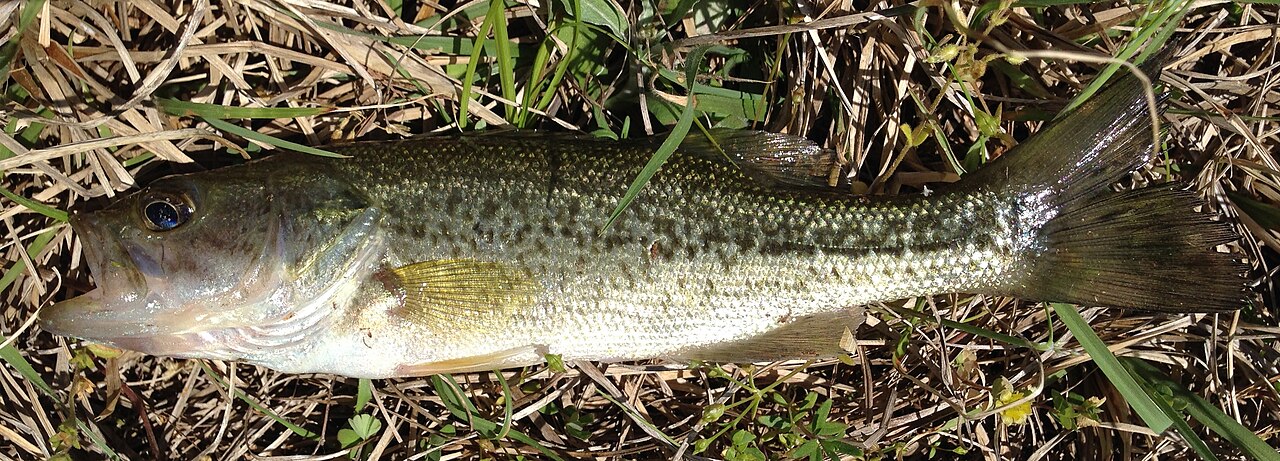
A largemouth is a green-backed fish with a white belly and a row of dark blotches down each side, forming a broken stripe. The field mark worth learning first is the jaw: when the mouth is closed, the upper jaw extends past the back edge of the eye. That is how you tell it from a smallmouth or a spotted bass, whose jaws stop short of the eye.
The largemouth bass (Micropterus nigricans) is a member of the sunfish family, and it is the most fished-for freshwater fish in North America. Florida bass, once counted as a subspecies, is now recognized as its own species. Native to the eastern and central United States, it now lives in nearly every state. A typical adult runs one to three pounds, and a five-pounder is a fish worth telling people about. The world record is 22 pounds 4 ounces, caught in Georgia in 1932 and tied in Japan in 2009.
Where they live
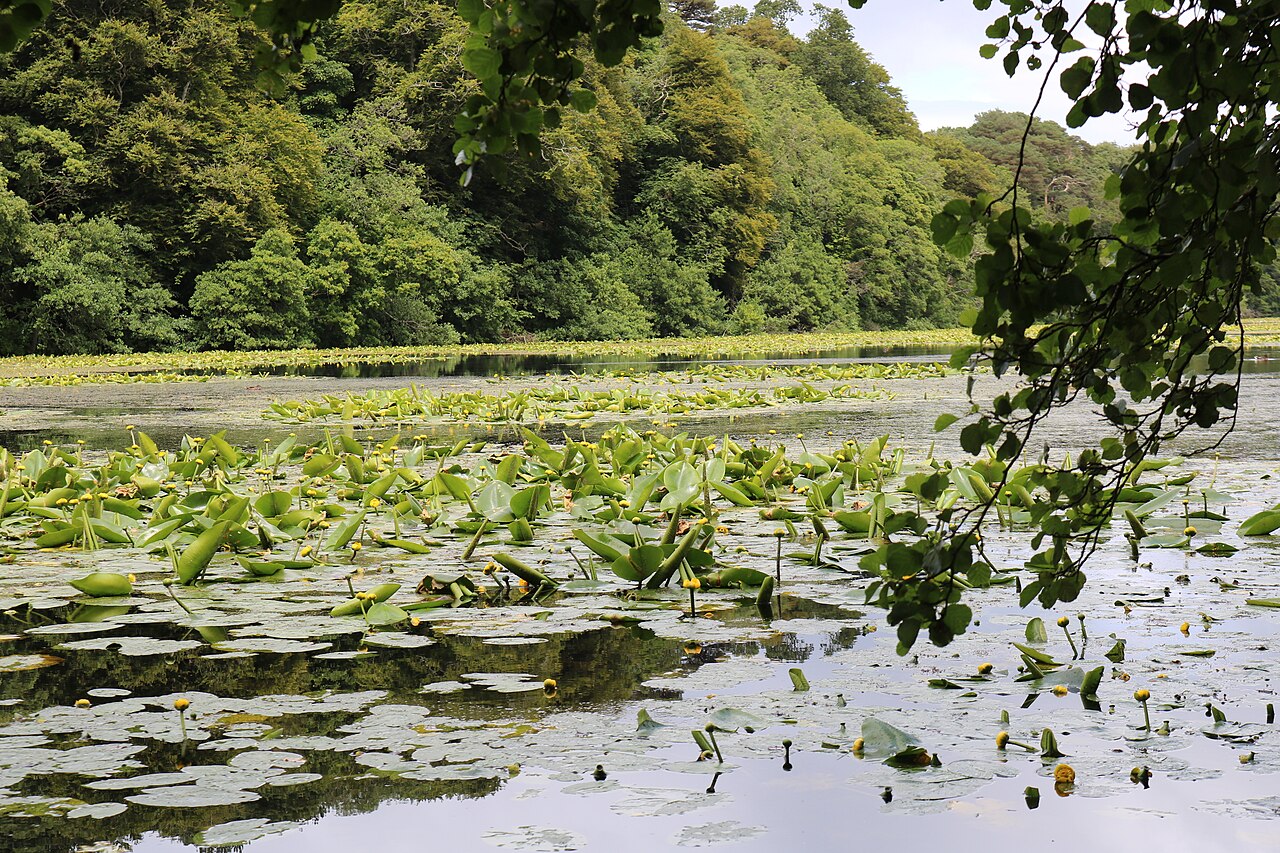
Largemouth want warm, slow, or still water with something to hide in. Ponds, small lakes, creek arms, sloughs, and reservoirs all hold them. The cover list is short and worth memorizing: lily pads, weed edges, docks, fallen trees, stumps, brush piles, riprap banks, and points. Bass are ambush feeders. They sit in or beside cover and wait for food to come to them, so fish the edge of the cover, not the middle of it and not open water. A plain worm fished at the edge of a weed bed will outfish the fanciest crankbait dragged through the middle of the lake.
Start on a pond. Small water is easier to learn, and a farm pond will teach you in an afternoon what a big reservoir takes a month to show you. On new water, fish the points first, working from deep water toward shallow. A point is a finger of land jutting into the lake, and bass use them as travel routes.
What they eat
A largemouth eats almost anything it can fit in its mouth. It is a suction feeder, which means it opens its mouth and inhales prey whole instead of biting chunks off. Adults eat shad and other small baitfish, crayfish, bluegill and sunfish, frogs, and large insects. In some northern lakes, crayfish make up most of what bass eat. Match your lure color to the water: natural colors in clear water, bright colors in stained water.
The year in water temperature
Bass are cold-blooded, so water temperature runs their calendar. Learn the bands and you can stop guessing by the month.
Prespawn, 45 to 60 degrees. Bass move from deep winter water toward shallow spawning areas, staging on the first drop-off near the bank. They feed hard. This is the best beginner season: fish are shallow, hungry, and catchable.
Spawn, roughly 60 to 70 degrees, peaking around 65 to 70. The male sweeps a nest in one to four feet of water, on gravel near hard cover. A female carries roughly 2,000 to 7,000 eggs for every pound she weighs, and the male guards the nest and fry for about three to four weeks. Spawning fish still strike lures, but they are guarding, not feeding, so expect short, defensive bites.
Post-spawn. Females slide back to the nearest drop-off to recover, and males stay on the nest until the fry scatter. The fish are scattered and moody, a tough stretch for beginners.
Summer. The population splits. Some bass go deep, 10 to 30 feet, on points, ledges, and humps. Others stay shallow in shade and thick cover: under docks, in lily pads, in weed mats. Fish early and late. Midday summer bass go deep or bury in cover.
Fall. Baitfish move shallow into creeks and flats, and bass follow them. Feeding picks up as the water cools through the 60s. It is one of the best times to be on the water.
Winter, below about 50 degrees. Bass settle deep and slow down. Feeding drops off sharply, and below about 41 degrees they stop feeding almost entirely. Small, slow presentations on deep structure still catch fish, but winter is the hardest season to learn in.
The one-rod starter kit
One rod is enough. A seven-foot medium-heavy rod with a fast action is the consensus starter, and fast action just means the rod bends mostly near the tip. Pair it with a size 2500 spinning reel and 8 to 10 pound monofilament or fluorocarbon line. Monofilament is cheaper and more forgiving. Fluorocarbon sinks and is harder for fish to see. Braid is strong and casts far, but it floats and needs a leader, so save it for your second spool. Our Best Spinning Combos Under $100 for Beginners guide covers ready-made setups at this exact spec.
A baitcaster is the second rod, not the first. Spinning gear is easier to learn, it tangles less, and it casts light lures farther.
Four lures that cover nearly everything
You do not need a tackle box full of lures. Four cover nearly every situation a beginner will meet.
A five-inch soft plastic stick bait in green pumpkin. This is the Senko-style worm, and it is one of the most consistently effective lures in bass fishing. Fish it weightless on a wacky rig, which means hooking the worm through its middle so both ends wiggle as it sinks, or on a Texas rig, which means burying the hook point in the plastic with a sliding bullet weight ahead of it so the whole thing slips through weeds without snagging. Cast it to cover, let it sink, and wait. Most bites come on the fall.
A 3/8-ounce spinnerbait in white or chartreuse. A spinnerbait is a wire arm with spinning metal blades on top and a skirted jig head below. It is a reaction bait: it flashes and vibrates, and bass hit it out of reflex. Reel it steady, just fast enough to keep the blades turning. Our Best Spinnerbaits and Chatterbaits guide covers blade choices in full.
A squarebill or lipless crankbait. A crankbait is a hard plug with a lip that makes it dive and wobble when you reel it in. Squarebills run two to six feet deep and bounce off cover. Lipless crankbaits sink and rattle. Our Best Crankbaits for Bass guide sorts out which type to throw and when.
A topwater popper for low light. A popper is a hard bait with a cupped mouth that spits water when you twitch it, best at dawn and dusk over calm water near cover. When a fish hits it on the surface, wait until you feel the weight before you set the hook.
How to find fish on water you have never fished
Start at a point. On new water, fish the points first, working from deep water toward shallow. Bass use points as travel routes.
Cast past the cover, not at it. Cast beyond the dock or the weed edge and work the lure into it. The strike usually comes right at the edge, where the fish is waiting.
Fish the first and last two hours of light. Dawn and dusk are the best windows, and overcast days fish well all day.
Go slow, then slower. The most repeated advice in the beginner threads we read is that beginners fish too fast. A worm that sits still for five or ten seconds after it lands will catch fish that a fast retrieve never meets. As one BassResource regular put it, fish so slow it hurts, then fish slower.
Watch the line. A bite on a soft plastic often shows as the line twitching, jumping, or swimming sideways, not as a tug you feel in the rod.
Mistakes that cost beginners fish
Fishing too fast. It is the number one mistake, so it earns the repeat.
Fishing open water. Bass live in cover. A cast into the middle of the lake is a cast where the fish are not.
Setting the hook on the first tap. On soft plastics, wait until you feel the weight of the fish, then sweep the rod up. Setting on the tap pulls the bait out of a fish that only mouthed it.
Switching lures every five casts. Give a lure 20 to 30 casts in a spot before you decide it is not working.
Making noise. Shallow bass spook at footsteps on a dock, a shadow crossing the water, or a tackle box dropped on the bank. Approach quietly, and make your first casts from back off the edge.
Handling your catch
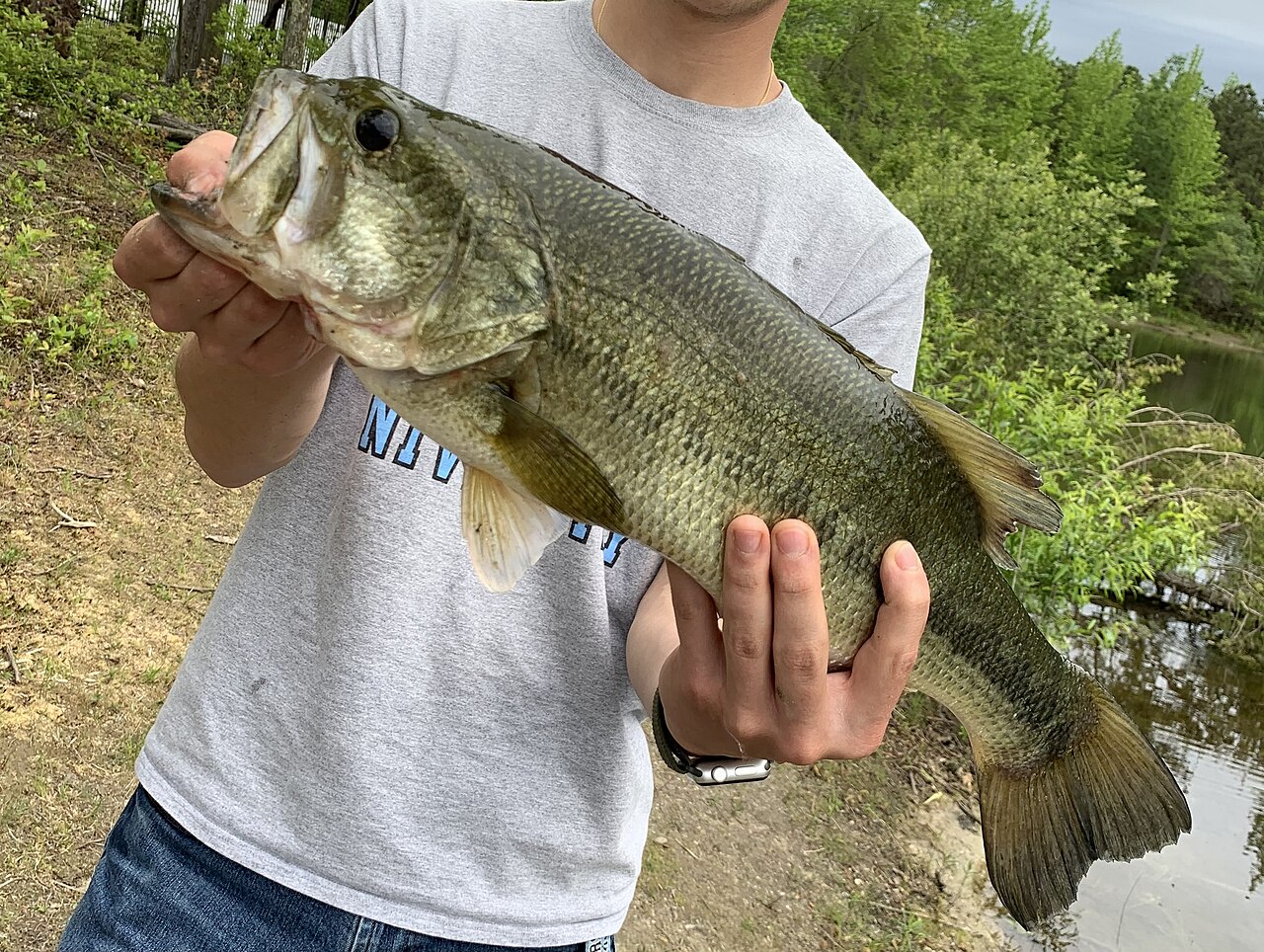
Wet your hands before you touch a bass. Dry hands strip the slime coat that protects the fish from infection. Hold it by the lower lip with one hand and support its belly with the other, keeping it horizontal. Never hold a big bass straight up and down by the jaw alone: the weight can damage its jaw. Get the hook out fast, take a quick photo, and put it back in the water. A fishing license is required in nearly every state, so check your state fish and wildlife agency's rules before you go.
The bottom line
One rod, one worm, and a pond with some cover in it is all you need to catch your first largemouth. The fish is not hard to find. It lives in the weeds at the edge of the water you drive past every day, and it feeds hardest in the first and last light. What takes practice is the slow part: casting to the edge, letting the bait fall, and waiting long enough for the fish to decide.