
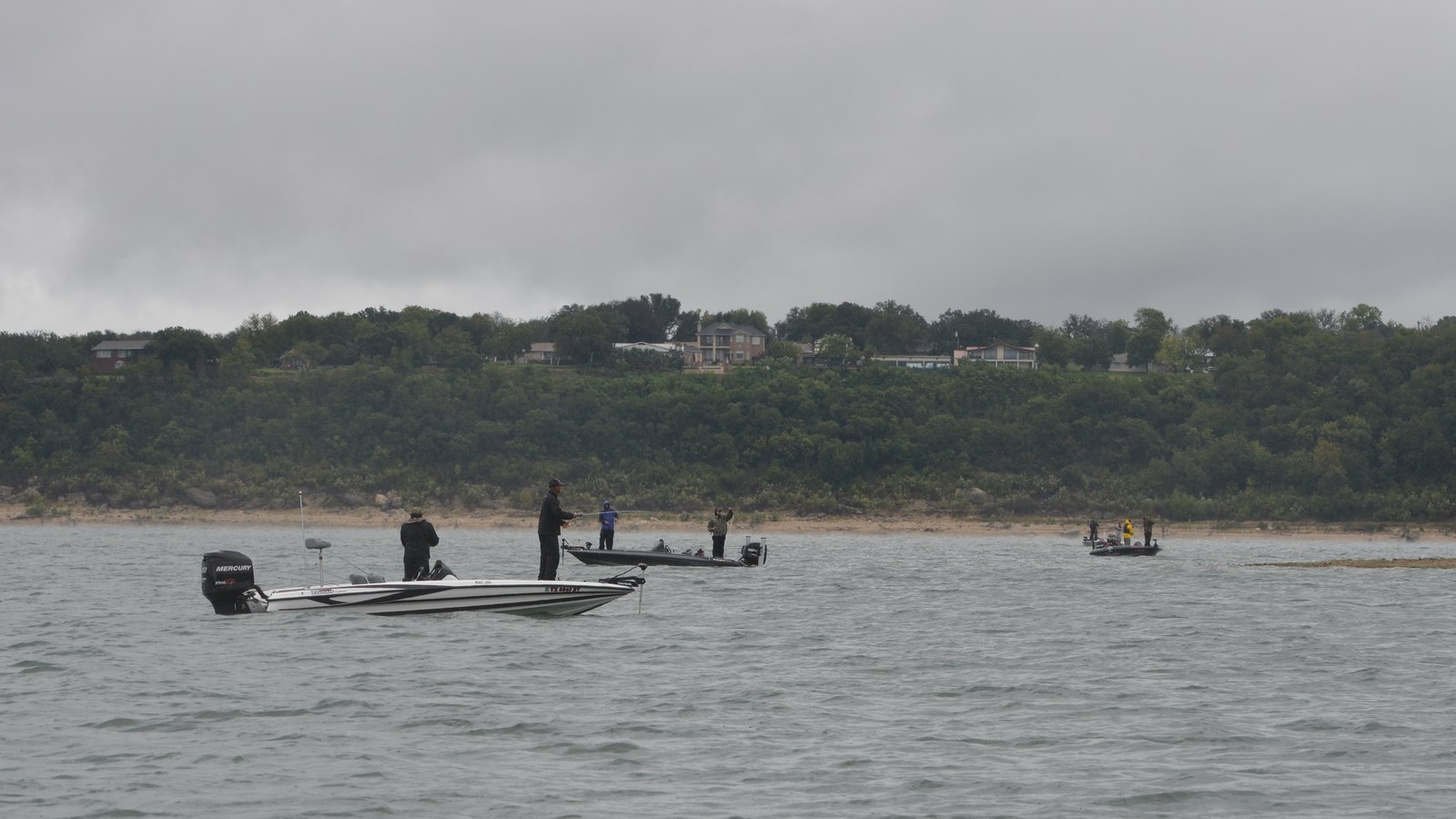
Rain is a window, not a washout
Watch a boat ramp when the first drops hit and you will see the pattern: most anglers load up and leave. The ones who stay usually have the lake to themselves, and on the right day the fishing after the crowd leaves beats the whole morning bite. Rain changes the bite. The trick is knowing which rain helps, which rain hurts, and when the sky is telling you to get off the water entirely.
The short version: fish light rain and the hours before a front arrives. Fish it fast, fish it loud, and fish the water the rain is running into. Walk away from lightning, from cold muddy water after a long storm, and from the bluebird day after a front passes, when the fish have stopped biting.

Why rain turns bass on
Five things happen at once, and every source we read agreed on the list even when they argued about which one matters most.
The light goes flat. Clouds and rain cut the glare, and bass leave cover and roam. Fish that hug shade on a bright day will cruise open flats in the rain, and they get less wary about what they eat.
The surface breaks up. Raindrops dimple the water, which hides your line, your lure, and you. A bank angler can walk up on normally spooky fish in a light rain and get casts they would never get on a calm day.
Runoff delivers food. Rain washes insects, worms, and loose dirt into the lake through creek mouths, culverts, drainage pipes, and ditches. Baitfish gather at those inflows to feed, and bass gather behind the baitfish. This is the single most repeatable rain pattern there is.
Oxygen rises and water cools. Surface agitation mixes oxygen into the water, and rain cools a hot lake, which matters most in summer, when warm water holds less oxygen and bass get sluggish by afternoon.
Pressure falls before the front. Anglers everywhere swear the bite peaks as a storm approaches and the barometer drops, then dies once the front passes and high pressure settles in. Treat that as convergent angler experience, not settled science: one long-time forum poster argues weather never touches bass directly, only water temperature, clarity, oxygen, current, and light do. Either way, the pattern holds, and the hours before the rain are the hottest fishing of the whole cycle. One more factor has nothing to do with fish: most anglers go home, and less pressure on the water is worth something on its own.
The four phases of a rainstorm
Rain fishing is not one condition. It is four, and the right move changes completely between them.
Before the rain. This is the best fishing in the whole cycle. The sky darkens, the pressure falls, and bass feed hard. Several anglers describe the last few minutes before a storm as lights-out fishing, which is also the trap: that is exactly when lightning shows up. Fish the front, but keep one eye on the sky and a hard exit plan.
Light rain. The best sustained fishing. Everything in the previous section is working at once, and it keeps working as long as the rain stays light. This is the window to cover water fast with moving baits.
Heavy rain. Mixed, and often worse than people expect. A hard downpour pounds the surface, kills visibility, and pushes bass toward cover or slightly deeper water. What still works is fishing the runoff: the inflows are dumping food even in a downpour, and the mud line, the visible edge where muddy runoff water meets clearer lake water, fishes like a weed line. Bass sit in the dirty water and dart into the clear side to grab food.
After the rain. This is where most anglers get it wrong, because "after" splits into two very different periods. The tail end of the storm and the first few hours after the front clears can still fish well, especially around runoff areas. But once blue skies and high pressure settle in, usually a day or two after a cold front, the bite goes dead. Bass go tight to cover or deep, ignore fast baits, and want a slow finesse presentation or nothing at all.
There is also the long-rain flip. One or two days of rain means aggressive bass and reaction baits. After two or three days of steady rain and cloud, the fish drop deeper and stop chasing moving baits, so switch to bottom contact: football-head jigs, shaky heads, and Ned rigs dragged slow along the bottom.
Where the fish go
Rain moves bass, and the moves are predictable enough to fish on purpose.
Fish the inflow. Creek mouths, culverts, drainage pipes, ditches, and any spot where rainwater is running into the lake. Bass hold in the slack water at the edges of the current, facing into the flow, so keep the boat close to cover — the stained water hides you — and cast upcurrent, letting the bait drift through the seam where moving water meets slack. Hop from one inflow to the next. If one has no bait showing, leave fast. A creek mouth with bait on it is worth an hour; one without bait is worth two minutes.
Fish the mud line. Where runoff meets the lake, fish the edge. Cast the muddy side and work the bait across the line. The same rule holds after the rain: if the whole lake is muddy, the inflows become the clearest water, so go back to them.
Fish rising water, avoid falling water. Rain raises the lake, and bass move shallow into newly flooded cover immediately, sometimes into water so skinny their backs break the surface. Flooded green vegetation and brush are the spots. But if the floodgates are open and the lake is dropping, bass vacate the shallows just as fast. Check whether the water is rising or falling before you commit to a shallow pattern. Rain also adds current, which stacks bass on points, humps, and eddies.
Warm rain versus cold rain. Warm spring rain can warm the shallows fast and produce some of the best days of the year. Cold rain does the opposite, especially in fall: it chills the shallows, and a cold rain can trigger lake turnover, the fall mixing of a stratified lake, which can shut the fishing down for days. Our Best Rain Gear for Fishing covers staying dry and warm when the rain itself is cold.
Summer rain is the exception. In summer, bass are locked into seasonal patterns, deep and suspended over ledges or buried in cover, and a summer rain barely moves them. Do not abandon your offshore spots and run shallow just because it started raining in July. One veteran guide puts the rain window at roughly 55 to 70 degrees, and the rain helps most inside that range.
What to throw
The lure box for rain is small, loud, and fast, at least while the window is open.
During light rain, power fish. Cover water fast with moving baits, because the low-pressure window is short and the fish are roaming. The convergent core across every source we read: buzzbaits and other moving topwaters, spinnerbaits, chatterbaits (a bladed jig that vibrates and flashes as it swims), and crankbaits. A spinnerbait's flash and vibration and a chatterbait's thump cut through rain-dimmed water and let bass find the bait by feel, through the lateral line, the row of sensory organs along a fish's side that detects vibration.
In heavy rain, go louder. When the surface is getting pounded, a subtle topwater gets lost. Switch to a buzzbait, a Whopper Plopper, or a single Colorado-blade spinnerbait, the single wide blade that thumps hardest and displaces the most water.
In muddy water, fish by contrast — and by thump. A single Colorado-blade spinnerbait is the call: the one wide blade displaces the most water, and bass find it by feel when they cannot see it. Pick solid painted blades — white, black, or chartreuse — over plated ones, which lose their flash in the stain. Two color camps argue about the rest, and both have their believers: dark solids like black, blue, and junebug for a sharp silhouette, or bright chartreuse, orange, and white for maximum visibility. Either way, the rule is contrast, not natural shad colors. Upsize the lure, add a rattle, and put a bulkier trailer on a bladed jig so it pushes more water. And when the current runs sideways across your cast, the spinnerbait keeps working where a bladed jig's action dies — that is the bait for cross-current.
When the bite cools, slow down. After the front passes, or after three days of steady rain, the moving baits stop working. Switch to soft plastics fished slow and tight to cover: Texas-rigged worms, jigs, drop shots, and Ned rigs. Let the bait sit on the bottom, move it a little, let it sit again. Patience is the technique now.
Mind the water temperature. Topwater fades when the water drops into the 50s. Bass break the surface less, and the rain bite goes subsurface: swim jigs, spinnerbaits, and chatterbaits take over. A topwater in cold rain is a cast wasted.
Lightning and rain safety
Lightning is the one thing every angler we read agreed on, and the agreement was emphatic: get off the water at the first sign of lightning or thunder. A graphite fishing rod conducts electricity, and holding one up on open water in a storm is asking for trouble. Open water is the worst place to be in a storm, and a boat deck, a dock, or a tree are not shelter. Wait 30 minutes after the last thunder before going back out, and shelter in a vehicle or a substantial building.
The hard part is that the bite peaks right before the lightning arrives. Anglers admit it openly: the five minutes before a storm can be the best fishing of the day, and people stay a few minutes too long because of it. One Texas angler described his line and bait floating an inch off the water from static charge, then lightning cracking trees fifty yards away, and they dropped their rods and ran for a boathouse. Another described a rod humming in his hands, and those are not warnings to weigh; they are the signal to leave now.
A few practical rules beyond lightning: non-slip footwear, because wet decks, docks, and banks are slick. A dry bag for your phone and electronics. And after the trip, dry the reel. Wipe it down, loosen the drag so the washers do not stick together while they dry, and leave the rod locker open so the gear airs out.
The bottom line
Rain is not one condition, and that is why the advice about it sounds contradictory. Light rain and the hours before a front are some of the best bass fishing of the year: low light, broken surface, food washing in, and fish feeding hard. Heavy rain, cold rain, and the bluebird days after a front are a different story, and the right move is often a slower bait, a different lake, or the truck. Fish the inflow, fish the mud line, throw loud moving baits while the window is open, and slow down when it closes. And when the sky starts flashing, the fishing is over.