Nothing in freshwater fishing hits like a topwater strike. Nothing else has a worse conversion rate. The typical story is ten blowups for one fish in the boat, and most of the lost ones were never the lure's fault. Topwater is a conditions weapon, not an all-day default. Get the conditions right and blowups turn into hookups.
The short version: throw topwater when the water is 60 degrees or warmer, in low light or overcast, with the barometer falling. Work the bait slower than your instincts say. And never set the hook on the splash.
When to throw topwater
Water temperature. "Throw topwaters only when the water is at least 60°F" is the codified rule of thumb and a solid beginner's floor. The pros go lower: Dean Rojas starts when water crosses 50 degrees, Dave Wolak calls 52 the magic number, and John Crews says bass will bust a topwater anytime it's above 50, "and when it starts pushing 60 they really come into their own." Fall stretches the window: frogs stay productive into the mid-50s, and Rojas finished second at Sam Rayburn on a frog in low-50s water. Use 60 as the reliable rule and 50 as the working floor, only when the water is warming, not falling.
Time of day. Dawn and dusk are the peaks. But topwater doesn't die when the sun climbs. Overcast stretches the bite deep into midday, and shade targets hold fish from 9 to 11 a.m.: docks, overhanging trees, vegetation edges. Know this about midday fish: they slap more than they commit. Expect follow-up strikes, not clean eats.
Pressure and fronts. Falling pressure ahead of a front is the money window. Wolak once made a tournament cut during a sleet storm on topwater: the fish were reacting to the falling pressure, not the weather. The next day's post-front bluebird sky killed it. Clear skies, rising pressure, fish buried in cover: topwater is near dead.
Wind. Glass-calm favors silent walking baits. A light ripple suits loud baits like the Plopper. Too much wind is the kill switch: waves bigger than your lure defeat it, so switch to a squarebill crankbait. Overcast plus drizzle is the best all-day topwater condition there is.
The five topwaters that survive their critics
Heddon Super Spook Jr. ~$7–10
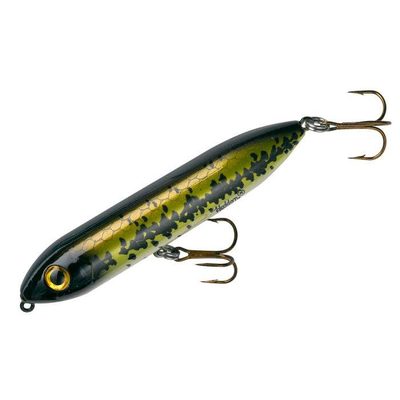
Walk-the-dog triggers the most violent strikes of any topwater class. The recurring forum image is a bass visibly tracking the Spook in clear water, then detonating on it. It casts like a bullet for its size, and the track record runs decades. At seven to ten dollars it routinely outfishes premium walkers at three times the price.
Two convergent catches. The factory trebles bend out: fine until you hook a good fish, then upgrade the hooks. And the walk takes real practice. The beginner failure modes recur everywhere: setting the hook on the splash instead of waiting to feel the fish load up, and never pausing the bait. The Jr. walks with less effort than the full-size Zara Spook. Skip it if you fish heavy vegetation: twin trebles foul instantly in grass and pads.
Heddon Super Spook Jr., the walking bait everything else is measured against — link goes live soon
River2Sea Whopper Plopper 90 ~$13–16
"Reel at any speed" is the most repeated beginner endorsement in topwater. No cadence to learn. It floats, so you can pause it, unlike a buzzbait. Multiple forum veterans report above-average fish on it, and first-cast fish stories recur independently.
It drew the strongest criticism of any pick here, stated plainly. Vegetation kills it: "catches every blade of grass," and a thread of moss seizes the tail. Several anglers quit the bait over this alone. The "tackle that failed me" megathread has Plopper entries: fell for the hype, shuts the bite down when fish aren't actively feeding. It needs feeding fish. The 130 size lands hard enough to spook fish in close. Beginner pick for open water. Pair it with the buzzbait below for cover.
River2Sea Whopper Plopper 90, topwater so simple it almost feels like cheating — link goes live soon
Booyah Buzz Buzzbait ~$6–9
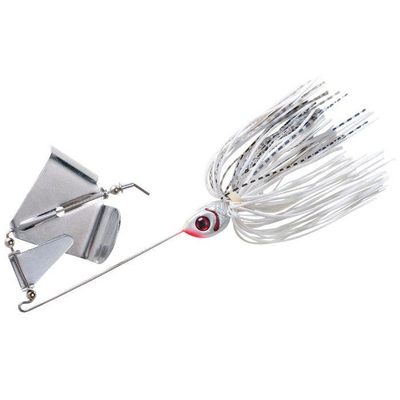
The buzzbait fishes where trebles can't. A single upturned hook skips through loose slop, wood edges, and dock posts, and personal-best bass stories recur on buzzbait threads. "Keep coming back to the black Booyah with the clacker" recurs across BassResource threads, and the technique-mastery threads name the buzzbait as the first topwater a beginner should learn: it flat catches fish.
Two limits. It sinks, so there is no pause button. If bass won't chase, you have no fallback presentation. And no brand wins a coronation: the Cavitron, the Strike King Tri-Wing, and War Eagle all have devoted camps. Booyah wins the plurality clearly. Don't buy bargain buzzbaits. Cheap ones lose blades and paint in days, and a bent wire means a morning spent tuning a crooked runner.
BOOYAH Buzz Buzzbait with clacker, the beginner topwater for cover — link goes live soon
SPRO Bronzeye Frog ~$9–12
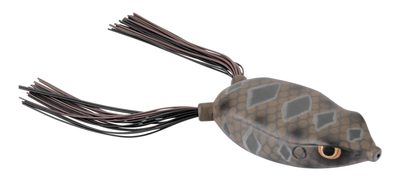
Matted grass and lily pads are water where nothing else works, and the Bronzeye is the best hollow-body frog for it. It walks superbly out of the package, per repeated forum comparisons, and the collapsible body with upturned dual hooks is fully weedless. The hooks are beefier than the Booyah Pad Crasher's: the explicit reason multiple Pad Crasher owners upgraded.
The catches. QC is inconsistent: multiple owners report frogs sinking straight out of the package, and one veteran who called SPRO was told to boil them. Buy in person if you can. It costs 1.5 to 2 times a Pad Crasher. And frog hookup ratios are inherently worse than treble baits: short strikes and missed blowups are the number-one frog complaint category-wide. Frogs demand the delayed hookset below. Skip the frog if you fish open water only.
SPRO Bronzeye Frog, the frog for the thickest cover — link goes live soon
Rebel Pop-R P71 ~$7–9
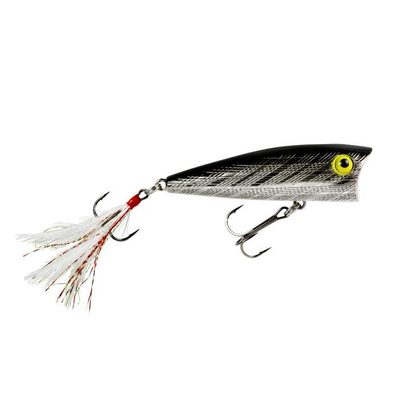
The classic that never left. Anglers report fishing Pop-Rs since the 70s and winning tournament money on them. The P71, the 3-inch size, pops on every twitch: reliable spit-and-chug cadence that owners' $20 Japanese poppers can't match. One tournament angler credits 80 percent of his placements to a Pop-R, fished March through November.
Get the P71, not the standard size. The smaller Pop-R is a dink magnet; the 3-incher is the big-bass slayer. Two real knocks: the factory hooks arrive dull ("nowhere close to sharp" recurs across Tackle Warehouse reviews), so budget a hook swap, and at least one longtime user reports slipping Rebel paint quality. It's a calm-water finesse tool, not an all-conditions bait.
Rebel Pop-R P71, the popper that has been catching bass since the 70s — link goes live soon
Also considered
Booyah Pad Crasher (~$7–9): the value frog, not the best frog. Softer body, lighter hooks, weaker skipping than the SPRO per multi-frog owners.
Heddon Tiny Torpedo (~$6–8): beloved pond classic with 60-plus years of loyal users, but the Plopper covers the same prop-bait slot with more presence and distance. Nostalgia, not a category win.
Teckel Sprinker Frog (~$14–18): innovative frog-plus-plopper-tail with Gamakatsu hooks, but field reports split and the nose-diving complaints didn't converge. Revisit in a year.
What to skip
The Deps Buzzjet (~$25–30). A cult bait with real fans, but $29.99 at two US shops for an import whose stability suffers when cranked fast and whose stock hook bent on a 2.5-pound fish. One user lost his in under ten minutes on a bad knot. Its advantages over a sixteen-dollar Plopper are marginal for 95 percent of anglers. That money buys a Plopper and a Spook.
How to fish each style
Walk-the-dog (Spook). Rod tip low, around nine o'clock. Work the bait with the rod, not the reel, on slack line. Snap the tip up, let it fall, reel up a little slack, repeat. GD Tackle's framing is the one to memorize: you're twitching the slack line, not the lure. A tight line drags the bait straight instead of pivoting. Default cadence is a steady, even rhythm. Speed up when bass are chasing; slow down and add pauses when they're looking. The strike often comes on the pause.
Popper (Pop-R). Cast, then wait. Don't move the bait until the ripples fully dissipate. Then a sharp downward twitch, enough to hear the blurp, not a violent yank, then a long pause. Most strikes come on the second or third pop, on the pause. Rod tip down near the water makes the loudest pop. If you see a follower, stop and dead-stick: it will usually hit it.
Frog (heavy cover). Walk it with gentle downward twitches, much softer than a Spook twitch. Pause is the key: park it a second or two in mat pockets and open holes, drag it over mats, walk it through openings. Keep the rod tip down while working it. Missed strikes are normal: bass hit from the side or slap behind the frog. When it happens, stop the frog. They often come back, or cast right back. Keep a weightless Senko tied on: topwater is a great search bait, a bird dog for bass, and missed fish usually eat the follow-up. Three owner-verified fixes for chronic short strikes: bend the hooks up and out a micro-fraction with pliers, trim the legs to about two inches, and soften a stiff body in boiling water for fifteen to twenty seconds.
Buzzbait. Start the retrieve before or as the bait hits the water. Engage the reel mid-cast so the blade planes on top immediately; never let it sink into grass. Default speed is just fast enough to keep the blade churning. If it rolls over, slow down. Bump cover, a stump or dock post or grass point, and briefly accelerate: that's what triggers followers. If you see swirls behind the bait, pause and give a sharp rod twitch.
The hookset: the one rule that costs everyone fish
Setting the hook on the splash is the number-one cited mistake in all of topwater. "Reacting to the splash instead of the pressure is one of the easiest ways to pull a buzzbait away from a bass." Swing at pressure, not at the explosion.
For walkers, poppers, and buzzbaits: keep working the bait until you feel the fish load up, then set. For frogs, the majority method is to wait until you feel the weight of the fish: reel down, take out the slack, and set hard. Treat it like a plastic worm: feel the strike, reel down, hammer it home.
One real pro dissent, split by situation. Jason Christie swings instantly, within a quarter second of the blowup: "I'd rather swing and miss than wait and miss." His logic holds in heavy mats, where a waiting fish burrows back into cover. Heavy mats or tournament pressure: swing fast and never take your eyes off the frog. Open pockets and pads: wait the beat and feel the weight.
Gear and line
Rods: 6'4" to 7', medium to medium-heavy for walkers and poppers, with the built-in compromise: fast enough to impart action, soft enough to keep trebles pinned. Frog rod is specialized: 7'3" to 7'6", heavy, fast, long handle for dragging fish out of mats. Buzzbait: 7 to 7'4", medium-heavy.
Reels: baitcaster preferred for walkers: no bail to flip, instant engagement. Gear ratio 6.3:1 to 7.5:1 is the sweet spot. Frogs want 7:1 or faster for slack pickup. You can always slow down with a fast reel, but you can't make a slow reel go faster.
Line: frogs want braid, 40 to 65 pounds, 65 the modal answer for mats. Walkers and poppers go mono, 12 to 15 pound, or braid, 30 to 40 pound. Mono floats and its stretch forgives surging treble-hooked fish. Fluorocarbon is the one clear no for slow topwaters: it sinks and drags the nose down. The veteran compromise is braid mainline to a short mono leader.
The bottom line
Topwater is the most fun way to catch a bass and one of the least forgiving ways to learn. Start with the conditions: 60-degree water or warmer, low light or overcast, falling pressure, light wind. Buy the Whopper Plopper 90 if you want bites with no technique, the Booyah clacker buzzbait if you fish cover, the SPRO Bronzeye when the pads mat up, the Rebel Pop-R P71 for calm clear mornings, and the Heddon Super Spook Jr. when you're ready for the most exciting strike in freshwater. Fish them all slower than your instincts say, and swing at pressure, never at the splash.
We built BiteLab to check conditions before you go, and topwater is the category where that habit pays the most: the right lure on a falling barometer at 7 a.m. beats the perfect retrieve on a bluebird afternoon at 2 p.m.