The short list
Kansas City is a two-state fishing town, and the bank fishing splits the same way. The Missouri side holds the big reservoirs and the best small-lake complex in the metro, while the Kansas side holds a set of county lakes that fish well and sit close to the suburbs. The rivers run through both, and they hold the biggest catfish in town.
Six names cover most trips: James A. Reed Memorial Wildlife Area, Lake Jacomo, Longview Lake, Shawnee Mission Park Lake, Kill Creek Park Lake, and Kaw Point on the Missouri River.
James A. Reed Memorial Wildlife Area: the top pick
Reed is the best bank-fishing complex in the metro, and it is not close. Twelve lakes spread across more than 3,000 acres a mile east of Lee's Summit, off Ranson Road south of Highway 50. Gopher Lake is the biggest at 42 acres, and the smallest are pond-sized. Jetties, docks, and trails reach most of the water, so you can fish a different lake every trip without ever launching a boat. There is no entry fee, and motors are not allowed on the lakes, which keeps the bank angler on equal footing with everyone else. Carry-in kayaks, canoes, paddleboards, and float tubes are allowed on Catclaw, Cottontail, Gopher, and Jackrabbit, hand-launched only, with no trailers.
The Conservation Department names Bluestem, Catclaw, Cottontail, Jackrabbit, Plover, and Nell as the best bass lakes, and bass over 5 pounds are not uncommon. Locals say Catclaw holds the best fish, with one warning attached: do not fish near the parking lot. Hike around and work every laydown, the fallen trees lying in the water, with slow plastics and jigs on sunny days and squarebill crankbaits along the brush. A good day there, by one regular's count, runs about five fish, a couple over 3 pounds.
Reed is famously tough, so go in expecting a grind, and one local put it plainly: you have to work every castable inch of the bank. Plenty of anglers report getting skunked, blanked without a bite, working the dams at Bluestem and Nell with Texas rigs, Senkos, chatterbaits, and Ned rigs.
Channel catfish are stocked in every lake each year. Drift nightcrawlers through the creek channels after spring rains, and switch to chicken liver or cut shad in summer. Once the water tops 80 degrees, float the bait under a bobber. Bluegill and redear sunfish spawn from late April into early June, with Gopher and Catclaw the best bluegill lakes. Crappie run early April to mid-May, and the daily limit is 30, because the lakes are overcrowded with small crappie and the department wants anglers to keep them. Rainbow trout go into Coot, Plover, and Honker Pond from November through March, and you need a Missouri trout permit to keep them. Honker Pond is kids only, age 15 and under, and Prairie Hollow Lake is reserved for educational groups.
Lake Jacomo: the big-water bass lake
Jacomo is 970 acres in Fleming Park, and locals call it the best bass lake on the Missouri side. The marina sits at 7401 W Park Road in Blue Springs, with boat rentals, bait and tackle, two ramps, and a fishing pier. A bank-fishing trail runs about 1,000 feet along the shore, and anglers fish straight off the boat docks with success.
Largemouth bass work the water-willow edges and vegetation in spring and summer, and beaver lodges and logs all year. Chatterbaits, topwater lures, and spinnerbaits do the work when the water runs in the 70s, and the black bass minimum is 15 inches. The south marina and the old swim beach are the best bank spots for channel catfish, many of them 10 to 15 pounds, and they stack in the backs of coves after rain. Flatheads over 20 pounds sit near deep rocky structure and creek channels in late spring and early summer, on live bait. Crappie bite off the north marina dock and the accessible docks over deep water in fall and winter, walleye run along the spillway after dark in late March and early April on noisy crankbaits, and white bass concentrate along the dam in mid-April.
Pole-and-line fishing only, meaning rod and reel, no trotlines or nets. Zebra mussels showed up in 2017, so clean, drain, and dry your gear before fishing another lake. A county boat permit is required to launch, even for an inflatable kayak, and there is a 25 horsepower limit on motors.
Longview Lake and Blue Springs Lake: the Fleming Park pair
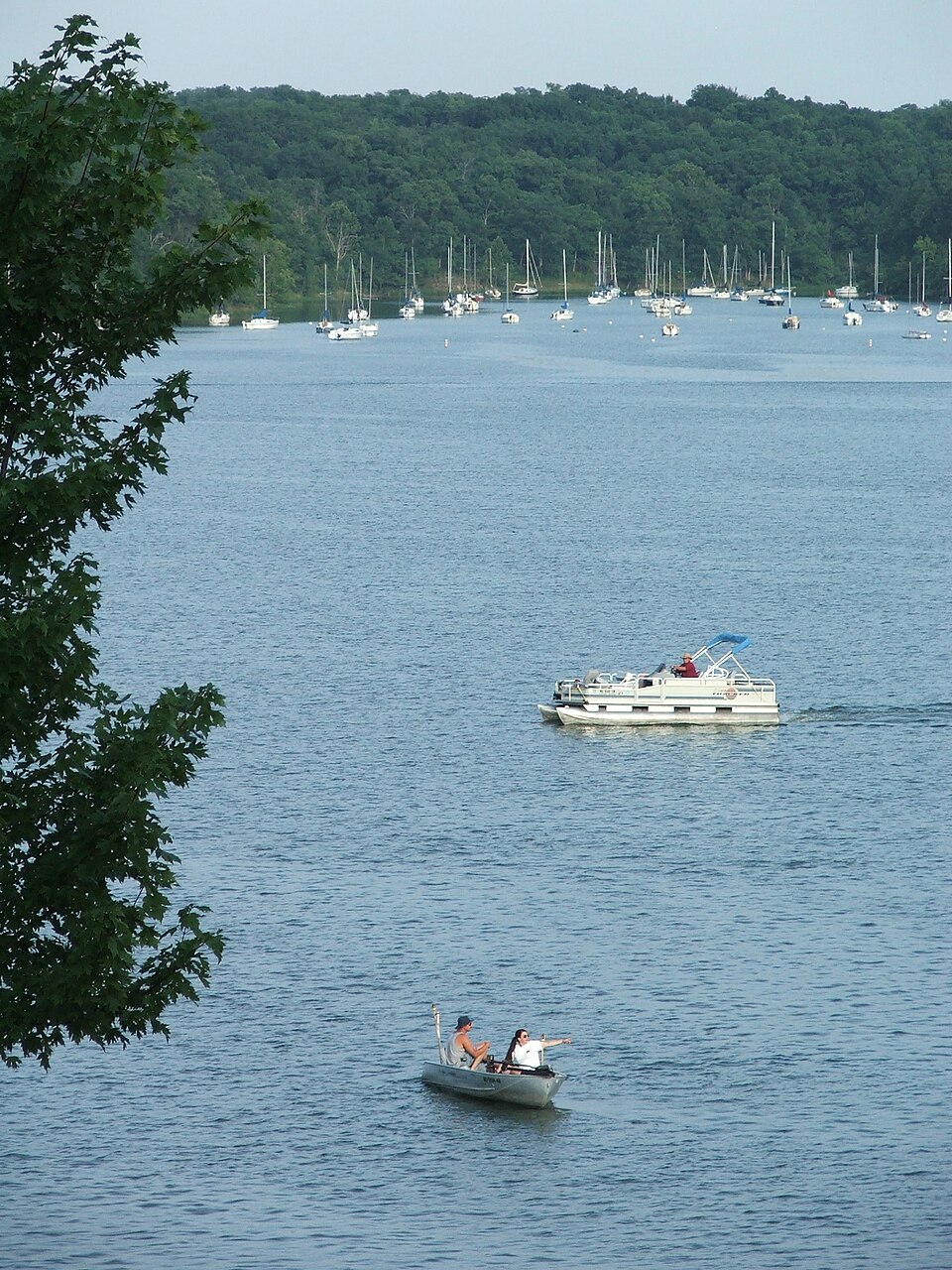
Longview Lake is 930 acres in the southeast corner of town, at 9898 Longview Road. Two boat ramps, fishing piers, and parking make the bank easy to reach, and the dam is the spot locals name first. Crappie stack along it in late April and early May, and locals report big catfish around the marina. Walleye run along the dam and the rocky east side in spring and fall, and the spring 2025 survey found 97 percent of them over 15 inches. Flatheads over 50 pounds live here, bass fishing keeps improving, and brush piles added on the east side in spring 2024 give bank anglers something to cast at. The black bass minimum is 15 inches, and it is pole-and-line only.
Blue Springs Lake is 720 acres on the other side of Fleming Park, reached off Bowlin Road. The headliner is the hybrid striped bass, a white bass and striped bass cross, stocked at more than 5,000 a year. Fish over 10 pounds are not uncommon, so bring heavier gear than you would for largemouth. Look for schooling fish chasing shad at the surface, best at the upper end near the Jacomo spillway when water is flowing, and along the dam and windy main-lake points in late summer and fall. For what changes when the water cools, see Fall bass fishing: how cooling water changes everything. Channel catfish are excellent from April through October, on the flats near Woods Chapel Road and along the dam in June. Crappie work the standing timber and brush piles, and largemouth sit along weed-bed edges and fallen timber east of Woods Chapel Road. Locals call Blue Springs the toughest of the three Fleming Park lakes for bass, though the hybrid stripers are the real draw there.
Lake Remembrance: the easy-access pick
Lake Remembrance is a 54-acre lake in Gregory O. Grounds Park at 1901 NE Jefferson Street in Blue Springs, and it is the simplest bank-fishing setup in this guide. A 2.7-mile trail circles the entire shoreline, so you can walk the whole lake and fish wherever the bank looks good. There is an accessible dock on the east shore and a big paved lot on the dam.
Largemouth run fair here, at low density, on spinnerbaits, crankbaits, and soft plastics around timber and weed edges. The jerkbait bite in spring and fall is the local favorite, and few bass run over 3 pounds. Bluegill up to 8 inches work the water-lily beds on the east shore, redear run good-sized, and channel catfish are stocked every year at 8 to 10 inches. No belly boats, no wading, no swimming.
The Kansas side: Shawnee Mission Park Lake and Kill Creek Park Lake
Johnson County's park lakes are the Kansas-side answer to Reed, and the rules changed recently. Since January 1, 2025, the county no longer sells its own fishing permits. A Kansas license covers the lakes, and a state trout permit is required for trout from December 1 through March 31.
Shawnee Mission Park Lake is 120 acres at 79th and Renner Road in Shawnee, inside a 1,756-acre park. It holds largemouth and smallmouth bass, wipers, channel catfish, crappie, and rainbow trout stocked in February and December. The state forecast rates its bass fair, with a big fish of 5.59 pounds. Fish the riprap dams, the rock piled along the dam face, the piers, brush piles, and weed edges. The north banks warm first in spring, and the wind-blown banks and points fish best in fall with crankbaits and spinnerbaits. You cannot fish from the marina docks while the marina is operating.
Kill Creek Park Lake is 27 acres at 11670 Homestead Lane in Olathe, and it is the better bass water of the two. The state forecast rates it excellent, the top rating among the county park lakes, with a big fish of 4.87 pounds. It also holds smallmouth, wipers, black crappie, redear and bluegill, walleye, channel catfish, and stocked trout. There is a fishing pier and a small marina, and standing timber in the east end gives bank anglers cover to work.
Heads up if you go in late November: Shawnee Mission Park Lake gets 2,000 pounds of trout on Tuesday, November 24, and Kill Creek gets 1,000 pounds on Monday, November 30. Both lakes close to all fishing until the morning of December 1, reopening at 6 a.m. at Shawnee Mission and 7:30 a.m. at Kill Creek, so check the county calendar before you drive out that week.
Lake Olathe and Cedar Lake, briefly. Lake Olathe is 170 acres in west Olathe with a shaded fishing pavilion, and its bass forecast is excellent, with a big fish of 5.26 pounds. Cedar Lake, south of Olathe, runs largemouth at five a day with an 18-inch minimum and crappie at 50 a day. Both are worth a stop if you are already on the Kansas side.
Wyandotte County Lake: good fish, one extra permit
Wyandotte County Lake is a 400-acre lake in a 1,500-acre park at 91st and Leavenworth Road in Kansas City, Kansas, with a marina, boat rentals, and a kids' fishing pond. It holds largemouth and smallmouth bass, walleye, wipers, crappie, channel catfish, and stocked rainbow trout. Anglers report largemouth to 6 pounds and smallmouth past 4.
Two things to know before you go. First, this lake is the exception to the Kansas-side rule: you need a Unified Government fishing permit on top of your Kansas license, for anyone age 16 to 64, and deputies patrol it. Buy the county permit before you fish. Second, it is hard from the bank. The bigger fish sit deeper on weed edges, the pontoons own the weekends, and locals say to fish it early, around 8 AM or earlier, or near sunset, or on a weekday.
The Missouri River and the Kaw: the catfish water
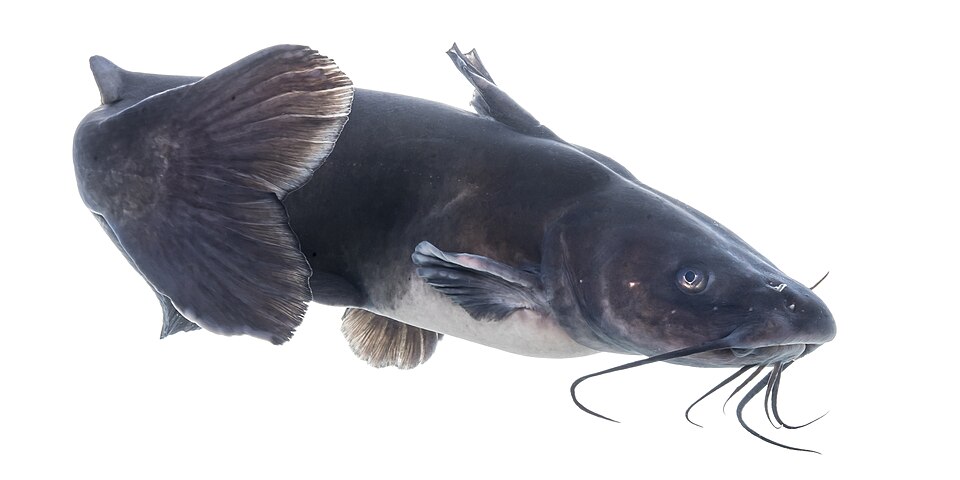
The Missouri River holds the biggest fish in this guide, and the bank access is real if you pick the right spot. The state-record flathead, caught on a trotline, came out near Riverside in 2015, and a 99-pound blue catfish was caught the same day. Catfish over 50 pounds turn up even in downtown Kansas City.
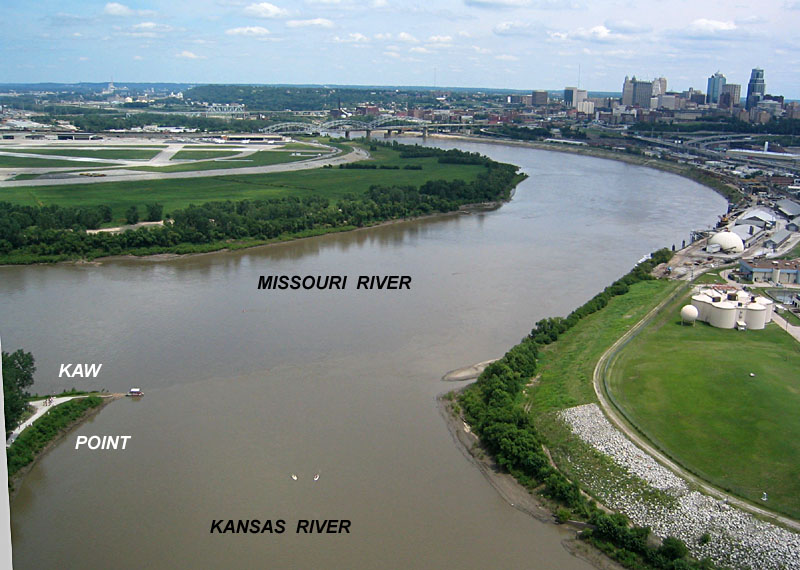
Kaw Point is the classic access, at 1403 Fairfax Trafficway in Kansas City, Kansas, where the Kansas River meets the Missouri. Fish the confluence for flatheads around brush piles, off the ends of wing dikes, the rock walls built out from the bank to steer the current, and in back eddies. Live bait is the way for flatheads, bullheads first, then green sunfish, bluegill, and creek chubs. Blue catfish feed on the shallow flats between wing dikes in the evening and in deep holes off dike ends in cooler months, on cut bait. Cut invasive carp is a top blue catfish bait, but it is illegal to move live invasive carp, so kill and ice them on the spot.
Other accesses include LaBenite Park on Highway 291 in Sugar Creek, open 4 AM to 10 PM, Cooley Lake Conservation Area off Highway 210 east of Missouri City, and the Parkville ramp and old Riverfront Park upstream of the Chouteau Bridge. The Kansas River fishes the same way from Kaw Point, mostly a catfish game on cut bait and nightcrawlers around deeper bends, current breaks, and logjams. The river is not a lake: wing dikes, floating debris, and strong current are real hazards, so bring a heavy catfish rod with 40-pound line, wear a life jacket near the water, and skip Kaw Point after dark with kids, which locals flag as rough.
The urban lakes: an hour after work
The Conservation Department stocks thirteen metro lakes with channel catfish from April through September, 8 to 10 inches each, with a daily limit of four. The Kansas City park ponds on the list include Blue Valley, Chaumiere, Englewood, Lake of the Woods in Swope Park, Lakewood, North Terrace, Penn Valley, and Troost. Hybrid sunfish go into Troost, Lake of the Woods, and Lakewood, and rainbow trout go into Chaumiere and a few other metro lakes from November through March. The stocking hotline is 816-525-0300, press 2.
Troost Lake, at 3036 The Paseo, is the beginner pick: three acres, stocked catfish, and small hooks with worms or crickets under a bobber will catch a kid's first fish. Lake of the Woods in Swope Park, at Gregory and Oldham Road, is the other name that keeps coming up in newcomer threads. Englewood Lake, at Northeast Englewood Road and North Troost Avenue, rounds out the trio. These are not destinations. They are the hour you have after work, and for that job they are perfect. For the same kind of water near Lawrence, see Best bank fishing spots near Lawrence, Kansas.
Worth the drive: Watkins Mill and Smithville
Watkins Mill State Park Lake sits about 35 miles northeast of town, near Lawson, and a 3.75-mile paved trail circles the whole 100-acre lake, which gives bank anglers access to nearly all of the shoreline. The bass fishing is among the region's best, with fish over 15 inches common, and redear sunfish run a chance at a 10-inch fish. Crappie are improving, channel catfish are stocked each fall, and hybrid stripers reach 20 inches. Night fishing needs a permit from the park office. Note the timing: the campground and the east-side day-use lot on the dam are closed all of November and December 2026 for construction, so use the west side.
Smithville Lake is the qualified mention. It is 7,190 acres of very good fishing, with bass catch rates near an all-time high in 2025 and excellent crappie and walleye, but most of the productive water needs a boat or kayak. The dam walkway and day-use areas give you shoreline, and that is where bank anglers should plan to fish. It is a Corps cost-share lake run by the City of Smithville and Clay County Parks, so the America the Beautiful pass does not work here, and the county sells day-use and annual passes at the park entrances.
What to skip
Heritage Park Lake in Olathe. The 41-acre Johnson County lake was dredged and renovated in 2023 and 2024, and the county said it would stay closed to fishing until mid-2026. We could not confirm it has reopened, so do not plan a trip around it until the county says so.
Chaumiere Lake. It is still listed in the winter trout program, but a 2026 source says the lake does not meet health and safety standards for human or pet contact. Until Kansas City Parks or the Conservation Department clears that up, fish one of the other urban lakes.
Private lakes. A lot of the water that looks fishable on a map around Kansas City is private, including neighborhood lakes like Lakewood. If a lake is not on a Conservation Department, county, or city park list, assume you cannot fish it.
Licenses, fees, and the rules that catch people out
Missouri needs a fishing permit for residents age 16 to 64 and nonresidents 16 and older; residents 65 and older are exempt, and kids under 16 fish free. A trout permit is needed to keep trout. Kansas needs a fishing license for residents age 16 through 74 and nonresidents 16 and older, plus a state trout permit from December 1 through March 31 on Type 2 trout waters, which is what the Johnson County lakes are. The full Kansas rundown, including where to buy one, is in the Kansas fishing license guide.
Johnson County no longer sells county fishing permits, as of January 1, 2025. Wyandotte County Lake is the exception: it still needs a Unified Government permit on top of the state license. Jackson County needs no county fishing permit for its lakes, though launching a boat needs a county boat permit. Zebra mussels are in Jacomo, Blue Springs Lake, and Longview Lake, so clean, drain, and dry your gear before moving between waters. Check the signs at every park: local limits beat anything you read online.
The bottom line
Start with James A. Reed when you want a full day on the bank, Jacomo when you want the best big-water bass, and Longview's dam when the crappie move shallow in spring. The Johnson County lakes cover the Kansas side, Troost covers the hour after work, and Kaw Point covers the night you want a catfish bigger than your net. Bring the right license for the side of the state line you are standing on, check the signs, and skip the private water: the best-looking lake on the map is often the one you cannot fish.