
Everybody starts by losing fish the same way
Ask a dozen experienced anglers what they got wrong when they started, and the same mistakes come up again and again. That is the good news. These are not mysteries. They are habits, and habits can be changed on your next trip.
The short version: slow down, buy less, and wait half a beat before you set the hook. The rest of this guide is the detail behind those three sentences.
Fishing too fast
This mistake shows up everywhere, and it comes up first whenever you ask around. Beginners cast out, reel straight back, and wonder why nothing bites. The lure never looks like food because food does not swim in a straight line at a steady speed.
A soft plastic worm needs to fall. A soft stickbait like a Senko, fished weightless, falls flat and slow on slack line, and most bites happen on that fall, when the line jumps or stops. Reel it back like a crankbait and you skip the whole bite window. A Texas rig, a soft plastic threaded on a hook with a sliding bullet weight above it, needs to stay on the bottom. If you cannot feel it ticking along the bottom, you are reeling too fast. Count to five between moves. In cold water, count to ten.
The fix is not complicated. Cast, let the bait sink, and watch the line while it does. Then move the bait a little and let it sink again. If it feels boring, you are probably doing it right. Test it in a swimming pool if you can: most beginners move the lure faster than they think. Slow down until the retrieve looks like something alive and a little bit lazy.
Depth is part of the same mistake. A lure rated to fifteen feet does not fish at fifteen feet unless you let it get there. Anglers with forward-facing sonar, the live sonar that shows your lure in real time, keep finding their bait running much higher than they thought, because they started reeling before it finished sinking. Count the bait down before you start the retrieve.
One exception matters. Speed is not always wrong. It is wrong for soft plastics, jigs, and spinnerbaits, which need time in the strike zone. Crankbaits fished fast and erratic catch fish, especially in choppy or murky water. Match the speed to the bait, not to your patience.
Setting the hook too soon
The second classic mistake is yanking the rod the instant something touches the bait. A bass will mouth a soft plastic and drop it the moment it feels the hook. If you set on the first tap, you pull the bait out of its mouth before it has committed.
The rule depends on the lure. With a soft plastic or a jig, wait until you feel weight. Reel down the slack first, feel the rod load, then swing. That half second feels like forever, and it is the difference between a hookup and a story about the one that got away. With a treble-hook lure, one with two small triple hooks hanging underneath, like a crankbait, set the moment you feel pressure. The fish is already hooked or it is gone, and waiting helps nothing. With topwater, wait until you feel the fish, not when you see the blowup. Setting on the splash pulls the lure away from a bass that has not actually taken it yet.
Watch the line, too. Most jig bites are never felt at all. The line twitches, jumps sideways, or goes slack for no reason. If you are staring at the water instead of the line, you will miss most of them. Become a line watcher. It is the cheapest skill in fishing.
Buying too much tackle
Walk into a tackle shop as a beginner and the wall of lures does its job. You leave with twenty lures in random colors and no idea when to use any of them. Then you spend the trip switching lures every two casts, and nothing gets a fair chance.
Start with five lures. A weightless soft stickbait, a Texas-rigged worm, a spinnerbait, a square-bill crankbait, and a small jig cover nearly every situation a beginner will meet. Learn those five before you buy a sixth. A tackle box full of confidence baits beats a tackle bag full of strangers.
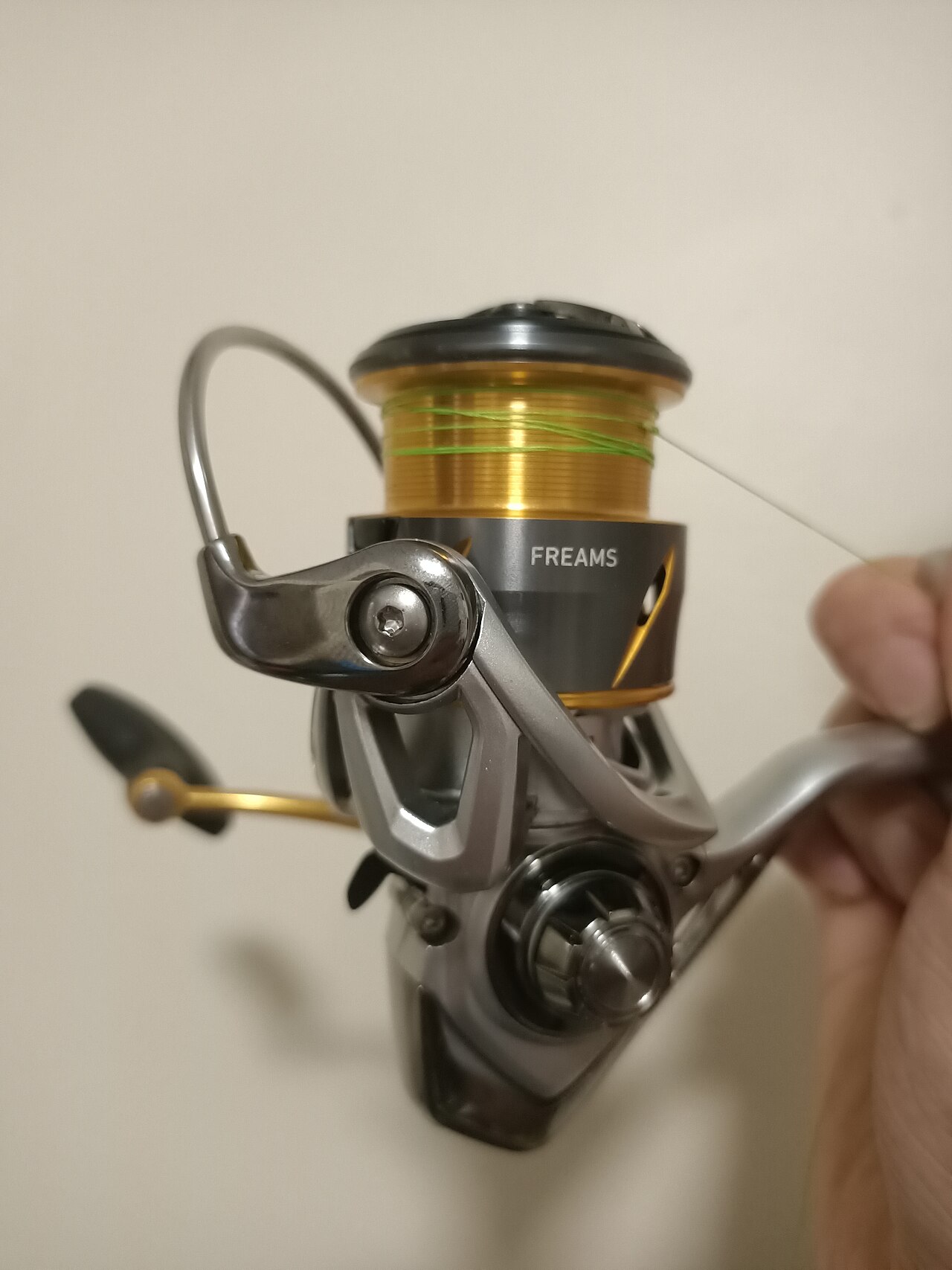
The same rule applies to rods. One spinning rod, about seven feet, medium power, with a 2500-size reel and 10-pound monofilament, handles almost everything a beginner needs. A baitcaster looks like the serious choice, and it is the wrong first reel for most people. It backlashes, tangling the line into a bird's nest on the spool, and it eats fishing time. Learn to cast and catch fish on spinning gear first. The baitcaster will still be there when you are ready for it.
Fishing open water
Bass relate to cover and structure: docks, laydowns, weed edges, rock piles, points. A beginner casting to the middle of the pond is fishing the emptiest water in it. Cast to something. If you can see a dock, a fallen tree, or a weed line, that is where the fish are. But structure is not only along the bank. Fish follow bait, and bait moves, so fish that were shallow at first light can be well offshore and deep by mid-morning. The old line is that ninety percent of the fish are in ten percent of the water, but that ten percent moves.
Work each piece of cover from more than one angle. One cast per dock misses fish sitting on the far side. Make five casts to one dock from five angles, then move on. The opposite mistake is camping a dead spot all day. Ten to fifteen good casts, then move fifty yards.
And do not skip the shallowest water. A bass will sit in a foot of water under floating sticks in the middle of summer, pinning baitfish against the bottom, the surface, and the bank. A weightless soft plastic or a light jig keeps the bait in that skinny zone long enough to get eaten.
Fishing yesterday's trip
The mistake every angler makes, according to a long BassResource thread on the subject, is fishing memories. You caught fish on a spinnerbait at the north point last Saturday, so you start there with the same spinnerbait this Saturday. The lake changed: the water cooled, the wind shifted, the baitfish moved. The fish are somewhere else.
Plenty of anglers pushed back: your history is your experience, and structure does not move. A spot that produced under the same conditions is a fine place to start. The real mistake is persisting. Start with the memory, then check the water at the launch. Temperature, clarity, wind, baitfish. If the conditions do not match the memory, fish the conditions. Memory is a starting guess, not a plan.
The same thinking applies to lures. If a bait has not produced in an hour or two, change it. Stubbornness is not confidence. Change the bait first, then change the area.
Neglecting the line, the knot, and the hook
This one costs the biggest fish. A frayed line snaps on the hookset, right after you finally land the fish you have been chasing all day. It takes thirty seconds to re-tie a Palomar knot, a simple loop knot that holds fast. Do it after every fish, after every snag, and whenever the last couple of feet of line feel rough.
Check the line itself. Run it through your fingers and feel for nicks. Fluorocarbon, the clear line that sinks and is hard for fish to see, holds up better than mono, but no line is nick-proof. Hooks dull from use and from knocking around in the tackle box, so sharpen them before the trip, not after the first missed fish. Service the reel once a year, and keep line out of the sun.
Our How to Tie the 5 Knots Every Angler Needs guide covers the knots worth knowing, and the Palomar is the one to learn first.
Making noise and moving too much
Bass feel vibration through the water. Heavy footsteps on a dock, a tackle box slammed shut, a trolling motor at full speed, your shadow falling across the spot you are about to cast to. All of it puts fish down.
Approach quietly. Cast past the target and work the lure back through it, so the splash lands beyond the fish instead of on top of them. Keep the boat or your feet still while you fish a spot. It sounds fussy until you watch a good angler work a dock without a sound.
The bottom line
None of these mistakes is a lack of talent. They are the normal first year of bass fishing, and every angler who has been at it for a decade made all of them. The fix for most of them is the same: slow down and carry less, and let today's water tell you what to do instead of last week's memory. Fish one spot properly, watch the line, and re-tie the knot before the next cast. Let the bait sit still long enough to get eaten. The fish have not changed, but your approach has.