
Cold ends more fishing days than bad fishing does. A bass will still bite in 45-degree water, but hands that cannot feel the line will not. The gear that matters in winter keeps you on the water long enough to fish slowly.
Our verdict up front: buy the Stormr Strykr Jacket + Bibs, about $750 for the set, if you fish winter often. For boots, the Muck Arctic Sport Tall runs about $170 to $180 and has the most long-term owners of any boot we found. The Simms Windstopper Foldover Mitt costs about $90 and is the best glove compromise we found. HotHands Hand Warmers cost about a dollar a pair and belong in every pocket. And Loon Stanley's Ice Off Paste runs about $10 and is the only purpose-built paste we found for frozen guides.
The layering rules first
No single piece of clothing does the whole job. Three rules came up in every corner of the research. First, work in three layers: a base layer that moves sweat off your skin, a mid layer that holds heat, and an outer layer that blocks wind and water. Second, wear merino wool or a synthetic base layer, never cotton. Cotton soaks up sweat and stays wet, and wet cotton against your skin in a cold wind ends a day early. Third, carry dry spares. Wet gloves are worthless, so a dry second pair beats one expensive pair.
One cheap system kept coming up in five separate threads: wear a thin nitrile glove under a wool or fingerless glove. The nitrile blocks wind and water, the wool insulates, and your fingers can still tie a knot.
What to skip
Rule out a few things before the picks. The KastKing IceRiver glove is warm enough, but an owner who bought a pair said he never got the hang of casting in them. Skip rechargeable hand warmers from Ocoopa: about 1.5 million units were recalled in July 2026 after fires and burn injuries. And never put gun oil in a reel. It gels in the cold and locks bearings up.
Stormr Strykr Jacket + Bibs ~$750
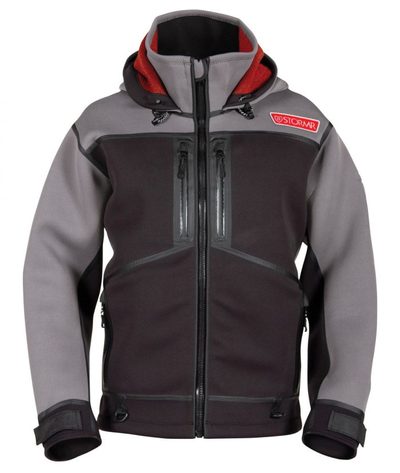
The Strykr is built from neoprene core material, the same stuff wetsuits are made from, with a fleece lining inside. The jacket adds about 5 pounds of positive buoyancy, which helps keep you afloat if you go in.
The evidence here is one long-term owner, and he is convincing. No other cold-specific suit in this research had a comparable decade-long owner behind it. A writer at Half Past First Cast has fished his Strykr suit for more than a decade, every winter, with zero maintenance in that time. No washing, no re-treating, nothing. In 20-degree air he fishes in jeans and a sweatshirt underneath and stays warm.
Two downsides. First, the price. The set runs about $750 now, $379 for the jacket and $370 for the bibs, up from about $560 when the suit launched. Second, the neoprene fit is snug at first, tighter than a loose rain suit, and the bibs are harder to get on and off than a baggy pair.
Not for: anglers who fish winter once or twice a year. At this price, that angler should layer under the rain suit they already own. Read our Best rain gear for fishing guide and layer under that suit instead.
Muck Arctic Sport Tall ~$170–180
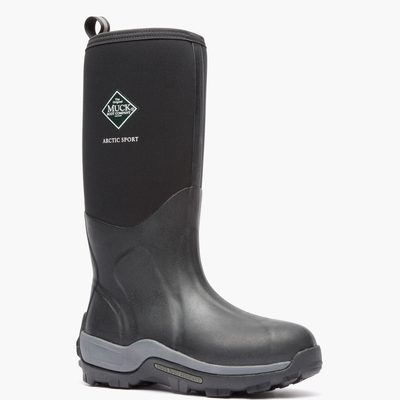
The Arctic Sport Tall is a 16-inch rubber boot with a 5-millimeter neoprene inner boot and a fleece lining, rated by Muck for comfort from minus 40 to 40 degrees. It slips on and off with no laces to freeze. Muck lists it at $175.
This boot had the most long-term owners of any pick in this guide. On Muck's own review pages, the boot holds 4.5 out of 5 across 232 reviews. Owners report pairs lasting 15 and 17 years of winter use. A utility worker who bought his first pair three years ago now buys a new pair every year and calls them the best winter boots he has ever owned.
Two downsides. First, the soles are slick on ice, so budget for a pair of ice cleats if you fish frozen ramps. Second, a 12-year owner reports his recent pairs started leaking within the first year, where his first two pairs lasted about four years each. That is one voice against dozens of happy owners, but it is the kind of quality complaint to check on your first wet day. Buy a size up so thick wool socks fit. Tight socks make cold feet worse, not better.
Not for: pedal-drive kayak anglers. The boot is too bulky for a pedal drive, and several kayak anglers said so directly.
Simms Windstopper Foldover Mitt ~$90
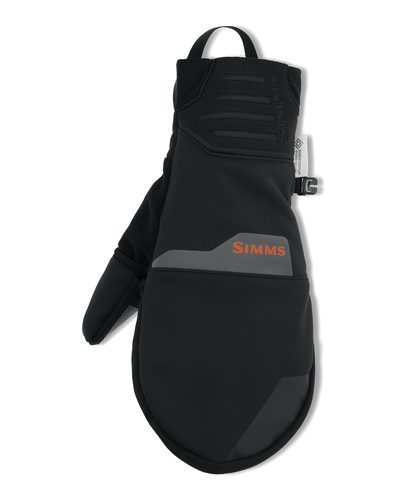
No glove is warm, waterproof, and dexterous all at once. Every glove in this research trades one for the others. The fold-over mitt is the best compromise we found, because it lets you switch between the two jobs. The mitt folds over your fingers when you are waiting or running the boat, then flips back so you can tie a knot or feel the line. It is made from Gore-Tex Windstopper fleece, a windproof stretch fabric, with rubberized palm overlays for grip.
The signal across forums, guides, and roundups is consistent. Pro Brent Ehrler fishes a wool half-finger glove under an oversized full-fingered glove, such as the Simms Challenger Insulated Glove, on boat runs. The mitt costs $90 on Simms' own site.
Two downsides. First, it is water-resistant, not waterproof. The fleece soaks through in steady rain or after dunking a hand to land a fish, and one Reddit angler reported wool staying wet and cold in a winter wind. Second, the price is steep for a glove that is not waterproof. Carry a dry spare pair and a nitrile liner underneath, and the mitt covers most winter days.
Not for: anglers who fish mostly in mild cold, above 40 degrees, where a $30 wool half-finger glove does the same job for a third of the price.
HotHands Hand Warmers ~$1 a pair
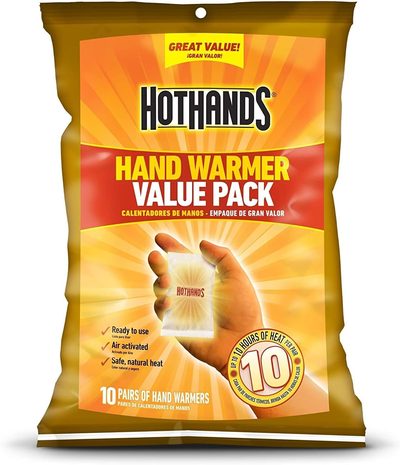
HotHands are air-activated heat packs, little pouches of iron powder that warm up when you open them and shake them. A pair gives up to 10 hours of heat, and a 10-pair pack runs about $7.50 to $10.
Placement matters more than brand. Put the warmer on the back of your hand or taped over the veins at your wrist, not in your palm, so it warms the blood heading to your fingers. Give them 15 to 30 minutes to reach full heat, so open them before you launch, not when your hands are already numb.
Two downsides. They are single-use, so a full winter of daily fishing burns through boxes of them, and the waste adds up. A refillable Zippo hand warmer costs about $30 and runs 12 hours on a fill. Note the October 2026 recall covers only the rechargeable HotHands warmer, not these air-activated packets.
Not for: nobody, really. At a dollar a pair, they belong in every tackle bag from November through March.
Loon Stanley's Ice Off Paste ~$10
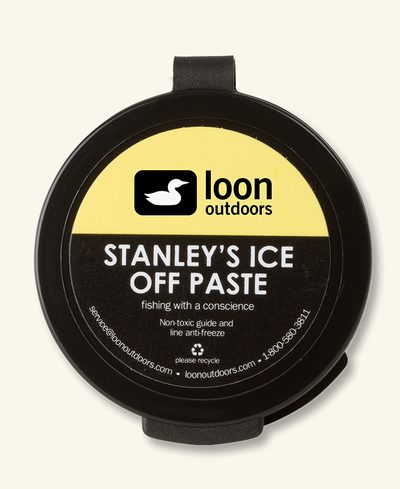
Frozen guides are the winter problem nobody solves completely. Water on your line freezes in the guides, the line sticks, and the cast stops short. The paste is the only purpose-built product we found for this job. Rub a thin layer on the guides and the first few feet of line at home, and it keeps ice from sticking. The paste works best down to 20 degrees, and Loon says it keeps guides from freezing even below zero. It is safe for all line types. Loon lists it at $9.00 on its own site.
The evidence is consistent but modest about what it can do. A Troutbitten writer who fishes winter trout says it works for a while, about five to fifteen minutes, then ice starts forming again, and it still lasts about twice as long as anything else he has tried. The folk fixes were tested and rejected: ChapStick, olive oil, Vaseline, and Pledge all wear off fast, and nobody could say whether they are safe for line and rod finishes.
Two downsides. It does not last all day, so reapply at lunch. It works best down to 20 degrees, so in deeper cold expect to reapply more often. The free fix that works alongside it is to dip the rod tip in the water every few casts. Never chip ice out of a guide with a fingernail or a tool. That can pop the ceramic insert out of the guide ring, and then the guide is done.
Not for: anglers fishing above freezing, where guides never ice up in the first place.
Winterizing your gear for spring
The gear you put away wet or dirty is the gear that fails in April. The routine is short.
Reels first. Clean each reel, dry it, and put one drop of oil on each moving part. One drop means a film, not a bath. Over-greasing is the failure that shows up in cold weather, when thick grease turns gummy and the reel feels stiff. Grease the gears, oil the bearings, then back the drag off all the way so the drag washers are not compressed all winter. For grease, Abu Silicote is the cheap pick that will not stiffen at zero degrees. Quantum Hot Sauce is the most-named alternative, but owners split on it over price.
Line and rods. Strip mono and fluorocarbon off the spool or at least loosen it, because line left tight all winter takes a coiled set and comes off the spool in curls in spring. Braid is more forgiving and can stay spooled. Run a cotton swab through every guide. If the swab snags, the guide insert is cracked and will cut line. Store rods upright or flat in a dry place that stays near room temperature, never leaning in a corner where they take a bend.
Soft plastics last. Keep soft plastic baits away from hard baits. The softeners in the plastic can melt paint off a crankbait or a jig head over a winter in the same tray.
The bottom line
Winter fishing is a clothing problem before it is a fishing problem. The suit, the boots, the gloves, and a dollar pair of hand warmers buy you the hours on the water that slow winter fishing needs, and the paste buys you a few more casts before the guides ice up. Spend the money on the pieces you will use every trip, carry dry spares of the rest, and put the reels away clean. Spring will come, and the gear will be ready.