
A bass angler asks three things of a pair of pliers, and they pull in different directions. Pull a treble out of a fish without tearing up your hand, and open a split ring to swap a dull hook without launching the ring into the lake. Then cut braid clean, close to the knot, without fraying it. Ask around on the forums and the same answer comes back: no one tool does all three well. Most anglers carry a small system instead of one hero tool.
The five below lead their job on convergent owner evidence, not spec sheets. Our pick if you buy one pair: the KastKing Cutthroat 7 inch, the steel all-rounder that cuts braid, opens split rings, and survives seasons of use.
KastKing Cutthroat 7 inch ~$24
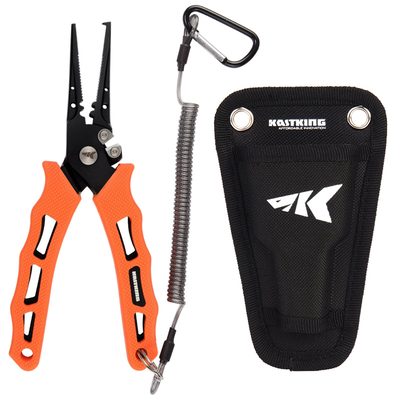
The Cutthroat is the consensus all-rounder across every source type we read. It is built from 420 stainless steel with a tough coating, with tungsten carbide side cutters mounted where you can see the line and cut close to a knot. The split-ring nose opens rings one-handed. Owners and testers agree on the same three strengths: the cutters slice braid clean when new, the steel body holds its jaw alignment where aluminum pliers flex, and the thin rubber grips stay grippy with wet, slimy hands.
Two drawbacks worth knowing. The sheath is the weak link: the case and carabiner rate below the pliers themselves. And the cutters dull with heavy saltwater use, so a bass angler fishing fresh water gets a longer life out of them than a surf angler does. Buy the split-ring nose version, not the straight nose, and tether the pliers instead of trusting the clip alone. KastKing Cutthroat 7 inch is the pair for the angler who wants one tool on the boat and does not want to think about pliers again this season.
Piscifun Aluminum Fishing Pliers ~$25
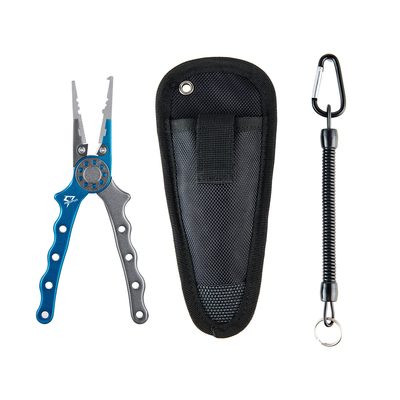
If the Cutthroat feels like a tool, the Piscifun feels like almost nothing. Its anodized aircraft-aluminum body keeps it light in the hand, with titanium-coated steel jaws and fully replaceable tungsten carbide cutters. In a head-to-head test against the Cutthroat, it cut smoother on every line type, braid included, and owners keep calling it the best pliers for the money. The split-ring tip handles lure hook changes fast, and a nylon sheath and coiled lanyard come in the box.
The trade is stiffness. Under torque the jaws flex and the tips can twist, and on very thin braid the cutters can bottom out before the jaws fully close. The sheath is cheap. None of that matters much for pond hopping and bank fishing, where weight and one-handed use matter more than prying power. Replacement cutters run about $9. Piscifun Aluminum Fishing Pliers is the pick for the bank angler, the kayaker, and anyone who has ever left heavy pliers in the truck because they did not want to carry them.
Texas Tackle Split Ring Pliers ~$15–20
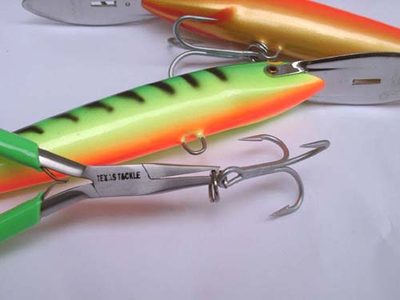
Split rings are where generic pliers fail and dedicated ones earn their keep. The Texas Tackle pliers, a 5-inch tool, use a triangular wedge tip and an elongated lower jaw that holds the ring open while you work a hook on or off, instead of pinching it and watching it fly. Forum anglers call them the best split-ring pliers they have used, one after another, and one long-term owner in a major magazine test has fished the same pair weekly for about two decades. Tackle Warehouse reviewers say the same thing in plainer words: hooks that once took days of fighting with a knife and a fingernail now take under a minute.
This is a one-job tool, and that is the point. It does not cut braid and it does not remove deep hooks. Pair it with a cutter and a needle-nose and you have the system the forum anglers actually run. The 4-inch Executive version, at $15.99, is the one for finesse crankbaits and jerkbaits with size 2 and smaller rings. Texas Tackle Split Ring Pliers is for anyone who changes trebles more than twice a season.
Beyond Braid Pro Aluminum 8 inch ~$38
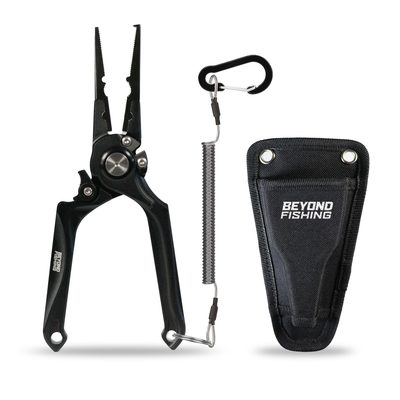
Braid is the test that separates real cutters from pretenders, and the Beyond Braid pair passes it in front of the largest owner base in this guide: 224 reviews at 4.8 stars, with the same themes repeating. The carbide cutters sit on top of the jaws so the line stays in the cutting zone, and reviewers cut everything from light braid to heavy mono with one motion. The jaws lock shut for storage, the molded sheath clips to a belt, and the body breaks down with common tools so you can clean salt out of the pivot and replace the cutters.
One complaint repeats enough to plan around it: the bare aluminum handles get slippery when wet, the same complaint leveled at other bare-aluminum pliers. A wrap of grip tape or a rubber sleeve fixes it for a dollar. At $37.99 it costs more than the budget pairs, but the cutter, the lock, and the sheath are the reason it earns the money. Beyond Braid Pro Aluminum 8 inch is the pick for the braid-first angler, the frog fisherman trimming 50-pound braid, and anyone whose current pliers chew braid instead of cutting it.
Gamakatsu Micro Split Ring Plier ~$9
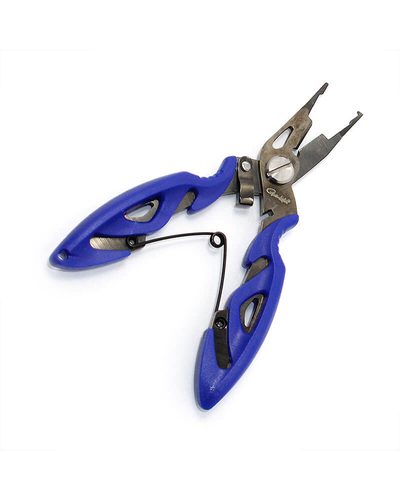
Tiny split rings are a different problem from normal ones. Rings in sizes 0 and 1 defeat most plier tips, which are simply too fat to get inside the coil. The Gamakatsu Micro, a 4.7-inch stainless tool with precision-ground micro tips, is the one reviewers reach for when nothing else fits: owners report it gripping, holding, and splitting rings their other tools could not touch, from tiny spinning lures to finesse cranks. The serrated cutters cut braid clean, according to one long-term reviewer. At $8.89 to $9.39 it is the cheapest pick in this guide by a wide margin.
Two limits. It binds a little when closing, according to one reviewer who otherwise liked the size, and it is not the tool for big saltwater rings. Think of it as the finesse specialist for boxes full of jerkbaits, small cranks, and topwaters with small hardware. Gamakatsu Micro Split Ring Plier pairs naturally with the Texas Tackle pliers, one for small rings and one for everything else.
What to skip
Three products earned their way onto this list by failing in public. The Bubba stainless pliers sit at 2.4 stars across seven Tackle Warehouse reviews, with bent jaws on the first fish, a bent tip out of the box, and jaws that gapped after crimping. The Cuda 8.75-inch titanium-bonded pliers sit at 1.3 stars across four reviews, all four about the same failure: they rusted and locked up, some within two months in a bass boat. Note the distinction: Cuda scissors are well loved, and forum anglers swear by the sub-$5 Cuda snips for braid. It is the Cuda pliers that fail, not the brand's cutters.
Skip the generic aluminum rebrand pattern too. One forum owner put it bluntly about his Optimum-branded pair: slick without gloves, cutters that dulled, and replacement cutters that would not align. Several aluminum pliers look like the same base tool under different paint, so judge the cutter and the jaws, not the logo. The Shimano Power Pliers fail a different test: strong for rigging, but the cutter does not work on braid at all. And the Van Staal titanium pliers are a wonderful tool at the wrong price for bass anglers: around $400, with a one-year warranty that owners have questioned.
The system, and how to keep it alive
If you buy only one pair, buy the Cutthroat. If you fish crankbaits and jerkbaits, add the Texas Tackle pliers. If you fish braid, add a real braid cutter, whether that is the Beyond Braid pair or cheap Cuda snips on a retractable tether. That three-piece system costs less than one premium pair.
Two habits keep any of these alive. First, cut with the base of the blades, not the tips, and cut braid with the line under a little tension when you can; both keep carbide edges sharp far longer. Second, rinse and dry after every trip, and put a drop of oil on the pivot now and then. Stainless steel still rusts when it lives wet in a boat compartment, and aluminum bodies do not save steel jaws and cutters.
Bottom line
Buy the KastKing Cutthroat if you buy one pair, and tether it. Add the Texas Tackle split-ring pliers if you change trebles, the Piscifun if you walk the bank and hate weight, the Beyond Braid if braid is your line, and the Gamakatsu Micro if your lures wear tiny rings. Skip the Bubba stainless and the Cuda pliers. Good pliers do not catch fish, but bad ones cost you hooks, rings, and afternoons.