The two-sentence difference
When you fish a Texas rig, you are fishing the lure. When you fish a Carolina rig, you are fishing the sinker.
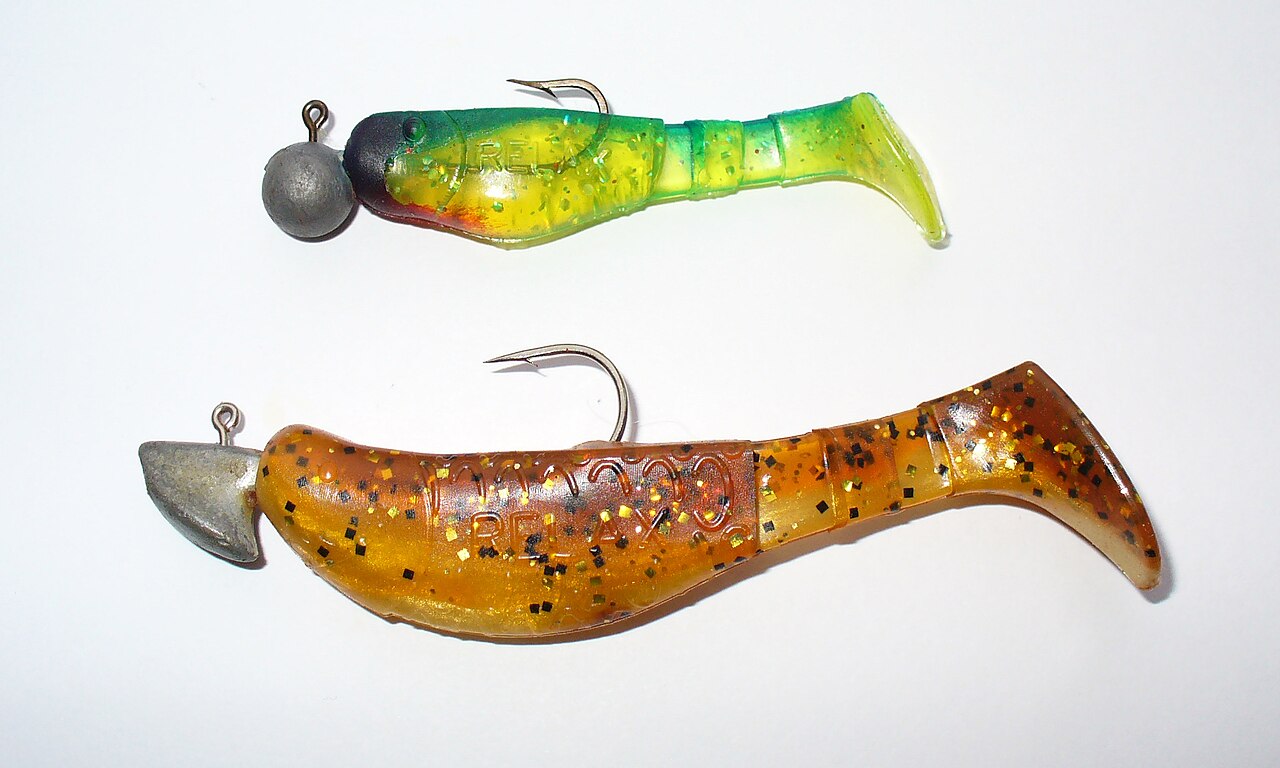
Everything else follows from that. A Texas rig pins a bullet weight against the nose of a soft plastic, so the whole package falls together, casts like a dart, and slips through cover as one weedless unit. A Carolina rig puts the weight on the main line ahead of a swivel, with the bait trailing a leader behind it. The sinker plows the bottom and the bass picks up a bait that feels like it isn't attached to anything.
Pick the wrong one for the water in front of you and the day gets quiet. Pick the right one and each rig does a job the other can't.
When to fish the Texas rig
Fish a Texas rig when the bass are holding on something specific. Heavy cover is the headline: grass, brush, laydowns, docks, matted vegetation. The compact package is the only soft-plastic presentation that punches through a mat or threads a laydown without hanging up, and every experienced voice in the research agrees on this one.
Beyond cover, reach for it when you're fishing targets rather than areas: pitching to dock posts, flipping holes in grass mats, dropping on a bed. It crawls down steep drops and pond dams where a Carolina rig would drag the bait straight to the bottom of the break. And in spring, a light or weightless Texas rig on bedding fish is the standard for a reason.
The Texas rig is a poor search tool. If the fish are scattered and you don't know where, dragging a Texas rig across open water is slow and mostly unproductive. That's the other rig's job.
When to fish the Carolina rig
Fish a Carolina rig when you need to find fish in open water. Points, flats, humps, ledges, channel swings, roadbeds: offshore structure where bass group up away from the bank. The heavy sinker holds bottom contact in 10 to 25 feet of water (deeper in winter), kicks up silt, and clicks against rock while the bait flutters behind it, unbothered.
It's the classic prespawn tool: bass staging on points and channel swings, moving in and out, scattered across big areas. Drag a Carolina rig through and it finds the school fast. It also shines when the bite is tough: clear water, pressured fish, the day after a cold front. The bass picks up the bait, feels no resistance because the line slides through the sinker, and holds it longer.
Two more situations worth knowing. In wind, a 3/4- to 1-ounce sinker keeps bottom contact when line bow makes a Texas rig unfishable. And on unfamiliar water, the dragging sinker reads the bottom for you: hard versus soft, rock versus grass, the edges of drops and humps. Before good electronics, this rig was the fish finder.
Where it fails is unanimous: heavy cover. It hangs up, can't reach small holes in grass or brush piles, and the long leader wraps wood. Shallow water, steep banks, and sight fishing are out too.
How to tie a Texas rig
Thread a bullet weight (1/8 to 1/2 ounce covers most days; up to 1.5 ounces for punching mats) onto your line, pointy end first. Tie on an offset or EWG worm hook in 3/0 to 5/0, matched to the bait so the gap clears the plastic's thickness. Thread the soft plastic onto the hook and bury the point back into the bait so it's weedless but the point can pop free on the set.
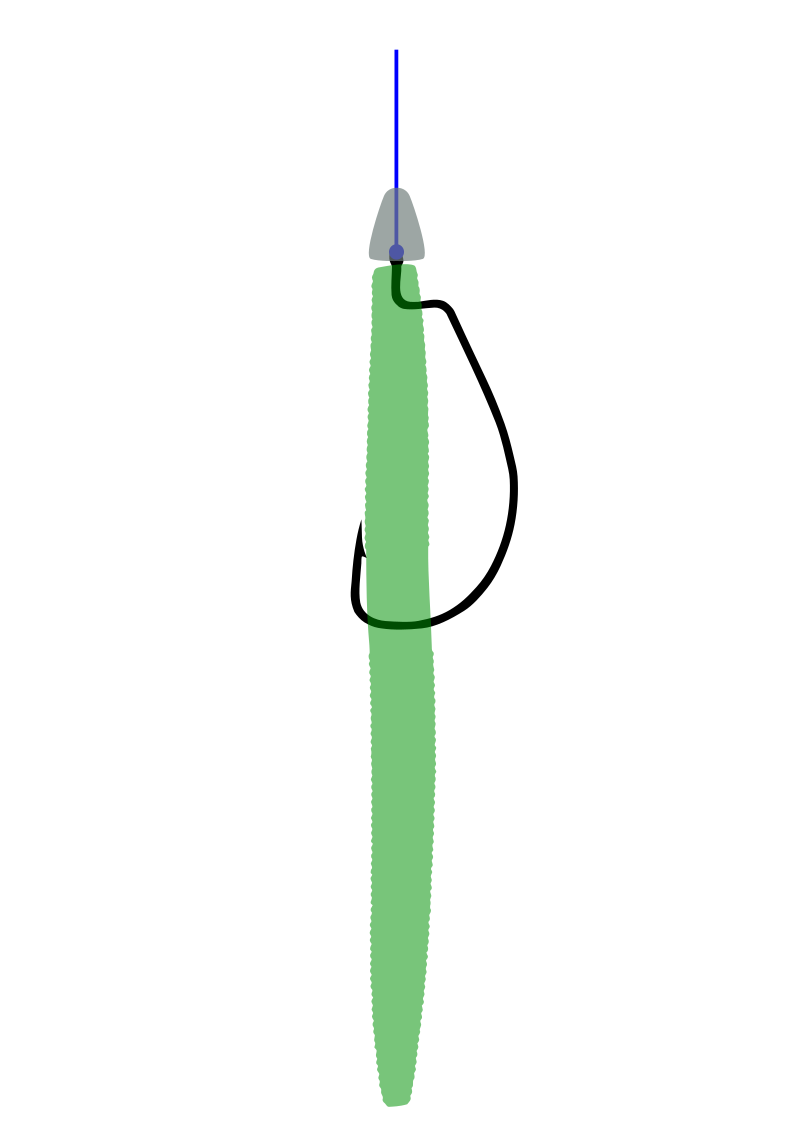
Peg the weight or don't, depending on the cover. In heavy stuff (mats, thick laydowns, anywhere you need the weight and bait to arrive as one piece), peg it with a toothpick or bobber stop. A pegged rig punches through and skips under docks; an unpegged one won't. In light cover, leave it unpegged with a bead above the hook: the sliding weight gives a more natural fall, and the click is a small bonus. One real failure mode to know: an unpegged weight in thick cover slides up the line on the cast, killing your accuracy, and can end up on the opposite side of a branch from the hook, at which point the hookset is impossible.
How to tie a Carolina rig
Slide a 1/2- to 1-ounce sinker (3/4 ounce is the all-rounder) onto your main line, then a bead, then tie on a barrel swivel. The bead protects the knot from the sinker hammering it, and the glass or plastic click against the weight imitates a feeding crawfish. Tie an 18- to 36-inch leader to the other end of the swivel, then your hook.
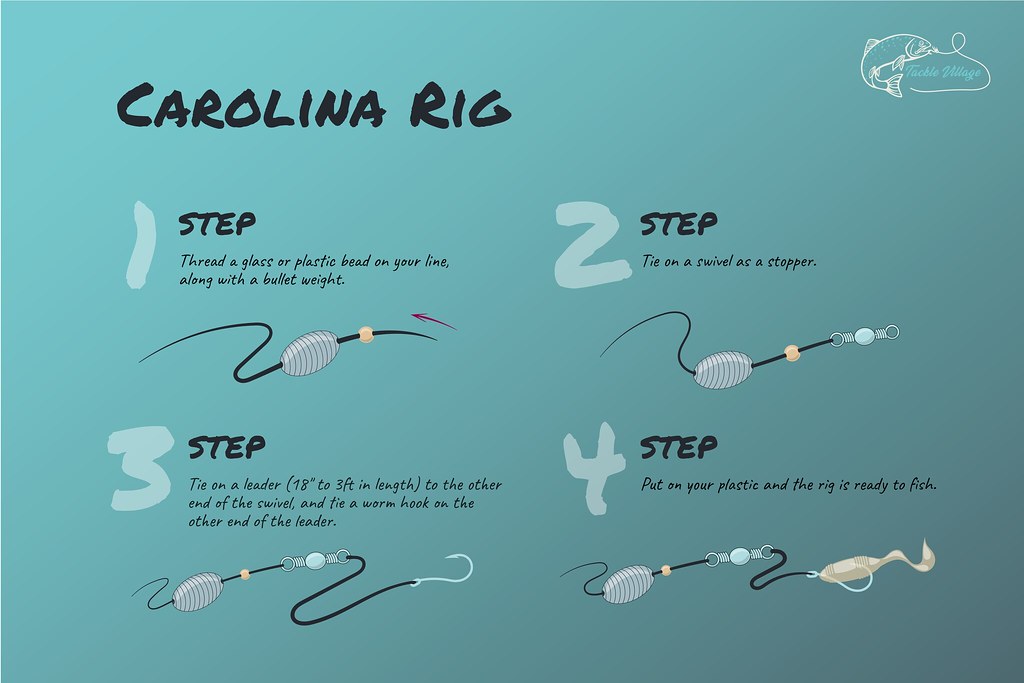
Three details matter more than anything else. First, the leader should be lighter than your main line. If you snag, you lose the hook and bait, not the whole rig. Second, use a light-wire hook. A heavy flipping hook drags the bait down and kills the fluttering action the rig is built around. Third, size the leader to the situation: longer (up to 4 or 5 feet) in clear water or on spooky fish so the bait rides far from the noisy sinker; shorter in dirty water, cold water, or wind. A veteran rule of thumb: make the leader long enough that the bait rides above the weed tops, and if that means more than about 3 feet, switch to a drop shot. A longer rig can't be cast with any control.
Pre-tie leaders at home. Retieing a Carolina rig in the boat after a break-off is nobody's idea of a good time.
How to fish them: the retrieve, the bite, the hookset
Texas rig: cast or pitch to the target, let it fall on semi-slack line, and watch the line. A huge share of bites come on the initial drop, showing up as the line jumping or moving sideways. Work it back with short lifts, hops over wood, or just shake it in place; that in-place quiver triggers inactive fish that ignore moving baits. The bite is the classic sharp tap. Set hard and upward, driving the point through the plastic, and get the fish's head up and out of the cover fast.
Carolina rig: lob it out: a long, smooth side-arm cast, because a snap cast wraps the leader around the main line. Let the sinker hit bottom, then drag, don't hop: slow sideways rod sweeps of a couple feet, pause, reel up the slack, repeat. You're feeling for bottom changes as much as bites. The bite rarely feels like a tap. The line moves sideways on its own, goes slack or tight for no reason, or the rod just loads up heavy and mushy, like dragging through soft mud. Set on anything suspicious. Swings are free.
The hookset is where beginners lose fish. On a Texas rig, it's a sharp upward sweep. On a Carolina rig, never set overhead: that just lifts the weight. Reel down until you feel the fish's weight, then a long sideways sweep to take up the bow in the line and drive the hook home. And give the fish a beat before you sweep. Don't pull it away from a bass that's still eating.
Mistakes that cost fish
Most Carolina rig failures trace back to the same short list: dragging it through heavy cover (switch to Texas), a crooked bait that spins and twists the line, a hook too small for the plastic so the bait balls up and blocks the point, a leader as heavy as the main line so every snag costs the whole rig, skipping the bead, setting on slack line, the overhead hookset, a heavy-gauge hook that kills the action, and fishing too fast. Both rigs are bottom rigs. Slow down, especially in cold water or after a front.
On the Texas side, the common errors are fishing it as a search bait across open water, going too heavy on the weight so the bait can't swim naturally, and leaving the weight unpegged in cover thick enough to separate it from the bait.
What you need (and where to learn more)
Neither rig demands exotic tackle: a 7- to 7'6" medium-heavy rod handles Texas rig duty, while the Carolina rig wants a longer stick (7'3" to 7'10", medium-heavy to heavy) to lob the rig and move line on the sweep set. If you're stocking up on the terminal end, our best fishing hooks for bass guide covers the EWG and offset hooks both rigs use, and best terminal tackle for bass covers weights, swivels, and bobber stops.